A Much-Needed Overhaul

Back in 2007 when I started this blog, I wasn’t all that concerned about design. I wanted to write about all these neat ideas I had, and so I opened an account with WordPress.com, picked a theme that had a tree on it, and got down to the important business of writing.

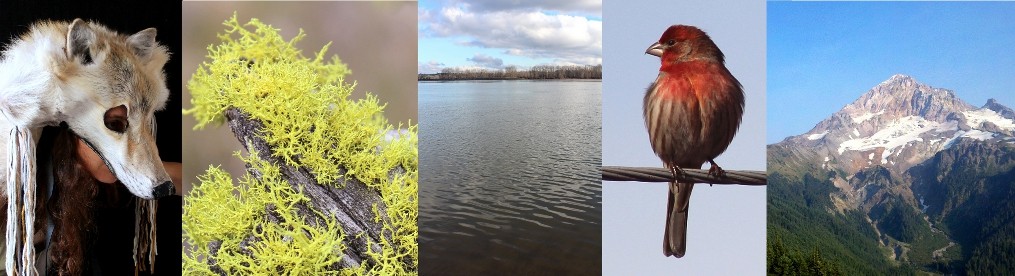
And I still get so distracted by the writing that I don’t spend as much time on general blog upkeep. So I finally took the time to do a pretty significant overhaul of the appearance, pages, and other such things. I changed the theme, and finally took the time to figure out how to upload a custom header image. The image itself isn’t anything really snazzy, just a few of my favorite photos I’ve taken stitched together into the proper 276 x 1015 pixel format. I made sure the pages were updated, especially since the new theme features them more prominently. Oh, and I pulled the search box further up the page to make it easier to access. Basically it was everything I could do without A) spending the better part of $200 porting the blog over to WordPress.org or B) learning CSS from scratch to tweak this one more fully.

Also, I updated the links on the sidebar. I admit I’ve been putting off editing the blogroll; even though I mainly just deleted blogs that hadn’t updated in a good long while, adding more blogs is a nerve-wracking experience. I’ve spent the past two hours (amid various tasks) thinking “What if I forget someone important and obvious? What if there are all sorts of people who have been kind enough to link to Therioshamanism all this time and I should probably link back to them but I don’t know who they are or I lost the email where they requested reciprocal links? What if a blog or site just isn’t really a good fit and I have to try to explain this to the person who’s been putting their blood, sweat, and tears into it? WHAT IF SOMEONE HATES ME FOREVER BECAUSE I DIDN’T LINK TO THEM?” Okay, it didn’t get quite that dire. But there are a lot of really good blogs out there, definitely more than what I have listed. So if you have suggestions for good blogs and sites along a nature paganism or related theme, let me know. I won’t promise I’ll add all of them, but the worst I’ll say is “no thanks”.

Finally, you may have noticed that the quote under the blog’s title has changed. From the beginning, I had had John Muir’s quote “In the silence of the wild, we find the home we lost in the city”. A long while back, I wrote about why I felt the quote needed to be changed for something more appropriate, but it wasn’t until recently that I found a suitable replacement:

All spiritual life begins with a sense of wonder, and nature is a window into that wonder. – Richard Louv

This is a much better fit for where my path is these days. Over time, as I’ve moved away from abstract symbols and more into direct contact with nature as the center of my practice, I’ve rediscovered the sense of wonder I have about the world–not just the wild parts, but the human-altered ones, too. My stock response to the complaint that the physical world is too mundane and boring is “Look at photosynthesis. That plant? It’s absorbing sunlight into its leaves, and making it into food, into measurable amounts of sugars. How is that not absolutely breathtaking, especially because we know more or less how it works?” But I feel that way about a lot of things; the amazing technology that launched rovers onto Mars so we could gather better data is nothing short of amazing to me. And my sense of wonder about these things and more presses me to know and learn and experience more; it drives me out into the world to explore it and my place within it, and entreats me to supplement with the observations of others through books and film and classes and more.

Note that Louv says that nature is a window, not the window. But for many of us, it’s not just a window but the door itself. For me, this wonder helped to bring me back to an entire home–whether in the city or the wilderness, I am home in the world.

Small, Sacred Places

Note: This is my contribution for the May edition of the Animist Blog Carnival. This month’s theme is Place Magic.

I’ve talked before about some of the places that raised me, and how badly their loss affected me. Other people in response told me about their own small, sacred places that they clung to when they were young, some of which had also been destroyed as they got older.

When we talk about “nature”, the first thing a lot of people picture is a wilderness setting with little to no overt human influence. These are certainly a significant part of nature, but they are not the sum total of nature itself. Most of us didn’t grow up right next to vast forests, fields and deserts, and even if we had we wouldn’t have been allowed to ramble across them unfettered. Instead, what many of us had were small open lots, parks, yards (our own or neighbors’) and the like. Because these may have been all we had, they became the definition of “nature” for us, and that imprint can last a lifetime.

For myself, when I was in my own small places, my fields and little patches of woods, for that time I was free and autonomous. I could explore those scant half-acres with impunity, and as a young child they seemed so vast and inviting that I didn’t want for more space. Instead of hiking for miles, I was exploring every inch of the land, every stone and stump and tree and pathway. I can even still remember the smells of sun on stone and cedar branches. That attention to detail is something I’m still learning to recapture as an adult recovering from the trauma of losing those places to destruction.

But it is coming back, and so is the sense of adventure and exploration that I had growing up. When I find myself deeper in the wilderness, away from the familiar roads and highways, that giddy excitement floods through my veins and I can’t wait to see what’s around the next bend in the trail. The world is all of a sudden new and shiny and even more beautiful than it was a moment before, and I feel so fortunate to be here in Oregon, the land that has embraced me.

As I get older, I spend less time in formal ritual. These days, a hike is a better way for me to connect with Something Bigger Than Myself, hence part of why I’ve been blogging about those hikes more. And I think it’s because I’ve stopped thinking of nature in terms of abstract concepts and symbols, and approach it directly, body and mind and heart and soul. A place, to me, isn’t sacred because of what rituals occurred there or what spirits call it home. Every place is inhabited by spirits, and every place is touched by the daily rituals of the turning of the Earth and the currents of the winds. As I simplify and streamline and integrate my path, I feel that pulling away the extraneous symbolism is like cutting away choking, invasive blackberries, opening up the ground so that the original inhabitants–snowberries and osoberry and others–can revive themselves. Some of the earth is open and wounded still, but now that the thorny canes have been removed, I’m eager to see what will grow in their place.

The places that raised me, small though they were, and dead though they may be today, are still sacred. It wasn’t about being a young pagan thing running around in the woods; I was still quite Catholic at the time. It was about forging that deep connection to the cosmos, to the wilderness, to the nonhuman beings that I share this world with. Most importantly, it was the early upwelling of wonder and awe at the world, that thing that has fueled my spirituality ever since. Because those places were the wellsprings of this feeling, they are the most sacred of all, even if only in memory.

The small, sacred places are sadly some of the most threatened. None of the environmental groups will work to protect a half an acre of scrubland in a small town. They’re vulnerable to development, yet another poorly-made cookie cutter house in an encroaching suburb. Few people will mourn their passing in the name of “progress”, and the children who move into that home will never know the wonders of the garter snakes and cedar trees that once lived where fertilized lawns now grow. For those of you who have lost your small, sacred places, I share your pain and your loss. For those who have the opportunity to preserve such places, whether for yourself or someone else, I commend you.

Here’s to all the small, sacred places that raised us, and that may still support us yet today.

The Grand Dance of the Cosmos

I’m a little bit late to the Animist Blog Carnival, but better late than never, yes?

This month’s theme is Time. I have a strange relationship with time. One of the things that brings me such wonder is the sheer vastness of the Universe we live in, to include its fourth dimension. I suppose it’s in part because, as I’ve grown older, it’s taken larger amounts of time to impress me. When I was young, the idea that I was seven whole years old was a Big Deal! I couldn’t even conceive of my parents being in their thirties; it was just a bigger number with no context. In my late teens and twenties, as I started contemplating my mortality, the average lifespan of seventy-two years was a bit of an obsession. “Wow, I’m a quarter of the way to there!” was a sobering thought at eighteen. But I made peace with that, and the possibility that I might end up not even seeing seventy-two, and so I had to move on to other numbers to be bewildered by.

Which that brings me to now, in my mid-thirties. I am a huge fan of history documentaries. Ancient petroglyphs here in the United States, stone circles in England that are thousands of years old, the march of humanity out of (and back into, and sometimes out again) Africa and across the globe–these things entangle my mind and make me wish for a time machine so that I could observe more closely these people who were just as alive and real then as I am now. And extending beyond that, the evolution of species of animals, fungi, plants, and more over millions upon millions of years. And then the planet itself, how I wish I had a piece of the oldest rocks known on the Earth, thinking of how Earth’s sister planet Theia might crashed into it so long ago and two became one, how once all of this was star-stuff and cosmic dust and before that one very big bang. To these, seventy-two years doesn’t even register.

They say that one of the purposes of spirituality is to inspire awe and wonder and reverence, connection to something greater than yourself. This bigger-picture approach to time is one of the things that’s helped me to move toward a more naturalistic spirituality, one very embedded in the physical world and the wonders thereof. The lines between spirits, and what those spirits are supposed to represent, have become much more blurred, and I feel as much reverence and joy in observing a scrub jay on the power line outside my home as I do for the totem Scrub Jay. It’s made being in this world a much more joyful place, and more than ever I strongly disagree with those who claim there is no magic in this world.

Additionally, this cosmic dance has given me peace over the fact that I have just a tiny blip in the grand scheme of things. The very fact that I was honored with a place in this dance, even for a brief time, is in and of itself a privilege and a blessing. I will continually be frustrated that I can neither peer backward into what came before me, nor will I be able to see how the story continues to unfold once I am gone. I may not even leave a mark that lasts much beyond my passing. But in the end it is enough that I was here, that a little piece of time unfolded just for me, as it has for all of us–pill bugs, Cooksonia, stromatolites, the continental shield of North America, and every single human being that has ever and will ever breathe the air.

The small things count, too. Every moment that I live and breathe and exist is important. I blink, I exhale, I turn my head. A word is spoken, a thought flickers and is brought into the open, a goal is completed. Each is stitched to the next by the passing of time, but not one can be taken away without the whole thing collapsing. Every moment is important both in and of itself, and as part of the overall continuation.

So even the worst moments in my life have meaning. They may not have happened for some extraordinary cosmic reason; I don’t need to make sense of them in the manner of “Well, you’re working off bad karma” or “it was meant to be”. But I don’t have to add extra meaning to these just to justify their existence. The fact that each moment exists is justification enough. Each one is a stepping stone from one to the next, and I couldn’t have just jumped from the best thing that happened to me last week to the great event I’ll get to experience in a few days. That’s why I can realize, even at my darkest moments when my anxiety has me convinced the worst is here and everything is horrible, that it’s just a temporary condition. I may not be very good at being in the moment and being okay with that when life falls apart, but I’m getting better at remembering that the bad moments are stitched to the good ones and sometimes I just need to be patient and let time continue to unfold apace. Eventually I come to a place of respite and safety again.

I’m not at all alone in this experience. I have moments that are knitted into years and an ever-expanding network of lifetimes, mine and others’, and we in turn are woven into the very latest threads of a much greater cloth, billions of years old and countless strands large. Time weaves no holes, only ever-expanding patterns. It doesn’t even matter whether there’s a conscious weaver behind it all or not. Just being here in time’s continual unfolding–that’ll evoke more than enough wonder, awe, and reverence for the remainder of my lifetime, I think.

A Caution Against Pagan Fundamentalism

A caveat to start with: No matter how well a writer writes something, inevitably someone will misinterpret what they were trying to say. Such is the limitation of language. In that spirit, allow me to make one thing very, very clear before this essay even starts: I am not equating hard polytheism with religious fundamentalism. I am concerned that because of certain patterns I have seen among some, not all, hard polytheists, that this may, not necessarily will, in the future give rise to a form of pagan religious fundamentalism. Additionally, the “You’re wrong, I’m right” attitude that I’m observing is not limited to debates regarding polytheism, but other areas of paganism as well, and any of these could also give rise to a form of fundamentalism given the right circumstances. Polytheism happens to be the topic of the moment which finally gave me a chance to voice some concerns about fundamentalism in paganism that I’ve been chewing on a while. There. Now that I’ve said that, feel free to proceed.

I’ve been watching the recent discussion on several pagan blogs concerning hard polytheism, “bringing back the gods”, and so forth with some interest. I admit that the older I get, the more I am moving toward a more pantheistic viewpoint, with a good dash of humanism as well. It’s not that I discount the existence of the Divine, spirits, and so forth, but that my experiences with them simply haven’t led me to adopt a hard polytheistic view (and anyway, I tend more toward totems and nature spirits than gods).

So that obviously colors my perspective on all this. I don’t have a stake in the proven reality of deities as independent entities, but neither does it bother me that some people do. What concerns me is the possibility of the rise of pagan religious fundamentalism. (Yes, I know there are polytheists dropping the term “pagan” from their experience because they associate it with Things That We Aren’t, but for the purposes of my discussion, polytheists are still pagan, in part so I don’t have to keep writing pagans/polytheists over and over.) Fundamentalism as a concept was originally described in certain areas of Protestantism in the early 1900s. These people had a very strict and literal interpretation of their religion, and today “fundamentalism” is often used to describe any of a number of religious perspectives that hold similar, inflexible views on God(s) and the way humans are supposed to act.

There are a lot of pagans (and other people, but let’s stick to pagans for now) who have had bad experiences as a result of fundamentalism, usually of the Christian variety. The community is full of stories of people growing up in strictly religious households and being treated pretty poorly for the mistake of exploring new beliefs. These could range from having their pagan religious tools and effects taken from them and destroyed, to being assaulted or thrown out of the home. Adult pagans have lost jobs, homes, and children due to religious persecution. Pagan prisoners are routinely denied access to religious materials and clergy, and it’s rare for a pagan clergyperson to be asked to lead a prayer in a civic setting where such things still occur. While Christian fundamentalists proper were not always the opposition in these cases, the attitudes of fundamentalism tend to leak out into the wider cultural consciousness (I’ll talk more about that in a minute).

With these consequences of fundamentalism in mind, it seems strange to see echoes of them in paganism. Yes, of course there’s the fact that people often subconsciously emulate the behavior patterns they were raised around, but surely that can’t be the source of every single instance of “You’re wrong, I’m right!” in paganism. And while not every one of those “I’m right!” instances constitutes fundamentalism, the long-standing tendency for some pagans to tell others “You’re doing it wrong!” seems to be heading closer to fundamentalism to a troubling degree. And so while I don’t want to point at any single claim of “hard polytheism is the best and only way!” as fundamentalist, because of the general trend I do want to put forth a warning against the dangers of falling prey to fundamentalist stances. Allow me to present a few points for consideration.

Not all pagans are theistic, and paganism is not just about the gods.

I really like Christine Kraemer’s Venn diagram in this recent post. It’s a reminder that “paganism” isn’t ONLY about gods, or ONLY about nature, or any other single influence. I agree with her when she she says in her own words (and italics), “for some pagans, polytheism is not a main focus for practice or belief.” Her post was in response to this one by P. Sufenas Virius Lupus whom I should mention, for disclosure’s sake, is a friend of mine and someone I respect highly. He wrote a really good essay (even if I don’t quite agree with all of it) that sparked a lot of discussion, and one of the key ideas was the possibility that the emphasis on “nature-based” paganism is to make non-pagans feel more comfortable with us, and that those of us who don’t embrace polytheism are making that choice because we’re uncomfortable with polytheism.

I’m not uncomfortable with polytheism. I spent most of my pagan “career” that started in 1996 being a polytheist to one degree or another. The shift toward pantheism has been a more recent thing, ironically brought on by my attempts to deepen my practice (another thing I’ll touch on more later). Being more comfortable with pantheism does not automatically mean a discomfort with polytheism, any more than choosing to be pagan means a discomfort with any other religion. If I’m uncomfortable with anything it’s the growing resemblance to fundamentalism I see in some sectors of hard polytheism, but that’s not why I am not a polytheist any more.

As my spiritual practice becomes more entwined with my path of service to the environment and to other humans, I find myself more and more rooted in this world. And my increased engagement with the physical world brings me closer to being a naturalist, with a combination of armchair scientific study and feet-on-the-ground, hands-in-the-dirt direct experience. So pantheism–seeing the Divine as directly manifest in the natural world that I interact with–makes more sense to me at this point. Truth be told, my involvement with most deities, other than Artemis, has never been particularly deep. I worked with the Animal Father as part of a personal pantheon early in my Therioshamanism work, but he eventually faded back into the wilderness from whence he came, and the energy I touched with him I see in every living animal, and I connect more strongly that way. As to Artemis? She’s always been an internal part of me much as my primary totem Gray Wolf is; it’s hard sometimes to tell where the boundaries fall between us. These days I’m simply not that concerned with proving once and for all whether my invisible friends are independent beings or manifestations of human consciousness and myth, and I’ve never had much note from any of the beings I work with that suggested they cared what I thought, either. What’s important to me and to them are the immediate and measurable manifestations of my practice, whether that’s a shamanic journey or a day spent cleaning up litter along the river.

The anger and debate seem to all be on the human side of things. When someone doesn’t perform a ritual properly, or refers to several goddesses as aspects of one Goddess, I haven’t seen divine bolts of lightning streak down and smite them. There are historical debates, of course, where we can argue the facts of what the people of such and such ancient and no longer extant culture did, but that doesn’t lead to proof of what a particular deity or spirit wants. It’s always the people arguing over whether a particular practice or belief is correct, sometimes to an absurd degree–I’ve seen people on Tumblr debate whether a store-bought strawberry tart was a fitting offering for Loki. Regardless, it always comes down to the “You’re wrong, I’m right” debate; it’s only the details that differ.

Saying that everyone MUST believe or practice in a particular way is at its heart fundamentalism.

Religious fundamentalism is characterized by people insisting that their way is correct and everyone else’s isn’t. It’s what keeps fundamentalism alive. As social creatures, we like having something sure to crowd around to unite us, and religion makes a great standard for rallying. Unfortunately, we also get this idea that the more right we are, the stronger we are, and so in order to increase our strength and security we have to prove our rightness. This fervor is part of how religion has very often been used as a tool for political and social machinations and power plays. The people involved are so focused on the surface message of “You’re wrong, we’re right” that they ignore the men behind the curtain. Look at the Crusades, for example; Pope Urban II called for them in part because the nobles in Europe were being rather rowdy, and he figured that sending them east under the guise of a holy war would at least get them out of the way for a while, as well as ingratiate him to the Byzantine emperor Alexios I who was being attacked by Muslim forces. Most people think it was just a matter of Christians versus Moslems in a grand melee for the Holy Land, but that was just the surface.

Religion in general plays on a lot of human behavioral tendencies, and while these can sometimes be beneficial, as in prayer and meditation to relieve stress and anxiety, and the benefits of a healthy community, fundamentalism has a poison to it. It’s divisive and exclusionary, and it builds identity not on connection but on isolation. And this isolation can be a very bad thing indeed.

Fundamentalism has a tendency to breed ignorance.

When you build your entire worldview on an idea, any opposing idea becomes a threat to that power base. There is absolutely no incontrovertible proof that any religious belief is more objectively and measurably true than any other, and the number of people who adhere to it does not increase its truth. Because we can’t prove a belief in the same way we can prove that gravity exists, or that water is composed of two hydrogen atoms and one oxygen, or that a mammal’s fur retains heat, adherents of beliefs can sometimes become very insecure about what they believe.

Now, there’s nothing wrong with a strongly-held belief in and of itself, even if you can’t prove it. But one of the defenses against having your worldview shaken is willful ignorance. I would imagine that most, if not all, of my readers are aware that homosexuality isn’t dangerous, that gay people are not more likely to be sexual predators, and that if gays get married it won’t cause the collapse of civilization as we know it. Yet because the Bible happens to mention in a couple of places that homosexuality is a bad thing, there are people who latch onto that and who absolutely refuse to consider any other evidence to the contrary.

We live in a 21st century where for a lot of us (though certainly not everyone) we have an inconceivable amount of information at our disposal through the internet and other forms of media. Even a quarter of a century ago when I was in elementary school writing my first essays I had access to several different sets of encyclopedias, dozens of magazines, and thousands of books, just in my little school’s library. The information is there; ignorance is the choice to not access it. And, I suppose, for some people the idea that they might be wrong is a terrifying thing, so much so that they don’t step out of their safe sphere.

I’ve made peace with the idea that I might be wrong. There was a feeling of liberation a while back when I finally felt the tyranny of “I HAVE TO MAKE SURE I’M RIGHT ABOUT EVERYTHING” lift away from my shoulders, and I had the liberty to move through the world unencumbered by that obsession. And it allowed me to be even more curious about the world than I already was. A sure belief doesn’t have to extinguish curiosity, but my own experience has been that allowing myself ambiguity has freed me to focus more on exploration and learning for its own sake, come what may.

Ignorance is dangerous.

Again, having a strongly held belief isn’t automatically ignorance. But ignorance, when it happens, has its own dangers. When we tunnel-vision so tightly on a belief that we refuse to listen to anything else, it can hurt us and others. It’s been proven again and again that vaccinations have absolutely nothing to do with autism, and yet there are increasing numbers of parents in the United States who refuse to vaccinate their children because of the strongly-held (and incorrect) belief that autism is somehow transmitted through common shots. As a direct result, diseases we’d significantly reduced or even almost eradicated, like pertussis and measles, are on the rise, along with the highest rates of deaths from these diseases in decades. We can prove without a doubt, due to decades of statistics on vaccination effectiveness and illnesses and deaths from these diseases, that these people likely died as a direct result of lower vaccination rates. And it’s not just the people who chose not to allow vaccinations who suffer: the dead include unvaccinated children who could still be alive today had they been given routine childhood vaccines.

Sometimes ignorance is on a grander, even deadlier scale. People have slaughtered each other for millenia based on religious and political propaganda which very often doesn’t paint the whole picture (remember Mark Twain’s The War Prayer?) And while modern paganism has not birthed such theocratic efforts, perhaps it’s only due to a lack of numbers and chance, as well as the persistent tendency for pagans to eschew preaching and converting–at least toward non-pagans.

And, in and of itself, insisting that the gods are real, independent entities a la hard polytheism isn’t particularly dangerous. You can believe whatever you like and still not be a problem to others if you just leave it to yourself and those who agree with you. It’s the desire to make others agree with you that’s the problem. And that desire stems from insecurity in one’s own belief, with ignorance another common side-effect. Ignorance only allows a person to learn about other ways far enough to be able to rail about how they’re wrong, to have fodder for their fight. They can’t venture too far from those shaking beliefs they hold for fear they’ll fall and so, like a dog chained to a rickety old dog house, they bark and snarl at the world around them, only knowing of the things that come close enough to feel like a threat.

Maybe the surest counter to this dangerous ignorance is genuine curiosity, and an openness to the world. There’s a certain strength in being able to hold your beliefs even when you’re learning about others, not out of the desire to disprove them, but simply to know more about them. This isn’t just knowing the words of others’ beliefs, but opening yourself to why people hold them. A little immersion in this way won’t make a person a convert, and the potential for a change in one’s own worldview shouldn’t be reason to shut the rest of the world out.

Fundamentalism is contagious.

Most adherents of a religion are not fundamentalists. However, many adherents do have some beliefs they hold strongly, and their communities help them to bolster that faith. Again, this in and of itself is not a bad thing; it’s part of religious communities as vessels of social memetics. But as we can see throughout history, extremists of any sort tend to attract a crowd, and while some may discount them, others catch hold of their message. Sometimes that extreme eventually becomes the norm; look at how Christianity grew from a tiny little cult surrounded by other tiny little cults into one of the dominant religions on Earth. Unfortunately, sometimes the messages that are the most contagious are also the most negative.

I can tell you a story of this from personal experience. When I first started this blog in 2007, it was part of my quest for a deeper, more meaningful spiritual path. I had watched a number of people I knew in the pagan community engage in some truly beautiful devotional practices to deities and spirits, with wonderfully elaborate schedules of celebrations, and creative shrines and altars. While I had certainly had good experiences with the totems and other spirits I worked with over the years, I felt the need to have something similarly focused and devotional. You can look back at the first year or two of this blog to see where I was really trying to build that. Ultimately, as I mentioned earlier in this post, I ended up finding my depth and meaning in a totally different direction, but that doesn’t invalidate the appreciation I still have for the devotions of others.

Unfortunately, one of the things I also picked up from a few–definitely not all–of the people who inspired me was a thread of one-true-way-ism. Usually this would be people who were trying to reconstruct a particular ancient polytheistic pagan faith, and who were so dead-set on doing it right that they openly criticized anyone doing things differently. I suppose, having seen that modeled, I latched onto core shamanism as my target of “You’re wrong!”, and again you can read through some of my earlier thoughts in this blog. As I’ve gotten older and more comfortable in my path, while I still have personal disagreements with core shamanism (especially when it’s presented as “genuine ancient shamanism”), I no longer feel the need to attack it as a whole path. There are people for whom it works just fine; in fact, I’ve seen some people in the counseling field integrate elements of it to help their clients in very genuine ways. How can I argue with that effectiveness?

Honestly, I feel like an asshole for being that heavily critical. It did speak to a certain level of insecurity on my part, and I feel bad that I probably influenced other people to be critical to a similar degree. Granted, I am not responsible for what people choose to do based on their interpretations of my writings, any more than the people who I saw modeling hyper-critical behavior were responsible for my wholesale attacks on core shamanism. But it does demonstrate the tendency of people to copy those they wish to emulate, sometimes without considering what it is, exactly, they’re emulating.

If proper fundamentalism takes greater hold in paganism, I worry about what direction it may take the community as a whole. Maybe instead of polytheists dropping out because they don’t feel any connection to everyone else, it’ll be pluralists fleeing the damning whip of fundamentalist criticism and harassment as the “You’re wrong! I’m right” arguments go from small bickering online to greater pressure to conform to one party line.

We do not need fundamentalism to be legitimate.

I’ve seen the argument that if we pagans are going to be taken seriously, we have to present a more hard-line, united front of beliefs. Supposedly because we’re a group of people with a wide variety of paths and faiths, this means that there’s no way we can rank up there with well-defined single religions–never mind that they at least have denominations that may vary widely from one to the next.

And yet I’ve seen some really admirable interfaith efforts on the part of people representing paganism in general. Look at what Patrick McCollum has been doing over the years in criticizing the “dominant religion lens” of Christianity in the U.S. He hasn’t only been advocating for Wiccans, but for pagans in general, and in fact his work could very well benefit people of many other minority faiths. He’s just one of many examples of how paganism can be a legitimate religious presence in the cultural and social consciousness without having to resort to fundamentalism for strict definition.

Final Thoughts.

As it stands, we are not embroiled in a massive pagan fundamentalism movement. I have no problem with hard polytheists wanting to define themselves more as such–or anyone else taking the time to more clearly explain who they are and what they believe and why. I don’t even particularly care about the existence of the ongoing “You’re wrong! I’m right!” argument that’s manifested in everything from the “Only Brit-trad Wiccans are REAL Wiccans” debate to the current trends toward a more hardline polytheism. What worries me is the possibility of any of the “You’re wrong! I’m right!” debates to turn into genuine fundamentalism with all its problems and poisons. I feel it’s better to bring it up now, before it ever happens–if it even ever happens for that matter–than after the fact.

Because I don’t feel I’m being too cautious about potential fundamentalism. We don’t really know for sure what happens when you offend a god, but we sure as hell know what happens when someone is so very focused on keeping others from offending the gods that they’ll go to extreme, dangerous, and even lethal lengths to prevent or avenge that offense. Even if that’s not a real threat in paganism today, let’s start creating a setting now that will keep it from being a reality in the future.
How To Introduce Yourself to a New Land

2012 has been a year of travel for me, both for business and pleasure; nothing out of the country, and mostly staying along the West Coast. But I’ve been all the way through California on I-5 and 101, in new portions of Oregon I haven’t visited before, and even to the Texas thornbush country.

Each of these places has its own distinct ecosystem, and resident land spirits/Genius Locii. And crossing their boundaries can be a more complicated experience than a simple road trip.

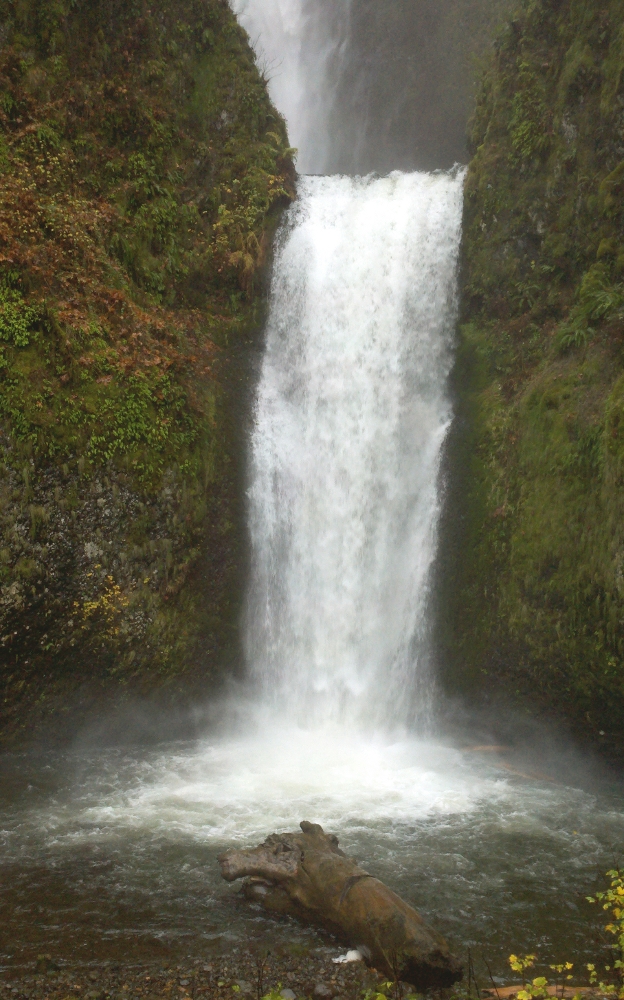
There are places I have gone into that have welcomed me immediately. The portion of the Columbia River Gorge around Multnomah and Wahkeena Falls took me in as soon as I set foot there, and I’ve had that repeated all throughout the Gorge. On the other hand, the deserts of Texas were a tough sell. Their spirits matched the prickly, thorny, dry landscape–my greeting when I first set foot on the dirt was a sharp, prickly burr in my shoe, and the land felt similarly offputting.

I grew to be more comfortable there, though, even though it was a short visit. And I’ve managed to integrate myself into other places even in brief periods of time. I spoke earlier in the year, over at No Unsacred Place, about the philosophy of my approach to this sort of Land work. Here, I want to get more into the practical side of it.

Just as a note, this may not be suitable for beginning practitioners. It involves opening yourself up to new energies and spirits, so this is recommended for those who feel confident in their ability to defend themselves and maintain their energetic integrity. In all my years of connecting to wild places I’ve not had a horribly bad experience that left me out of balance. The worst was living in Seattle for a year, and that was more just a matter of it being too big a city for my tastes–I still appreciate a visit now and then. Still, having the ability to not let a place “eat” you, as it were, is a must for this activity.

The first step, not surprisingly, is to be open to the Land. The manner in which we approach the spirits of a place can have a very strong influence on how we’re received. While I understand that there are people who find certain places to be very hostile, I do have to wonder how many times it’s because we expect, on some level, for it to be hostile in the first place. On certain levels, yes, a place can kill you. If you go into a deep wilderness unprepared, you may end up dead. And I don’t think that having a good relationship with the land spirits will automatically get you an easy out in an emergency; they may just be sadder if you die.

But before you even get out of the car or step off the plane or train, meditate about your biases about the place you’re going. Do you have any negative attitudes about it, either because of the natural ecosystem or the human society? If you just get “a bad feeling”, can you pinpoint why? Even if you do get that feeling, leave yourself open anyway (if a little more cautiously).

When you have the opportunity, spend some time connecting to the place. This is best done on foot rather than in a vehicle, and with enough time that you can go at your own pace. I’ve gone for hikes in new places, sat at the edge of the ocean, and even gone for a run through a farm-lined suburb. The important thing is to be able to make that physical connection and to not be too concerned about time limitations. Here’s the basic process I go through.

–First, go out into the place at a point where it’s relatively safe on a physical level, taking your outdoor skills into account. Know where you’ll be going and how to get back. If you want to take someone with you, make sure they know why you’re going out.

–Next, start your walk/hike/etc.–your introductory journey. As you go, open yourself spiritually to the place. Take in the ambient energy of the place, and start to shift your energy to match. This may not be an easy or quick process; it can take time to “shapeshift” in this manner, and you may feel some unease, especially if it’s a very unfamiliar territory. Give yourself time and patience to adjust. If at any point you feel too uncomfortable to continue, simply shift yourself back to your baseline state; if you’re having difficulty with that, turn back and try again another time.

–Once you feel your energy has shifted to match the place, start seeing if any of the local spirits seem interested in you. You may just be seen as a temporary inconvenience, or you may be a curiosity. I’ve rarely found anything that was openly hostile, especially after blending myself into the landscape. Interact as you both/all choose.

–If you wish to approach a particular spirit, make sure it notices you, then introduce yourself politely. Proceed (or not) based on its response.

–You may wish to let the Land itself, the Genius Locii of the place, know that you are there, and how long you will be there. You may also wish to discuss protocol for the next time you come through. Some places may not care one way or the other; others may wish for a small offering, or at least a heads-up upon your arrival. If a place is hostile toward you, it doesn’t mean you can never, ever, ever come back. It just may mean that you need to shield more heavily when you’re there, or try more diplomacy.

–If the Land accepts you, it may make an offering of a small gift to you, such as a small stone or stick. Assuming you’re in a place where it’s legal to take such things (many state and federal parks and other lands prohibit it), graciously accept the gift, and give it an honored place in your home. You can even create a place altar specifically for these connecting items.

–You may also wish to leave an offering to the Land. My preference is a small lock of hair, as it’s biodegradable and it infuses my energy into the place. Water also works as a gift, especially in deserts and other dry places. Make sure you don’t leave anything that could be toxic to the environment such as metals or nonbiodegradable chemicals. I also don’t recommend leaving food; many of the things we eat aren’t good for wildlife (such as giving bread to ducks and other birds) and it can encourage wildlife to associate humans with food, which almost always goes badly for the wildlife.

These are just some basic steps to connecting with a new place. Details for each place may arise as you spend more time in them. And don’t be surprised if your relationship with a place changes over time, especially if the place itself is changed. The second patch of woods I played in as a child used to be a happy, welcoming place. After it was mostly bulldozed for yet another new sprawling subdivision, the remains of it now push me away every time I visit, not wanting me to get hurt the way it did.

Keep in mind, too, that this is just the introduction. Anywhere you go, the Land is full of many beings, physical and spiritual. Some of them you may grow fond of; others you may learn to avoid. But always, always go in with respect and appreciation; these things will serve you well in your explorations.

And finally, just a quick bread-and-butter note–if you liked this post, I cover more ways to connect to the land, and especially the animal totems thereof, in the Bioregional Totemism chapter in my newest book, New Paths to Animal Totems, which just came out from Llewellyn Publications. I have copies on hand if you want one signed directly from me–details at the link above.

Plants Need Animals, And Other Necessary Connections

Heh. Volunteering with tree planting and cleaning up garbage from watersheds has given me plenty to write about.

Photo by Fir0002/Flagstaffotos, from Wikipedia

One of the things I’ve been chewing on is the earthworms. Okay, not literally chewing on earthworms. But the soil southeast of Portland where I’ve been planting trees is healthy enough to have a really nice population of them (no Oregon giant earthworms this time). Every shovel full of dirt had several of the little pink critters squirming around in it, and I had to be really careful to dig around them as best as I could.

I also thought about Jason Woodrue, also known in DC Comics as the Floronic Man. This botanist went so far as to transform himself into a human/plant hybrid, and was perhaps even more tightly tied to the plant world than his better-known counterpart, Pamela Isley/Poison Ivy. During Alan Moore’s run of Swamp Thing in the 1980s, Woodrue tried to kill off humanity–and all animals–by making all the plants in the world increase their oxygen production to an excessive degree (there can be too much of a good thing). The Swamp Thing pointed out that, instead of creating a perfect plant planet, this would lead to the death of all plants because there would be no more animals to create carbon dioxide.

It’s not the only reason plants rely on worms–and other animals–to survive. These creatures aerate the soil, their castings fertilize, and their bodies become further food. Many plants need insects and other animals to pollinate them; some, like one species of fig tree, are so intricately tied to their animal pollinators that if one went extinct so would the other. From a purely evolutionary perspective, wheat and other domesticated plants are the most successful because they’ve convinced the entire species of humanity to deliberately propagate their genes.

And it’s not just the animals. We assume that plants were the first living beings on the land, but in fact fungi may very well have been much earlier. I am not an expert, but it wouldn’t surprise me if the intricate relationships between plants and fungi developed not long after both took to land. Today we still see that interconnection with mycorrhizal fungi, as well as the wide variety of fungi that help break down dead animals and plants into nutrients that plants can absorb.

In an alternate reality, perhaps plants would have evolved into completely self-sufficient beings. Maybe all the kingdoms of living beings would have. But in this world that we live in, all the kingdoms rely on each other so intimately that there’s no way to extract one completely from any ecosystem (except perhaps the realms of extremophile bacteria who essentially reign alone in their little pockets).

As I’m working more with both animal and non-animal totems, I’m noticing these tightly-knit relationships as well. For example, while Douglas Squirrel isn’t a totem I really work with, whenever I work with Douglas Fir and the totems of other Pacific Northwest conifers, there’s a “shadow” of Douglas Squirrel present. And it’s not alone; there are similar shadows of totems of other animal species that live in and around these trees. More, perhaps, than even the animals, the plant and fungi totems bring their homes with them into their work with me.

I suppose it makes sense. I’ve always met the animal totems in spiritual settings full of plants and waterways and such, but until relatively recently I only occasionally paid attention to anyone besides the animals. It didn’t mean they were any less there.

So many of us fall prey to what Richard Louv, in The Nature Principle, refers to as “plant blindness”, the biased perception that plants and fungi are just scenery and not active parts of the natural environment. Yet you’ll always see more plants than animals when outdoors, and even fungi are easier to observe. So consciously turning my attention to them on both physical and spiritual levels has emphasized their importance in my perception, though the plants were bringing their animal shadows from the beginning.

So continues my work with the totemic ecosystem.

Skin Spirits and Sacred Remains on Samhain

I haven’t celebrated the cross-quarters (Samhain, Beltane, etc.) in years, and I generally don’t do purely celebratory ritual unless I’m invited to it (such as Pagan Pride Day rites and so forth). Additionally, I’m two days out from vending at OryCon this weekend, and since I spent a large portion of October too sick to work (thank you, food poisoning), I’m working hard to create enough new things to make my booth a place of all sorts of furry and feathered and beaded creations to take home. That means today was predominantly a “hide in the art studio and pretend the rest of the world doesn’t exist” day.

Except I can’t forget the rest of the world exists. My apartment is festooned with bits and pieces of wood, stone, and other organic findings from hikes and explorations, reminders of where I’ve been and where I’ll visit again. I almost always have documentaries about nature, human history, modern technological advancements, and the like going on while I work. Even when I’m holed up in my apartment for days, I never forget that there’s so much more outside those walls.

Gray wolf mask by Lupa, 2012

And then there are the dead critters. One of the perks of my art is that I get to work with the remains of animals from all around the world. So I have these constant reminders of the diverse ecosystems that have developed over thousands of years. I’ll probably never get to pet a spotted hyena or a Geoffrey’s cat in the flesh, but I can at least touch and examine bits of their fur as I stitch them.

I am also constantly reminded that these were once living beings who met their deaths largely at human hands, one way or another. These deaths often are terrifying, even when they’re relatively quick. Yes, death is a constant threat in the wild, and many of the wild animals whose remains I work with might otherwise have had a much worse death than a quick bullet–starvation, disease, infected injuries, or death in the jaws of a predator. But that does not remove our responsibility to make the deaths we cause be as humane as possible.

No animal enjoys dying, and this reality must be remembered. Even the gentlest death is still a living being suddenly being permanently deprived of its ability to interact with this world. The afterlife is not a fact, only a speculation, and it is small comfort to say “perhaps its spirit still roams”, when the only life we know for sure exists has come to a close. Even as I work with the skin spirits in my art and practice, I know that there’s a good chance that these, and all other spirits, are simply emanations of the human imagination, and that this life is all we get. Even if there is an afterlife of some sort, the fact remains that a living being has lost its vehicle for interacting with this wild, amazing world we live in. This is a loss of which we can be absolutely sure, and it is no small thing.

This–this is the foundation of my work with animal parts. My work with the spirits for the past fifteen years, developed through trial and error and experience, self- and spirit-taught–this is the heart of my artwork. The aesthetics and the flow are important, and yes, the ability to pay my bills is convenient. But from the time I picked up my first fox faces and deerskin scraps so many years ago, the spirits I discovered in them, and the stories of their lives and their deaths, have been the reason I do this work.

Fox tooth necklace, Lupa 2012

Every piece of art I make with fur and bone, leather and feather, is a piece of funerary art. Even the simplest claw necklace or tail is a testament to the animals who once wore the remains, every bit as much as an elaborate bone ritual knife or whole-hide totem dance costume. I think sometimes I take for granted that people realize that. And yet it’s more often that people recognize it in the bigger, more obviously “sacred” ritual tools, and I have to remind them that every little bit, even the snippets and scraps I use as pillow stuffing, is just as sacred and special.

Skin spirits and sacred remains: the crafted archetypal memory, and the physical memorial. These are inextricably tangled together in my work and my practice. Hence the prayers and rituals that go along with the stitching and the painting. For me, it would be unthinkable to treat these remains as mere “materials” to be used. These beings once lived, and those lives deserve to be honored and celebrated through my art and ritual.

Working almost every day with the sacred remains, from initial preparation to the process of art creation and into the purification ritual, I appreciate not only the lives that these animals had, but also the preciousness of my own life. As I grow older I become more acutely aware of my own mortality, and how fortunate I am to have made it–today being my birthday–to thirty-four years of age. The skin spirits sit with me as I work on their remains, and they whisper in my ear: “Remember, thou art mortal!”

As I sit here on the cusp of Samhain Day*, once I finish my break and return to my work, I will continue with the ongoing, daily rites and practices that honor these beloved dead. And these rituals aren’t just to honor the dead, but to remind me to protect the living. My partner tells me his favorite part of my work is the alchemy of taking the remains of the dead and turning them into money I can give to protect the living and their habitats. It is not only my own mortality I have to remember, but that of every other living being sharing this planet with me.

Mastodont skeleton at Oregon Zoo; photo by Lupa, 2012

Therefore, please do not mistake the work with skin spirits and sacred remains as one focused merely on death. Death is only the most obvious element of this work. Through my art and spiritual practice I have gained a greater appreciation of the long parade of beings that have come and gone on this blue-green planet, and for the urgent need we have to preserve the balance that our species has endangered so greatly.

The spirits remind me of my mortality, but they also remind me I am still very much alive. Perhaps the greatest honor I can do these beloved dead is to make the most of this life, not just as an isolated individual, but as a part of the great, tangled, interconnected web of life, death, and rebirth that we all have had our time in.

*A lot of people celebrate Samhain on Oct. 31 because of Halloween. However, Oct. 31 is Samhain eve, and November 1 is Samhain day. Yes, that makes me a Samhain baby. Also, I know some folks celebrate it the full moon before/right after Nov. 1 to be *really* authentic about it; I’m going with the more popular May 1 Beltane/Nov. 1 Samhain configuration 🙂

“Nature Vs. Technology” is a False Dichotomy

I am not a fan of dichotomies; I much prefer continua, Venn diagrams, and big, messy, organic tangles. Our world is a world not of black and white, but of a series of gray areas and vibrant colors. Sure, having a nice, neat “either/or” perspective makes it easier to think. You can set yourself up as the good guy, and the other perspective is the bad guy, and life is ever so simple!

It’s also intellectually lazy. And it’s irritating. One of the many reasons I am no longer Christian is because I got tired of the right/wrong, good/evil, wonderful Christians/nasty ol’ everybody else dichotomies. While I didn’t choose to go to paganism because of a lack of dichotomies, I must admit the greater proliferation of the “gray areas” mindset among the pagans I met was a nice perk.

However, there are a few dichotomies I’ve seen crop up every so often in discussions in the pagan realm that set my teeth on edge. One of them has to do with the false dichotomy of “nature/spirituality/magic vs. technology”. The Wild Hunt recently featured discussion on a proclamation by a well-known occult publisher about their exodus from Facebook. It’s not their leaving Facebook that I take issue with; after all, I was pretty annoyed that the media giant wants businesses to pay for their statuses to show up in people’s feeds along with everything else. I don’t blame them for their decision, and I wish them well.

What got me was the snarky sour grapes attitude toward all technology in the publisher’s original statement, with such choice phrases as “We are fortunate to say that many of the best practitioners we know have no online profile, and would suggest that those who are most vocal online should perhaps have their claims taken with a pinch of salt” and “The internet is making you stupider, stupid”. Some of the comments in the Wild Hunt discussion were of a similar us vs. them (and we’re better) bent. This sets up that dichotomy of “real serious occult practitioners who are too busy being real serious occult practitioners to have a Facebook account” vs. “wannabe practitioners who spend too much time online and are just in it for the image and trappings and ruining their magic by posting altar pictures to Pinterest”. All this assumes that the more time a person spends online, the worse a practitioner they must be, because obviously “real practitioners” don’t have time for Facebook and other distractions. (One might wonder whether they also don’t have time for television, or reading novels and other fiction, and other frivolous pleasures.)

But I’ve seen it go the other way, too. I’ve seen people swear up and down that nature doesn’t need to be preserved because we don’t need it, that all we need to do is plug ourselves into a virtual reality and all our psychological and spiritual needs will be cared for, and eventually we won’t even need the physical world. I’ve seen paganism and other nature-based spiritualities degraded as “backwards” and “primitive” and “not in touch with the modern world”, while “cutting edge” occultists play dick-fencing by seeing who can quote the most obscure countercultural figures on internet forums, and how many occult symbols they can create while on some manmade hallucinogen or another.

Neither of these extremes is the norm, of course, though they’re fodder for convenient straw men for each side of the nature/tech divide to attack and thereby feel superior. In reality, most people, whether esotericists or not, have their own comfortable balance between old tech and new tech. The pagan Luddites, and the internet addicts, are extreme minorities that make for good worst-case-scenarios but do not typify all/most pagans or all/most social media users.

I have found great value in both the physical and the virtual. I was primarily raised in a small town and was the weird kid who grubbed around in the woods catching garter snakes. I still love being outdoors, and my spirituality centers around the wilderness and the wild world we live in. But I also am a big geek, and have been ever since I met my first band o’ gaming, cosplaying, anime-watching computer nerd friends as a teen in the 90s. I’m not as heavily embedded in the newest tech as some, but I’m still pretty well plugged into the internet on a variety of levels.

I needed both of those to become the practitioner I am today. All my experiences outdoors have been formative, from my first forays in the bushes in the front yard, to my most recent hike. Being in the wild helped me to not only appreciate myself as a human animal, but to see why people do things like greet the directions and believe there are spirits in waters and trees and birds. When I first was able to do ritual outdoors instead of in my room, it made sense in the same way the first time I did cutting drills with a real sword instead of a practice waster—I experienced what the tools and movements were actually created for, whether live steel or wild setting. For me, personally, practicing outdoors was (and is) what my paganism was all about.

But I also can never express how much the internet also formed me. Before I really found people in everyday life who grokked the things I did, I had the internet to discover that I wasn’t alone in being pagan, queer, progressive, and otherwise “weird’. In a time and place where I was largely socially isolated, the chat rooms and websites I visited were lifelines. And I was able to access a lot more information on paganism than was available in the few old books on witchcraft in the local library, and the New Age fluff at the health food store. Over the years the internet opened me up to more and more concepts and practices that I never would have discovered otherwise.

Today, both are still crucial to my life and practice; the balance shifts over time, but both remain. I am able to work from home, completely self-employed as an author and artist, because of the internet. Between my website, my Etsy shop, and my various social media accounts (to include, yes, that terror that is Facebook), I can support myself and my household, and I can afford the time and gas money to go hiking on a weekly basis. I’m also able to keep in touch with people in the various places I’ve lived over the years as I’ve moved from city to city, and I’m able to talk with other practitioners of various arts and spiritualities around the world, people I might not otherwise have talked to. But my practice is hollow and empty if I don’t get outside and interact with the animals, plants, and other natural phenomena, urban and wild alike. It isn’t enough to talk about nature; I need to be in nature (and as we’ve found, I suffer if I am separated from it too long).

Everyone has to find their own balance, to be sure. Some people are miserable even in a city as small and close-in as Portland, and need more wilderness than I do; others work with the spirits of advanced technology, and can’t practice without at least a laptop and a solid internet connection. But to degrade someone else’s balance as wrong, and to make broad, negative assumptions about it because it’s not the same as your balance, I feel is short-sighted. It also suggests a fundamental insecurity in one’s practice, needing to attack the differences in others’ paths to bolster one’s confidence in one’s own practice. (And really, where do such serious practitioners find the time to worry so much about other people’s practices, anyway?)

Okay, yes, it is good to keep tabs on what others are doing, just for curiosity’s sake if nothing else. But we are not so divided as some may claim. There is not a dichotomy between nature/spirit and technology; there is only each person finding their personal balance among a wide variety of factors and influences in a world that, even as it relies more on technology, still maintains its fundamental physical, biological, chemical nature.

A Thousand Invisible Cords That Cannot Be Broken

I’m back in my art studio again, which means it’s documentary time! While I do very much love being outdoors (as we established in my last post), and nothing compares to the experience of being out in the wilderness, I do enjoy books and documentaries on various natural and scientific topics. The documentaries are a nice thing to have on while I’m working on artwork; I sometimes revisit old favorites, swapped up with new finds on Netflix and YouTube. I love re-watching the “Walking With” series about various dinosaurs and other prehistoric critters, even in spite of the factual errors here and there. I also found a neat BBC series on the evolution of plants, and I spent a while being completely fascinated by the history of the kings of Britain (a bit of latter-day human hierarchical behavior in action).

Most recently I watched The Secret of the Savannah, one of a four-part BBC series highlighting just a tiny bit of the intricate webbing of several complex ecosystems. In this episode the interconnection among the animals, plants, and even base chemical components of grasslands in the Americas, Africa, and Australia were explored, often with surprising results. For example, we know it’s critical to keep the white rhinoceros from going extinct. One of the many reasons is because it’s one of the very few animals that can live on nitrogen-poor “sour” grass. The rhino can process it enough that more nitrogen fixes and leads to “sweeter” grass, which allows other animals, such as antelope, to then live there and create an even more vibrant ecosystem. Similarly, maned wolves, ants, and a particular kind of fruit form a strong triangle of food and fertilizer, benefiting all three as well as others. And so on.

We have made a great career of ignoring these existing relationships that have developed over millions of years. We as a species have done more than our fair share of meddling with existing ecosystems. Few places have not lost native species or had invasives introduced by our hand. And until recently we hadn’t even thought of the effects of those changes. So selfishly we decided we needed the deer and elk more than the wolves and cougars did, and we even determined that the landscape wasn’t good enough without some Chinese pheasants for us to hunt. And just for good measure, we turned much of the land to agriculture (and some of it to Dust Bowl in the 1930s). So it was that much of the Great Plains, the United States’ great grasslands, changed to our whim.

And now natives like the prairie chicken hang on by a thread, and others move to take their place. Certainly the ring-necked pheasant from China isn’t nearly so competitive an invasive as some, and doesn’t have as much to do with the prairie chicken’s lowering numbers as loss of habitat to agriculture does. But if the chickens were all gone, would the pheasant be able to step into its niche? Likely not. While the documentary didn’t detail this particular bird, it did make it clear that we don’t know nearly all the ways in which the species of an ecosystem rely on each other. Given that the chicken evolved here and the pheasant didn’t, there would almost certainly be some “invisible cords” missing if the latter were to go away forever.

The “thousand invisible cords” in the title are a reference to John Muir’s original quote, “When we try to pick out anything by itself we find that it is bound fast by a thousand invisible cords that cannot be broken, to everything in the universe” (Muir 1988, p. 110) These cords can be broken, but only by the eradication of a species at one end of it. The cords also cannot be transferred; new ones must be forged, and those forged hastily are rarely as strong or as neatly woven into the ecological pattern. The relationships that the prairie chicken has to the grasses and insects are unique, and the pheasant cannot expect to create the same. The very differences in physical biology of the two birds prevent it, never mind their individual behavior and how that affects their place in the ecosystem.

This is why I am heartened to see a shift to a more systemic approach to nature, instead of just focusing on a single or few charismatic animal species. Our tendency to tunnel-vision has contributed greatly to our ignoring the effects of our decisions, and if we can cultivate a wider way of approaching the world, perhaps we can make wiser, more informed decisions as we move forward. At the very least, if we’re going to be successful in reviving the ecosystems we’ve damaged, we need to have more of an understanding of the intricate ways in which they work. It’s not enough to slap some plants and animals and fungi together and call it good; we need the hows and whys of those beings all together.

This is also why I cultivate the totemic ecosystem. Nature spirituality is a popular way for those feeling disconnected from the natural world to try to access it again. The abstract symbolism and archetypes of totems create imagery that may be easier to grasp than the sometimes very alien world of the wilderness, especially for those who have forgotten their own wild heritage. Plus many of us have come into adulthood without those natural connections intact. The practice of ritual can not only get us in touch with the wild again, but also re-teach us the crucial element of play. Play is how young animals explore their world, and it’s one way we can engage in similar exploration.

But just as young animals don’t only make a study of one or two species in their ecosystem, so we need to expand beyond our individual totems and favorite animals. The spiritual world is not only made of wolves and eagles and bears, but also the totems of mychorrizal fungi and the politics of field mice and the spirits of storm clouds. If your totem is Cougar, then it is good to know as much about cougars as possible. But it’s also important to know who the cougar’s neighbors are, what it eats and why, and what happens when the cougar is taken away, even to the effects on the very soil itself. And the spirits and totems of these can be known as well. So it may not so much be that Cougar is your totem, as it is that Cougar’s Home is your totemic ecosystem.

Clearly there is much more to the study and practice of totemism than just the animals.

So. Think about your local ecosystem and all the intricate connections. Let the concepts percolate in your head, and then let them slowly begin to ooze up into your consciousness. See if your worldview then expands, pick up your stick and drum, and go explore.

Source:

Muir, John (1988). My First Summer in the Sierra. Boston: Houghton Mifflin.

I Don’t Believe in Karma

I don’t believe in Karma (the New Age version, that is, which for the purposes of this discussion I’m separating from the Hindu and Buddhist versions thereof). Or the Threefold Law. Or any other attempt to stuff morality and ethics into a nice, neat proportionate package, which I’ll abbreviate as Karma/3FL. Karma/3FL states that if you do bad things, bad things will happen to you, and if you do good things then you’ll receive that good in return, sometimes in the same proportion, sometimes in some set multiple like three.

Karma/3FL is a way for people to give themselves a sense of having more more control over the external world than they actually do. Or, if they don’t have direct control, they want to be able to put themselves at the mercy of someone or something that does. Hence you have people wanting to believe that bad people get what they deserve no matter what and that some invisible force above us all makes it so.

At the other end of the supposed spectrum there’s senseless chaos. Why, if we didn’t have Karma/3FL, then bad people would just keep doing bad things without consequence, and good people would keep getting hurt for no apparent reason. To an extent that is the world we live in. There are people who die of old age having spent their lives abusing others with impunity and reaping the benefits thereof. There are wonderful people who die too young, after hard lives of unfairness. Karma/3FL is a great way to distract ourselves from that perceived imbalance and to pretend that, behind the scenes, really those bad people were suffering in private, while the good people find riches despite their suffering. (For a truly esoteric extension of this, just look at how many people comfort themselves with the idea that this person went to heaven, but that person is being punished in hell, now that they’re all dead. If they didn’t get their just desserts in this life, well, by golly, they’ll get them in the next!)

We really have no proof of this balance beyond confirmation bias, that bugaboo of thoughts that keeps us blinded to anything except that which supports our beliefs. If Nasty Individual has five good things and one bad thing happen to them, we conveniently ignore the first five and only focus on the last; supposedly that’s enough proof that they got their due. Yet people keep thinking in this regard because it comforts them more than the idea that the dastardly villain got away with it after all; that injustice is unfathomable. It’s easier to weave a fantasy around it in self-defense than to live with that stark reality.

This is the cognitive error that Karma/3FL can promote: the idea that the world is more just than it is (see “just world hypothesis”), and a justification of empathic laziness. It makes people make up stories of an ordered world to protect themselves from a world of chaos, but in doing so it also dampens compassion for those who are just “getting what they deserve”. It’s mean-spirited besides; in fact, I feel that at the heart of Karma/3FL there’s a distinct streak of Schadenfreude.

I prefer to think of being in a world of agency and acceptance. Agency means that we do have free will and ultimately our lives and the decisions we make are all on us. It can be scary the moment we come to realize that there’s no one else holding the steering wheel of our lives—that we’re it. There’s no great balancing force that “makes everything better”; there’s just us and the choices we make. And the claiming of that agency is terrifying, so much that many of us dive right into denial at the thought.

The answer to that is acceptance. Crying about the fact that there’s no one to make our decisions for us isn’t acceptance. Pretending that that mean person who hurt us is secretly wracked by three times as much pain isn’t acceptance. Passively “letting Karma/3FL do its job” isn’t acceptance. Acceptance is allowing things to be as they are, no matter how seemingly injust, and acting from there.

Acceptance also means accepting that there are many, many factors that we simply cannot control. Humans have built up our species on control; we control our environment and other species, as well as other humans, to an unprecedented degree. So we stamp our feet and throw tantrums when we reach the end of our ability to act in a particular direction. We don’t know when enough is enough. If we don’t control everything, then everything falls apart—or so we think. We want to impose order on the world, personally and globally, because it makes us feel safer from the things we actually don’t have any control over.

Yet there is already order in the world, albeit a more organic one. I take comfort in the fact that the world is made up of systems that have developed over millions upon millions of years, from the atmosphere and weather patterns to continental drift to the biological imperative to procreate. These were not created by beings that were trying to pretend they had more control than they do, but beings accepting (not necessarily consciously) that the world is a particular way in this moment, and this is how to adapt to survive it. Non-biological systems were shaped by the laws of physics—pressures and movements and speeds and resistances—all predictable and knowable at some level. Instead of screaming and ranting when these systems don’t do what I want, I can flow with them as as being who developed within them, and I find comfort in that.

Like earthquakes. I can’t stop an earthquake. If Portland got hit by The Big One tomorrow, there’s not a damned thing I could do to stop it. But I can educate myself on what to do if it hits, and what resources I need, and what to do in the aftermath. Comforting myself with the idea that the earthquake happened for some abstract reason, or that maybe some bad people lost their homes or even died in it, certainly is no replacement for preparedness. In fact, making up stories about how earthquakes happen to punish bad people (I’m looking at you, Pat Robertson) just distracts time and attention away from knowing more about plate tectonics and how that study may someday help us predict earthquakes and save lives.

In the same way as preparing for the reality of an earthquake instead of my control-freak fantasies about it, I can’t just patch over the ugliness in the world by pretending that Karma/3FL has it all covered and that it all “happens for a reason”. Instead, it’s my task and even duty to roll up my sleeves and work to make this world a better, more compassionate place, not to earn myself karma points, but because the world isn’t just, and I can do something to help those caught in the injustice. It’s something that requires me to challenge myself and my perceptions on a daily basis, to be vulnerable even when it’s terrifying, and to be courageous even when I tremble. I have to leave the comfortable realm of black and white and get messy in the gray areas in between.

And I have willingly cast off the blinders of Karma/3FL in favor of embracing my agency and my ability to act within the world, even as I learn the boundaries I have to work within. True, there’s the challenge of getting over the fear of lack of control, and acceptance of the limitations of my agency, however frustrating that may be. But isn’t it more productive to maximize the use of the control I actually have rather than engage in spiritual and mental fantasizing over control that I can’t, and will never, have? That, I think, is worth facing the fear of the loss of control and the false promises of balance that Karma/3FL claims.