Science and Spirituality

Recently I got into a conversation online with one of the many people who are convinced that at some point in the future, either something specific like December 21, 2012, or a more vague “When the Veils between the worlds fall”, “magic” will overcome “science”, and instead of having technology to guide us and lengthen our lifespans, we’ll all be able to shoot fireballs, heal instantly by touch, and ride dragons. Or similar things that are impossible in the current state of physics.

I’ve seen this entirely too many times in my decade and change in the pagan and Otherkin communities. Not only does it show an escapist form of wishful thinking that completely ignores the wonders and miracles inherent in the material world (I mean, come on–photosynthesis? Is totally cool.), but the argument also shows an ignorance of what science actually is.

Science does not dictate the nature of reality. No matter how much we know about, say, how physics works, we cannot change the laws of physics (as Scotty liked to remind us). We can change what we are able to do within the parameters of material reality through the understanding of that reality that science gives us. But science does not change the basic parameters of material reality.

Of course, when these people I speak of try to contrast magic and science, their general understanding of what “pure magic” is would violate the laws of physics, biology, chemistry, and just about every other science out there–if it could actually do what they claim it can do. They point to situations where magical practice has apparently done the impossible, by creating changes in physical reality that aren’t supposed to happen. Confirmation bias aside, I’m guessing that all of these can be explained ultimately through science. The explanations may not be to the satisfaction of the imaginations (and wishful thinking) of some folks, but IMO, that doesn’t make those explanations any less important for being explained through “boring” science. After all, if you get the result you wanted, what does it matter?

I know the argument would then go that belief shapes reality, and the more people believe in science, the more science changes and shapes reality. Yet that’s a fallacious argument that again shows a complete ignorance of what science is. Science is compiling information about material reality based on controlled, empirical observations of that reality. In short, it is not manipulating reality, but merely observing it and recording what is observed. If that observation changed reality every time it happened, then the observations recorded would be nowhere near as consistent as they are, even after making allowances for human error. Yes, we change things within objective reality though our technology, but the technology does not change the nature of the objective reality itself.

And this is why I think that spirituality should not be placed in opposition to science. Spirituality that defines itself as completely unattached to science is in denial of the parameters we realistically work within every moment of our lives–to include the parameters in which we practice spirituality and magic. The splitting of science and spirit into two completely separate camps has done nothing beneficial for spirituality; all it has done is turned it into a tool for denialism and ignorance. Most of the observable effects are less drastic than the tragic cases of, say, children who die because their parents think prayer is a better cure for chronic illnesses than western medicine. But when we take science entirely out of our spirituality, we are in grave danger of imperiling ourselves on multiple levels–physical, psychological, and otherwise.

This is not to say that there is no room for suspension of disbelief. Science, for example, has not been able to prove the existence of souls, or an Otherworld, other than as psychological constructs. But when I journey, I journey with the mindset that I am going to an objectively real place where there are spirits, and where I am a temporarily disembodied spirit myself wandering through talking to animals. I realize that this is empirically unprovable, and you’re going to just have to trust me when I say I experienced it. But for me, in that moment, it is every bit as real as the physical world we all share.

However, when I come back out of the spirit world and regain my body, I become consciously aware again that there is a decided psychological angle to what I just did. It doesn’t in the least bit diminish my experience. Instead, it adds an additional layer of understanding to it, and enriches it by giving me even more language to communicate what I did. (While psychology is a soft science at best, it still contains more empirical evidence than most spiritual practices.)

And that’s the thing: science augments my spirituality. Knowing how photosynthesis works just makes knowing plant spirits that much better. Being aware of how stress affects physiological processes of the body adds value to meditation. Understanding the natural history of physical animals helps me know their totems even better.

I have more to say, but I am tired, and my words aren’t working as well as when I started this essay. Expect more in the future.

A Quick Thought on Critters

I’ve just started reading Denialism by Michael Specter (haven’t gotten deeply enough into it to determine whether I agree with all the negative reviews–which I haven’t read deeply anyway so as to not bias myself). It’s the latest in a number of influences ranging from a scientific-rationalist-transhumanist partner, to reading things like Dawkins’ The Selfish Gene, balancing out a lot of the more woo-woo reading and interaction I do. I’m of the firm belief that my spirituality does not have to be antithetical to science; in fact, I see science as an augmentation of my understanding of my cosmology. Totemism, for example, stems in large part from a metaphorical extrapolation of human observations of animal behavior. And there are plenty of ridiculous and even unsafe behaviors that can come as a result of being chronically ungrounded and out of touch with consensus reality (regardless of how much you personally disagree with that reality, it’s still important to be keenly aware of its existence and the mutual effect you and it have on each other).

One of the things that I tell people curious about totemism is that one of the best ways to get to know totems is to study their natural history and biology, to get to know the physical animals attached to the totems. What I see all too often is a romanticization of animals, and a lack of understanding of actual animal behavior. For instance, there’s the oft-related myth that non-human animals never injure or kill another except in self-defense or for food. Yet this ignores a host of documented, and sometimes common, animal behaviors. Male lions taking over a new pride will kill the young of their predecessors so they can breed with the lionesses. Male dolphins rape females. Foxes and other canine/vulpine predators have been known to kill an entire flock of chickens (or, in the case of larger predators, sheep), much more than they can eat and cache.

And there are other projections of human ideals onto animals. Look at the lone wolf, for example. In American culture, rugged individualism is prized, and wolves are often seen as the symbol of the wild (independence). Thus the ideal of the “lone wolf”. Yet in actuality, a lone wolf is generally one who is marked for death if s/he can’t find a pack to join. S/he may be too old, or may have been driven from the family pack to avoid inbreeding. Hunting large ungulates, which are important food in cold months especially, is too dangerous to do alone–a single kick from an elk can snap a wolf’s jaw or leg, which is essentially a death sentence. Hence wolves having evolved to hunt in packs. Therefore, the lone wolf ideal is just that–an ideal, not reality.

Even concepts that were made in good science at the time can be changed. L. David Mech, for example, has publicly rescinded the alpha wolf concept he introduced way back when. That’s not a bad thing, as far as I’m concerned. Science is not a perfect system, but it is designed to minimize errors. You simply can’t have a 0% rate of errors when dealing with human perception and behavior.

And natural history and biology are ways for me to gain better understanding of the totems and animal spirits I work with, as well as the greater cosmology (way of understanding the universe) I work with. I’m admittedly fond of myth and metaphor as structures for understanding, but I keep them in addition to, not opposed to, literal, materialistic, scientific explanations. I know, for example, that my perception of Brown Bear being a totem of healing for me has a good deal to do with human interpretation of certain traits and behaviors of brown bears, and the mythos that has grown up around that. That doesn’t mean that physical brown bears will walk up to me and give me a healing herb if I end up sickened in a forest in Alaska. I’d rather know how to safely avoid conflict with large omnivorous animals that could do me some serious damage if I don’t respect them and their territories.

I am even more convinced that one of the best ways to get to know more about a totem is to study the behaviors and other traits of its physical counterparts, whether you have access to the animals themselves directly or only through media. Not only does it give one better knowledge about the animal, but it also helps to reduce unhealthy romanticization that can give incorrect information about the physical animals, which can then lead to inaccurate public perception which can affect the realities of things like species management and reintroduction efforts. Yes, we want people to know that grey wolves are not the vicious killers that European-based folklore paints them to be. But we do need to acknowledge the complaints of ranchers who actually have lost stock to wolves; if they feel heard and included in the debates, then perhaps they’ll be more amenable to finding solutions that benefit the wolves but don’t leave the ranchers completely out of the loop. (Hence not hyper-romanticizing wolves as never, ever preying on livestock, etc.)

I have a longer post on science and spirituality I want to write at some point, the gist of which is “Science is not a way of controlling the world; it is a way of understanding the world. You don’t make reality happen through science, and it’s not some force to be combated with magic or spirituality. It’s simply a systematic way of perceiving the world in great detail, and that does not have to be antithetical to spirituality”.

On the Recent Sweat Lodge Deaths

This has been bothering me all day, but I couldn’t really figure out how to articulate it until I was sitting working on some artwork tonight.

In case you haven’t heard, two people are dead and others ill after a sweat lodge held by James A. Ray, a proponent of The Secret, went awry. This is far from the first death caused by improperly constructed lodges; heart problems seem to be a common factor, as is wrapping the lodge in a layer of plastic (which is a bad idea all around, no pun intended). I first read about it at the Wild Hunt, and others have weighed in on angles such as pseudo-psychology and (not) cultural appropriation.

I think the issue that stands out to me the most is that of competency. In counseling, competency means having at least an adequate, if not superior, set of knowledge and skills about a given topic to be able to effectively help a client with a minimum of risk to their psychological health. One thing I’m learning in my classes on practical skills is that no matter who you are, you will always screw up. Therapists are human, and as much as one would like to be the most awesome, helpful, effective therapist ever, there will always be those clients who just don’t work out–and the ones that you really regret because you know you could have acted differently in hindsight.

Competency is an ethical issue designed to make sure that the chances of causing harm are minimized. For example, I’m on the adult track in my program. My classes are tailored toward working with adults, and my internship will be the same. Before I could ostensibly work with children, I would have to take steps to increase my competency through education and reading, at the very least. The same thing goes if I end up having a client referred to me who is of a special population whose unique situation I don’t have experience or knowledge of.

Running a proper sweat requires competency on a couple of levels. I’m not going to get into the debate as to whether indigenous spiritual ceremonies associated with sweats are inherently spiritually better than New Age or otherwise not indigenous ones, and whether these people died because the spirits were displeased. On a physical level, though, there is a definite need for competency–how to safely construct the lodge, how to prepare the correct sort of stone, how to monitor participants for health concerns, and so forth. Psychologically, too, there needs to be competency with any sort of rite of passage or other ritual that has the potential to shake a person out of their usual headspace. I have heard entirely too many horror stories in the neopagan community of ritual leaders who led people through a particularly moving ritual–and then didn’t stick around to pick up the pieces when a participant ended up with some trauma being dredged up by the experience.

What seems to have happened here is a lack of competency on a physical, and potentially psychological, level. Did Ray know about the risks of running a sweat with that many people and that sort of construction, and how to know when something was going wrong? Did he make it clear to people that, no matter how moving an experience they were having, if they felt ill they needed to get out, and they wouldn’t have failed for admitting their limits? Did he receive any sort of training that might have included how to address these and other concerns?

And I think this is something that neoshamans/shamanists/shamanic practitioners in general should be thinking about. Most of us don’t have access to indigenous cultures and their spiritual teachings (nor should we presume we have a right to such things). There’s no shamanism inherent to the culture I am a part of. But there are attempts to try to construct such a thing. The problem is that we’re starting from scratch, whether that means working with core shamanism, gleaning what we can from indigenous contacts, or trying to piece things together on our own.

How can we really gauge competency when there are so many people going in so many directions? There’s not a single non-indigenous shamanic path that doesn’t come under some scrutiny, whether from indigenous practitioners, or from neoshamans themselves. We aren’t going to get everyone to agree to some universal way of doing things. this survey from the Society of Shamanic Practitioners shows a bias toward a very specific, core-based manner of practice that I couldn’t finish because a lot of the questions simply didn’t apply to how I currently do things; same thing goes for others I know.

Some would argue that we have to do more in conjunction with indigenous cultures who have well-established shamanic systems (using the term shamanic loosely). While this certainly would give a person firm grounding in that culture’s shamanism, it A) supposes that a culture would be willing to share such a thing, and B) doesn’t take into account that many, if not most, of the practices and cosmologies found in indigenous shamanism aren’t going to do as well outside of their original cultural context. Nor will many Americans view things like journeying and ceremonies as anything other than “crazy stuff” or “devil worship”–which pretty much eliminates them as potential recipients of shamanic work. (On a side note, I’ve had people tell me I should just look to the religions of my ancestors. Beyond the fact that it’s Catholics way back, I fail to see how 1,000+ year old cultures from a continent away are going to be any more helpful in working with this culture than indigenous ones would be. I am not a circa 700 A.D. Slavic peasant.)

We could also try to come up with some standards and best practices for neoshamans, but who gets to decide what’s what? If we’re going by sheer numbers, core shamans are the most numerous, but most non-core neoshamans have some misgivings with core shamanism. And we’re talking about a bunch of people who are scattered across the country, not all of whom spend as much time on the internet as I do, and are not always particularly accessible or willing to network. It’s a much different context from a more localized, relatively homogenized culture. (I do think that talking more about this stuff, though, is highly recommended, even if nothing truly universal comes out of it. Peer review is a good thing.)

My own personal preference in gaining competency is to interweave aspects of my culture that are most analogous to what I understand shamanism to be, hence my working on a Master’s in counseling psych, since psychology figures heavily in my practice and general worldview. However, I also have the privilege of being able to get loans and go to school in the first place, as well as having enough of an interest and ability with psychology to make it worth my time. And people may disagree with various assessments of what a shaman would be in this culture.

Then, of course, there are those who would be thrilled if all us not-indigenous folks put aside these games of “shamanism” since we don’t have the level of competency indigenous cultures have. Both from a spiritual and psychological perspective, I can see great value in creating structures of meaning, rites of passage, and other things missing from large portions of this culture, and if the means and trappings in which some practitioners try to create these structures is misguided and appropriative, at least the general effort is of value and should be fine-tuned rather than scrapped entirely.

There are times, honestly, when all I want to do is throw my hands up and decide that we’re all arguing over completely subjective psychological meaning-making systems, and that it doesn’t really matter what you believe, but how you use it and for what purposes. Maybe we’d quit arguing over who believes the right things, and get rid of the red herrings of subjective authenticity, and instead get down to the business of dealing with what’s more objective. Whether I believe animal totems talk with me when I drum is a subjective issue, and again something that I sometimes think is wholly a structure of personal mythology. If I claim that what I’m doing is according to some indigenous culture I’ve never had any contact with, then it veers over into objective territory in that I’m making a verifiably false claim about the beliefs that could potentially affect the people whose legitimacy I’m trying to leech. And if I further use this to justify telling people to, say, drink bleach because Bear said that it’s good for what ails you, then we’re really into the objective, insofar as the actions I am taking extrapolated from my beliefs.

And that’s where I really think competency comes in. You can’t measure the legitimacy of whether the totems talk to me or not; there’s no such thing as spiritual competency in that regard, unless someone has some form of omniscience that I’m not privy to. (Gods know there are lots of neopagans and others who try their damnedest to measure the spiritual competency of others, especially others they dislike.) But you can measure one’s competency in psychological and physical terms. If I integrate shamanism into my counseling practice, no one can say whether, say, a soul retrieval was spiritually successful–but we can look at the client’s progress after that ritual and see whether it helped improve their psychological health. And if I decided to incorporate wilderness therapy in my practice and take clients hiking, my competency could be measured in terms of things like whether I have up-to-date Wilderness First Responder training.

As far as how much competency Ray had? There’s not yet enough information available, unless I’ve missed something. I looked on the bio on his website, and couldn’t really find anything to suggest he has any psychological training, or what sort of spiritual training he may have had (including that which may have shown him how to safely run a sweat). Hopefully more will come out in the wash. In the meantime, I think we need to focus less on things like cultural appropriation and the exact tools (physical and psychological) used in this case, and instead look at the people involved and how they were using these tools. Being a non-indigenous person running a sweat lodge does not automatically make you a potential killer. Being someone who doesn’t possess physical and psychological competency involved with the rite, regardless of the exact cultural trappings, is an entirely different story.

Directional No More?

I’m continuing to refine my ritual structure. If you look at the very early posts in this blog, you’ll note that my practice was originally pretty heavily influenced by my background in generic Wicca-flavored neopaganism; my first six months involved a directional/elemental approach to revisiting the basics to get some grounding, and to establish something of a regular focus. I’m really trying to get away from that. I can’t completely start over from scratch without tossing out all the valuable things that I’ve learned and developed over the years, but the past two years have involved a lot of reassessing what of my previous practice was something I wanted to carry over into my shamanic work, and what was simply something that no longer worked for me.

Since the very early time of my practice, I’ve done a fairly typical circle-casting, greeting totem animals I associated with the four cardinal directions–Gray Wolf at North, Brown Bear at West, Red-tailed Hawk at East, and a variety of animals, most recently Red Fox, at South. Along with these directional totems came the standard neopagan, derived from ceremonialism and old grimoires, elemental and other correspondences. And for years, that sort of abstracted structure worked pretty well.

However, now I’m really interested in creating a practice based on my immediate experiences and environment. Granted, to an extent there are still some things that don’t quite fit that model; for example, I’ve still never met a gray wolf in the wild, and my only experience with elk has been nearly getting run over by a pair of them in a dark field at night. My totemic work nonetheless is something that is still central to my path, and I’ll still continue to work with totems whose physical counterparts I don’t have much direct experience with, even as I increase my work with those whom I have, such as Scrub Jay.

But in thinking about how I want to structure formal rituals, I find that the cardinal directions don’t really have much in the way of personal meaning, and the totems I associated with them were mostly arbitrarily drawn from early neoshamanic readings, other than the South totem, who has always represented the change in my life at the time. Or, rather, it’s the concept of the directions themselves that don’t really resonate with me now that I’m doing more shedding of rote correspondences.

What is important to me are the natural landmarks and other phenomena found near the physical location where I am doing a ritual. For example, at home I have the Cascades to the east of me, the Columbia River to the north, Johnson Creek to the south, and the Pacific Ocean to the west, all at varying distances. And that’s not even including the urban spirit of Portland and all that includes.

So I’m thinking that what I’m going to do is focus on, prior to the ritual, familiarizing myself with local landmarks surrounding the place where the ritual will happen. At home this won’t be an issue, but if I do any traveling, it’ll necessitate some research, as well as introducing myself to the Land itself, and seeing if any of the spirits in particular request/require acknowledgment or permissions. It seems more appropriate than simply greeting fairly generic directions, though it also takes more work (and some people may prefer the quicker broad-brush “spirits of the North, etc.” I’m not even thinking the actual directions they’re in in relation to me would be all that important in and of themselves, other than as a note of orientation (what if the biggest nearby body of water is to the traditionally airy east, not the watery west, for example?)

The thing I need to remember, as a final thought, is that this path is of my own creation. If I want to do it properly, I need to be deliberate about it, and have good reasons for what I do and why. There’s a lot of freedom in being able to create one’s path essentially from scratch, but there’s also the lack of inherent checks and balances that normally come from working within an established path, or developing with a group. I was talking to someone I met today at the Esoteric Book Conference about how I have people that I trade notes with and go to with questions. Sometimes the practices these people engage in resonate strongly with me. But I don’t just copy what they do and say I’m doing the same thing. Ultimately there’s a lot of “me” in what I’m creating, and if I just took things whole-cloth from others without really considering why I adopted those things, and whether they really fit for me, then I’d be doing everyone a disservice.

Thus it is that I’m rethinking the whole circle-casting-inspired, generic-correspondence-laden approach to opening a ritual that I’ve been used to, and trying to come up with something that better fits this thing that I’ve been putting together formally for two years now.

What I Did on my Summer Vacation, Part One

I just spent the past four days in the woods out at Beacon Rock State Park for a wilderness therapy intensive for grad school. It was incredibly rejuvenating in some ways, and very challenging in others. However, I have a much clearer view of what wilderness therapy is, why it isn’t just “wilderness boot camps” like the media portrays (even though many of the teenage participants are there under duress, mainly because it’s a last resort to keep them out of jail/alive–which is a tough controversy we discussed), and how I as a therapist-to-be can incorporate elements of it into my practice as well as help clients figure out whether it may be a viable option for them or their children.

Where a boot camp mentality deals with strictly regimenting teenagers to challenge them through tough hierarchies, rigid scheduling, and pressure to conform to authority, what we learned about are ways to use the challenges that naturally come up during long-term hiking and camping as parallels to challenges the kids face in everyday life. It’s a matter of waiting until the individual participant hits a point where they need support, offering that support, and helping them to learn a better solution of how to deal with challenging situations than what they’ve been doing. They also learn the value of working with others, not through being ordered to do so, but because cooperation helps everyone involved.

We actually incorporated a few of the more common teambuilding techniques in our intensive experience. One of the most important ones for me was meal preparation. We were divided up into three teams of four (twelve students) and each team cooked one of the three meals each day. In order to get it done efficiently and with the limited gear we had, we had to work together–not as one leader telling the rest what to do, but as a quartet working together, adopting or delegating tasks as needed to get things done. There was no competition between the groups (well, other than a round of rock, paper, scissors to determine who did what meal), just shared appreciation for the work that went into the meals. There were other exercises, but this seemingly simple daily ritual really helped to demonstrate to me the difference between being ordered to do something, and doing it for mutual shared benefit and the pleasure that comes from it.

Anyway, there was a lot more to the formal educational portion of the experience, but I wanted to explore a few things that happened that are relevant to the spiritual aspects of what happened. This is one of two posts that will cover that.

This one deals with a drawing that I did as a bit of art therapy in one of our exercises. We were asked to draw the various influences–media, cultural, spiritual, experiential, etc.–that contributed to our understanding of the word “wilderness”. I ended up drawing an open book near the bottom of the page. Above it there were pictures of lots of wild animals, wolves, elk, foxes, etc., and lots of trees and ferns. Below the book, in a very small space, were the small animals I had encountered a lot in my childhood and beyond–songbirds, snakes, rodents, etc.

What this spoke to was my actual experiences with wilderness, which aren’t very many. I grew up in a family that didn’t hike or camp. And since I didn’t have much in the way of friends growing up, I didn’t really have anyone to take me out to the woods with their families. As for Girl Scouts? Forget it. My troop leaders’ idea of “camping” was having us all sleep in sleeping bags on the floor of an old commercial bakery, where the only wildlife was the cockroaches. So this led to a life completely devoid of camping until my twenties. Seriously.

Living in the Pacific Northwest has made me really self-conscious of this fact. A lot of people here are avid hikers and campers, and not just the kind that park a camper somewhere and walk down the paved road in the middle of the campground. We’re talking through-hikers on the Pacific Crest Trail, and those who can take a single backpack into the woods and stay for a few days, no problem. I really envy them, though people have been really awesome about helping me get up to speed.

Anyway, one thing that I realized as I was making this drawing was that I got my early conception of the wilderness primarily from books. As a child, I must have read Jack London’s White Fang and The Call of the Wild countless times. London, of course, described the Arctic regions in very stark, manly-man, eat or be eaten terms. So that informed a lot of my understanding of wilderness growing up–which just made me even more attracted to it, especially since I mainly had yards and open lots as my substitute for wilderness (and which I still found endlessly fascinating).

And as I got older, and I continued to have really limited access to anything but generic suburbs, I found more and more that I formulated my understanding through books. In a lot of ways being a nerdy little bookworm helped me out a lot. However, I often substituted the map for the territory to the point that I often didn’t realize the difference. I ended up with a lot of abstracts based on not a lot of actual experience.

In some ways I wonder how much my spirituality is based more on the abstracts I’ve constructed. As I’ve finally been able to start fleshing out my experiences, it’s been sobering to see just how much I haven’t been in contact with the natural world. My increased exposure has changed my spirituality quite a bit. I’m finding more ways to ground my beliefs in my experiences, a good example of this is more work with local totems like Scrub Jay. And admittedly I’m pretty embarrassed about the fact that I’ve never seen my primary totem, Gray Wolf, in the wild, even if it’s mainly because I haven’t been in places where I’ve had that opportunity open to me.

I don’t think it’s a matter, though, of scrapping everything I’ve created. Even the abstract bits have helped give me a personal mythological structure to work with. Like my current Elk work. I haven’t met an elk in the wild, either, other than the two that nearly ran me over in a field back in June. But it’s helped immensely, as my next post (when I’ve time to write about it) will explain.

But I do think that I’m going to be spending more time grounding my spirituality in the Nature that it’s supposed to be based in. Neopaganism is full of abstractions, which just helped me to further distance myself from the source of my spirituality. (When you have people who worship deities of natural phenomena who claim they aren’t practicing a Nature-based religion, that should say something to someone, somewhere.) I think, perhaps, that therioshamanism has been in part a way for me to get that groundedness, even if I didn’t consciously realize it until recently. I’ve always enjoyed the outdoors, and I’ve observed principles of my spirituality at work in it (and vice versa) but I think now I’m trying to make the distinction between the spiritual and the physical less…well…distinct.

More tomorrow.

All Hail the Scavengers!

First off, before I get into the main topic of this post, I just wanted to give a brief squee of joy: I am not the only person to actively connect animism with bioregionalism! I got an appropriate comment on Bioregionalism and the Genius Locii with the above link, and having looked over the blog, I found it full of lots of good brain-foods (as well as some good ideas for further getting to know the bioregion I’ve chosen as my long-term home). Highly recommended.

So. Scavengers. A friend of mine over on Livejournal had remarked a few days ago that despite the importance vultures have had in various paleopagan religions and cultures, most notably Egyptian, neopagans really have a tendency to either ignore scavengers, or romanticize them as not-scavengers (think ravens as spirit guides–more on that in a bit). That really says a lot about the cultures that formed neopaganism; my experience is primarily with American neopaganism, so I’ll speak mainly to that.

In this culture, everything’s hygienic. Houses. Hospitals. Food production. Even the body-fluid-messy acts of sex and sexuality are presented as “glowing”. Because we are so far removed from our own bodily effluvia and that of other animals, we have the luxury of conveniently forgetting they’re there. So scavengers, animals that eat already-dead stuff that smells to high heaven, aren’t exactly the sexiest critters in the neopagan-totemic world. Well, okay–Raven’s pretty popular. But Raven’s also presented as intelligent, and with glossy black feathers, and associated with cool deities like the Morrigan. However, nobody wants to talk about the fact that ravens eat dead stuff–except for a few people who joke about ravens eating eyeballs. OTOH, ravens eating putrid, half-decayed intestines? Not so awesome. (Mmmm. I could go for some sausages right about now…)

(And let’s not get into glossy black feathers full of mites. Insects = NOT COOL according to a lot of modern totemists. Especially if they aren’t dragonflies or butterflies or other pretty bugs. And beyond that–tapeworms. Totemic tapeworms. Really.)

Ahem. I digress. But you get my point.

So yes. Nobody wants to play with the scavengers in the stinky dead stuff. Only a particular sense of humor would find this comic funny. (I laugh every time I read it–and the rest of the artist’s stuff is pretty good, if mostly more sanitary. /excuse for another parenthetical statement) Not surprising when you consider most people who eat meat have never killed or seen killed the animal they’re about to eat (except maybe crabs and lobsters, but those aren’t cute and furry and don’t count). And most of us here in the U.S. will never have to deal with what your average emergency room employee deals with, or clean up dead bodies–or, hell, see those bodies as anything other than the makeup-bedecked corpses in shiny coffins at funerals.

Lots of people don’t like human scavengers, either–again because we’re so removed from the processes involved with our basic needs. There’s a certain sense of entitlement on the part of some people in this culture. It’s the idea that because we can have access to food all the time, as well as medical care and utilities and other such things, that we’re not only allowed but encouraged to take them for granted. I see this every single time I see people leave a restaurant without taking substantial amounts of perfectly good leftovers home with them, instead leaving them to be thrown away (or, if you’re in Portland, at least they’ve a good chance of being composted). I saw it the time I was walking down a sidewalk behind a guy who was sorting out all the pennies in his pocket change and simply dropping them on the ground. I see it when people throw out perfectly good furniture and household items on trash day, instead of Freecycling it or having a local nonprofit thrift store come pick it up. Waste is a way of life here, because we think that we can get away with it.

So the dumpster divers and other people who take pains to salvage what others discard are seen as “strange” or “desperate”. I know of people who think that never buying anything used is a sign of success, and anyone who does otherwise is beneath them. Look at the trend of where our household appliances are going. Don’t worry about getting things repaired–just get a new one from the store! Anything else is seen as taking up too much time, and who’d be crazy enough to get a toaster repaired when Wal-Mart has a sale on them for ten bucks?

The thing is though…we do this because we do take what we have for granted. We assume that we’re always going to have access to food, water, shelter, safety, utilities, and other such things. We figure that the only way we can’t get a television at Best Buy is because they just had a huge clearance and everyone else beat us to it until they get the next shipment in–and even then, it was only on the one really fantastic new model that just came out. They still have televisions, but who wants those? Yet let there be one tiny hint of a shortage, and people panic. Remember what happened last year when it was reported that there was a shortage on rice? The stores couldn’t keep it in stock, partly because shoppers panicked and snapped up as much as they could. But we don’t actually have to worry about that happening for real, right?

Yet the scavengers say otherwise. They remind us of the uncomfortable truth that security is an illusion. They’re not afraid of that, though. They’re realistic. They make the most of the resources that are available. Most Americans are unfamiliar with just how precarious our situation is. Our economy is based on resources whose prices are artificially lowered thanks to government subsidies. Those resources drive our utilities that we take for granted, the things we assume will always be there that allow us to have the sort of lifestyle we have.

“How quickly you forget your history”, the scavengers say. I’ve heard people refer to the current recession as being as bad if not worse than the Great Depression. I don’t buy it. Yes, it sucks right now; I won’t deny that. But have you ever heard of a Hoover Hog? It’s a rabbit, a common, ordinary rabbit. During the Depression, numerous people, particularly in the southwest, ate rabbits because there was nothing else available. At least now we have the cheap hot dogs and burritos at the convenience store to fall back on. And if all else fails, there’s always ramen, staple food of poor college students everywhere!

And only a couple of generations ago, during WWII, we had rationing and Victory Gardens. Do you know how people would respond today if they had to ration? We’re still fighting multiple wars, and yet life goes on for most people because we don’t have any immediate reminders of the fact that there are hardships. There are still soldiers (and civilians) dying where these wars are happening–over 4,330 military personnel just in Iraq since the war began. And yet I guarantee that if rationing were imposed, you’d have more people out on the
street protesting that than were out with me and mine when the war first started. Priorities, what?

Scavengers are that reminder that we’re all gonna die. They’re the reminder that no matter how pretty a picture you paint of your life, nothing’s permanent. And it could all fall to pieces before you’re done with it. But, again, the scavengers aren’t afraid. They know what to do. They’re realistic, and prepared. And that’s their message that we so often ignore with our rose-colored glasses.

And the old pagans knew this, too. They didn’t have that luxury of being so removed from death and other unpleasantness. That’s why they didn’t just romanticize their view of nature to the point where it wasn’t real to them any more. We, on the other hand, have so removed ourselves from the reality of the way things are that we would prefer an imaginary stagnancy to the vibrant (and yes, sometimes subjectively unpleasant) variety and vigor of vida, vita, la vie!

Does this mean we should all walk around in sackcloth and ashes and bemoan our fates? Of course not. But what it does mean is (I can’t believe I’m about to use this cliched phrase) a shift in consciousness. We. Are. Privileged. The very fact that we can take basic things for granted that many, many people in other cultures–and yes, in America, too–have to scrabble for on a daily basis means that we have a metric fuckton of privilege. We shouldn’t let that be a reason to berate ourselves or, conversely, artificially inflate our importance. What we need to be doing is actively appreciating the technological and social advances that have made everything from indoor plumbing to antibiotics possible. It’s not just the basic actions we take–it’s the awareness guiding those actions that we need to start with. Many of the problems the human world faces today are due to taking things for granted and acting on some really shaky assumptions, as well as a big honking helping of deeeeeee-nial!

And we need to quit hating on the scavengers, human and otherwise. We need to stop glossing over the fact that yeah, Raven might be a trickster to some people, and a totem of a war goddess to others, and somehow a nocturnal (?) graveyard denizen to yet another, ah, demographic–but that Raven is also the totem over a species of birds that eat stinky dead corpses full of pus and other fluids, and that’s every bit as important as the mythos, if not moreso. Because whether we like it or not, they have important things to teach those of us who have our hands slapped firmly over our ears while we sing “La, la, la, la, I CAN’T HEAR YOUUUUU!!!!”

And if we can’t handle the very basic knowledge that death happens, decay happens, change happens, then how the hell are we going to be able to get anything out of the more esoteric lessons that the facilitators of those changes have to offer us in being more realistic and prepared for the things life may throw at us that we may not like, but need to deal with effectively anyway?

(Oh, and for the record, all you people with cool, impressive carnivorous totems like Wolf and Lion? Guess what? Your totems’ physical children eat carrion, too. Why go through the trouble and potential danger of injury of wandering across the land looking for animals to eat that may very well fight back, when hey–there’s a dead critter right there, ripe for the munching? It’s not just the scavengers who are practical, ya know. That’s why I don’t question whether I misidentified Wolf as my primary totem just because I love scavenging of numerous sorts–wolves aren’t going to turn their nose up at easy resources, no matter the origin.)

On Totems and Categorizing

I’ve recently started working with Elk for help with emotional regulation. I’m working through some of the most deep-seated issues I have, and needless to say it’s been a real roller coaster–only not as much fun for me and those around me. Now, just out of curiosity, I did check a few totem animal dictionaries out of curiosity to see what Elk had taught other people, because s/he wasn’t who I would have expected to help me with this particular effort. I didn’t find anything specifically on healing psychological aches and pains, though I did find some emphasis on community involvement and intense emotions. This isn’t surprising, given the herd formation (particularly of females) and the aggression of bull elk during rutting season.

But then I found that I was really trying to come up with a label for Elk. Was Elk my emotional totem? My heart totem? My psychological health totem? My working through depression and anxiety totem? And I realized just how limiting a mindset that really is. Having been neopagan for over a decade, I can look at countless examples of books and other sources that treat not only totems but also deities and other beings as pigeonholed, categorized, and neatly shuffled into place, like so many correspondences. I even have heard plenty of pagans talking about which deity or totem or spirit to “use” for what purpose. Yes, different beings have their bailiwicks, but there’s almost no talk of the individuality and personal evolution of the spirits.

I decided I had to stop myself from doing was trying to put Elk into a category. I have the habit of thinking of Brown Bear as my healing totem, Whitetail Deer as my dream totem, and so forth, because those are the main ways they’ve interacted with me thus far. But I also know they’re not limited to these things, especially as I begin journeying again, and as my shamanic practice has deepened my relationships with them.

And that’s really one of my biggest complaints about the dictionaries–they unnecessarily limit our perception of what different totems can do, to the point where it almost becomes plug-and-play totemism. It’s a bad habit I need to get out of, myself. Totems are individuals; yes, they’re archetypal in nature, but archetypes continue to be shaped by the changes in what feeds and becomes them. For instance, our relationship as humans to elk as animals, as well as symbols, has changed over time, and from culture to culture. It doesn’t mean that older observations and relationships go away; they simply are joined by newer ones. And that all goes into the continuing evolution of Elk as totem. It’s that way for everything and everyone–we shape the world and the world shapes us, even if that shaping varies depending on the nature of the individual beings involved. Totems aren’t physical human beings or even physical animals, and to treat them as such is inaccurate.

At the same time, totems and other archetypal beings aren’t labels. Yes, it can be useful to have some shorthand ideas for casual discourse among totemists and others. But as I’ve maintained for years, what a particular totem tells me may not be what that totem tells someone else, and it’s ridiculous to expect that everyone will get the same message. Part of why I avoid going to dictionaries when I get a new totem or other animal spirit in my life is because I want to get to know them on our own terms, not bias myself by seeing what others had to say. Yes, I went and checked up on Elk in a couple of dictionaries, but that was after we’d already established some form of relationship, and I went in with curiosity, not seeking answers.

So I’m going to continue de-conditioning that tendency to say “Bear is the healer, Deer is the dreamkeeper” because it’s too limiting, both for them and for others–as well as myself. It’s a really bad habit, and I suggest my readers who work with totems in a neopagan/neoshamanic sense take a look at similar patterns in your own views of the totems and other spirits you work with.

Okay, I’ll Play Along…

The pagan blogosphere seems to have latched onto this nifty declaration of International Pagan Values Blogging Month. It’s given me a good excuse to put down some thoughts that I’ve been having trouble putting into words as of late.

The biggest problem with trying to define “pagan values” is that, as others have noted both in this blogathon and before, is that “neopaganism” doesn’t describe just one religion–it describes a plethora of them. As Sannion pointed out, a lot of the time “pagan” often ends up being interpreted (not overtly, generally) as “Wicca, or Wicca-flavored”. Not surprising, since so many of us cut our teeth on books by folks like Scott Cunningham, and many pagans never really define themselves beyond “generic Wicca-flavored pagan”. From my experience in the communities I’ve participated in (both in person and online), and in going to a wide variety of festivals the past few years, “generic Wicca-flavored pagans” outnumber any other single group of pagans. This isn’t necessarily a bad thing; it just means that there’s no simple set of pagan values when you have that much variety.

The other issue is that values are ultimately subjective. Even among members of the same pagan religion, you may have a wide variety of values that individual people adhere to, whether due to the tenets of their faith, or other factors informing their everyday choices. And I do mean that last bit–values do not only have to come from religious sources, though the two may inform each other to the extent that they may seem inseparable.

One of the things I’ve been kicking around in my head as of late is the idea that we (not just pagans) create religion (and, by extension in many cases, values) out of whatever comforts us. We may not consciously realize we’re creating religion, and as most people view religions primarily in a literal sense, some may be offended by the idea that their experiences are anything other than direct contact with the Divine/spirits/other intermediaries. Still, people seem to match their religious beliefs pretty well; the structures within which they interact with the Powers That Be connect to things that give them some form of comfort and security. (And I’ll most likely write about this more later when I’ve brought together my thoughts on it more cohesively.)

I know exactly where my comfort in Nature comes from. I was a weird kid growing up. While all the other girls in my small town Catholic grade school class were playing with Barbies and putting on kiddie makeup and starting to get interested in clothes, I was grubbing around in the woods catching garter snakes. I didn’t really have friends, for the most part, and got picked on a lot. My family loved me like nobody’s business, but I think sometimes they just didn’t know what to make of me. My only sibling was significantly older than I was, so I ended up spending a lot of time alone.

Living in a small town, I was able to run around our yard, the neighbors’ yard, and the Big Hill across the street where the retirement home was. I even repeatedly sneaked off to the semi-wooded lot on the other side of the hill, even though I was supposed to. (After all, that’s where the best place to find garter snakes was!) So I spent long days in cool shade on mats of moss and grass and clover, under poplar trees and juniper bushes, watching Monarch butterflies come out of their chrysales, chasing (but never catching) cottontail rabbits. When I was indoors, I was reading voraciously, getting every book on animals from the library that I could lay hands on.

Nature was comforting to me. When people were confusing, or mean, or simply didn’t get that no, I wasn’t interested in doing things their way, I knew I could turn to the natural world and find a place where I wasn’t judged. Sure, the animals ran away when I came stomping through the woods, but they did that to every human, and even to each other to an extent. That’s just the way they were. They weren’t out with an agenda beyond day to day survival, and they didn’t single me out. And in turn, if I was quiet (and lucky) enough, I got to observe the denizens of the wild and witness their goings-on with wonder (though this was easier with plants, which tended to just stay put regardless of how much I looked at them). And yes, I did tell stories to myself about Nature; there was more to it than just what the books said. I never told anyone about these personal myths, but they sowed the seeds for meaning-making.

This continued well into my mid-teens. When my parents and I moved to a new home in the very early 1990s, there was one of the last farms to survive the sprawling of my town right behind our home, and I had a few acres of woods that weren’t immediately fenced in to explore. I grew very attached very quickly, especially because it was bigger, with a creek running through it (I’ve always been attracted to running water), and more variety in inhabitants and geography. Even as I entered into the awkwardness of junior high, I continued to find the most solace in those woods.

And then, one day…I came home on the school bus to find that my woods had been completely bulldozed to make way for a new housing subdivision. To say I was devastated, crushed, would come nowhere near describing how I felt. I honestly think that’s what touched off the depression I fought with for years afterward. I had lost my anchor, the place I went to when people simply didn’t understand. worse, I had lost a piece of my soul.

When I discovered paganism at the age of 17, a few years later, I immediately latched onto the nature-based aspects of it, especially animal magic and totemism. Neopaganism gave me a structure to try to rebuild the rapport I had had with Nature that had been so shockingly destroyed. In the few years between the destruction of “my” woods and discovering paganism, I had reacted so badly to the trauma that I distanced myself from nature as much as I could, and lost that innocent connection I’d had for so long. Even now I find myself having to fight seeing Nature in too many abstractions, trying to keep from mistaking the map for the territory. And yet, the older I get and the more of that initial connection I rebuild, the more comforted I am, and the more depth my relationship to Nature gains. Granted, I have a much healthier social life than I did when I was younger, but that hasn’t caused my comfort in Nature to cease.

So what’s the point to this long, rambly narrative? Where do values come in? First, I wanted to illustrate how our values–including those that are formed through religious experience–may very well be tightly linked to what comforts us. But second, and perhaps more importantly, I wanted to show where my own values come from. Because, as I mentioned, I can’t blog about “pagan values”. They simply can’t exist in a universal form, not even those based on the assumption that pagan = reveres Nature. While I can argue up and down, for example, that you can’t separate an Earth or Harvest deity from the actual, physical Earth, there are numerous pagans who will deny that their paganism is Nature-based, instead saying that their religion is “based on the worship of the Gods” (never mind that their gods are personifications of natural phenomena), or some other explanation. (My rant about the artificial dichotomy of “natural” vs. “not natural” will have to wait.) It’s not that there aren’t other pagans whose values resemble mine; it’s that these values cannot be universally described as “pagan values”. But I can confidently extrapolate on my own!

If you look through the posts in this blog, it’s pretty easy to see where my values are. While I may not always be capable of acting in the most harmonious ways when it comes to valuing being a part of an interconnected set of natural systems involving numerous beings on all levels of existence and evolution, my values most definitely do direct the decisions I make–even if that means keeping certain ones in mind for later when they’re more feasible. Now, I am not a philosopher; while I’ve done a little reading up on the differences between values, ethics and morals in order to prepare for this post, the differences are still kind of fuzzy for me. So here are the essentials, and I apologize if these aren’t properly explained as “values”:

–Nature is sacred. Not just in an abstracted, symbolic, archetypal way, but in its very immediate physical reality, from the rich dirt that I work composted cow manure into every year before gardening, to the Columbia River Gorge where some of my favorite wild places are, to the countless microflora in my body, living in symbiosis with me (most of the time). It is sacred not only for its meaning, but for the very fact that without it, I die.

–The above assertion is not antithetical to scientific knowledge. When I say my prayers in the morning and evening and honor the Earth, the Sky, the Sun, the Moon, and others, I am not only saying these things to anthropomorphized symbols. I am saying them to the Earth that is the basis of my life-support system, and the Sky that contains the necessary atmosphere to create climates and weather patterns. When I journey and speak with totems and other spiritual beings, I am not only speaking to spirits, but to embodiments of entire species and natural phenomena that exist in a very physical way.

–The assertion directly above this one is not antithetical to the existence of a meaning-making system composed of my personal mythology, as well as the elements of greater cultural mythologies that interweave with it. When I say my prayers, I do not only say them to the physical manifestations of natural phenomena. I am saying them to the archetypal energies that have been built up around them through countless years of human attention and belief, as well as through the strength of my own connection and the meaning-making activities I have partaken in my entire life. When I journey to the totems and others, I do not only limit my knowledge of them to natural history, but also interact with totems-as-archetypes, vastly complex symbols that resonate with my psyche on multiple levels.

I endeavor to live in such a way as to honor all the above assertions equally. However, I do this with the understanding that ideals and reality may not always mesh well, particularly in the physical realm. For instance, I would love to be able to have a greywater system, and a yarden (yes, an entire yard converted to veggies and fruit!), and a number of other things that require me to not be a renter. Unfortunately, we’re still several years off from being able to buy a house. While I know that going vegetarian is better for the environment, I simply do not thrive well without meat (and yes, I’m currently going through medical professionals to see about this, just to see what’s up).

But there are decisions I can make, and have made, that are in line with my values. I am in grad school to get a degree in counseling psychology, and my emphasis (though not exclusively) is on ecopsychology, as well as narrative therapy and other tools for aiding others in meaning-making activities (and, of course, better mental health!). While I’m not yet a subsistence gardener, I’m doing my best to learn better skills as I go along. A lot of my day-to-day purchases have environmental impact in mind; I’m a frequent shopper at Goodwill and other thrift stores, and haven’t bought anything from a mall or a Wal-mart in years. These things are as much a part of my values, and really, my spirituality as a pagan, as any rituals, journeying, and other activities I do.

Paganism, for me, is not limited to the overtly spiritual practices, and neither are the values I associate with my paganism. If I do not do my best to integrate what I believe into what I do to the extent that is currently possible, then why do I believe it?
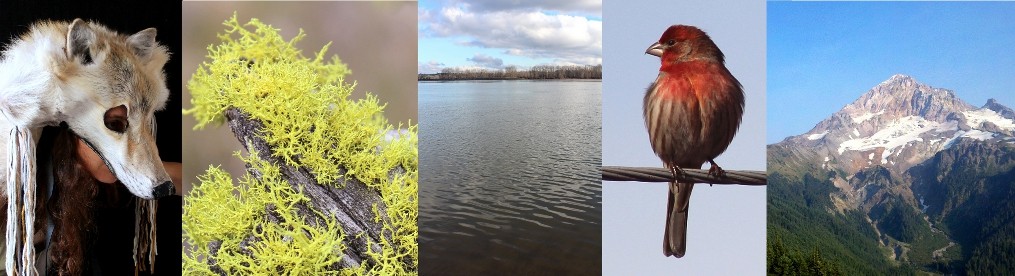
Bioregionalism and the Genius Locii

I haven’t been posting much here lately; I’ve pretty much resigned myself to the fact that graduate school is going to eat my life as long as I’m here, and I’m going to have to do most of my ritual work on breaks and during the lighter summer semester. I could handle it better when I was working forty hours a week, come to think of it. My once consolation is that the grad work, and the internal psychological development I’ve been doing as one result of it, are also an important part of my development of therioshamanism, so it’s not as though I’m not getting anything done. I miss regular journeying, and I’ll be glad when the semester’s done at the end of the month.

One of the valuable things I have been getting out of grad school has been the ecopsychology classes. This semester I’ve been taking the ecotherapy course; this is the second of two weekend-long intensives for it. Ecotherapy, in very brief, is utilizing the natural environment in therapeutic practice. This can include anything from having natural objects in one’s office, to wilderness therapy outings that last days or even a couple of weeks. Like ecopsychology, it’s not a linear, strictly defined set of techniques, but rather an integrative approach that can be applied to any formal school of psychological thought and practice.

One of the concepts we touched on today was that of bioregionalism. Normally Americans describe their location in terms of human phenomena–streets, addresses, buildings, and other such landmarks. I would describe my location as Portland, in the state of Oregon, in the Pacific Northwest region of the United States. Bioregionalism, however, orients a person according to natural phenomena, both very local and larger ecosystems. So I would therefore describe myself as living in the Johnson Creek watershed, which is a part of the Lower Columbia River Estuary, which is part of the larger Cascadia bioregion composed of the temperate rainforests of the west coast.

This is a very different way of approaching one’s location, but it’s also exceptionally telling when thinking about the way we perceive the world around us and place our priorities. We are exceptionally anthropocentric in every portion of our cognition, emotions, and descriptions thereof; using the metaphorical imagery of other animals, for example, is usually about as far from that as most people get.

And yet ecopsychology calls us to not only consider the environment we are in (human and otherwise)–but it also calls us to identify and embrace our ecological self. According to Winter and Koger:

“We experience our ecological self when we feel the connection between our self and other people, other life forms, ecosystems, or the planet. We experience it when we sense a deep resonance with other species and a quality of belonging and connection to the larger ecological whole…the ecological self leads to environmentally appropriate behaviors, not out of a sense of self-sacrifice or self-denial, but out of a sense of love and common identity”. (1)

What does this sound very much like? Animism. Even if we don’t look at spirits as literal entities, a more metaphorical animism still provides a great deal of meaning to an ecosystem that we too often just see as the backdrop for the grand plans of humanity. It could be argued, of course, that this sort of modern storytelling and mythmaking isn’t even necessary to be able to appreciate the beauties and amazing phenomena of the natural sciences–and I would agree. Yet there is also value in this meaning-making process.

Bioregionalism gives more meaning to the natural phenomena that surround us. It takes the focus off manmade objects, where it has been almost exclusively for quite some time, and causes us to stop and think about that where that focus has been–and what we’ve been missing out on. We need that so much in this culture; we are so disconnected as a people from the cycles that we rely on. Not everything postindustrial is evil and wrong, mind you–but we do so much completely out of touch with what we’re affecting by our actions. Bioregionalism is just one of many ways to find reconnection, and as Muir said, “When we try to pick out anything by itself, we find it hitched to everything else in the Universe”. Finding one connection invariably leads to another, and another, and we only cease finding connections when we stop looking–or caring. The bioregion is a series of connections that reminds us that streets and addresses are only one of many forms of connection.

This, the bioregion, is the genius locii, the Spirit of Place. This is the Land that I refer to. Not a singular spirit, of course, but one for each place, many overlapping and enfolding and not as linear as some might like. Like my home range, for example. There is the spirit of my garden, and all the individual beings in it. Then there are the wetlands that my yard drains into. And then, from the wetlands, we go right into Johnson Creek itself. These are all their own entities, and yet part of larger watersheds and waterways–and that’s not even looking at geology, or air currents, or, for that matter, the spirit of the city and neighborhood.

This approach to bioregionalism, in which psychology and ecology and spirituality all combine in varying manners, is just one of the reasons why I am incorporating a career in therapy in general, and ecopsychology/ecotherapy in specific, into my shamanic practice. As I have mentioned before, I see therioshamanism as an attempt–albeit still in its relative infancy–to create a shamanism for the culture I am a part of. In order to effectively incorporate the role and functions of “shamanism” as a broad, general concept into this culture, it is necessary to work within the parameters and language (not just English, mind you) of this culture. Psychology is something that, although it is not fully understood by everyone in my community and culture, is still recognized as a way of healing and of discourse and of creating connections and meaning. Granted, these are more abstract concepts than, say, journeying to speak to the spirits–but most people in my culture wouldn’t fully accept animism in its raw form.

So I choose to not only work with literal animism, but also with metaphorical animism, in part through ecopsychology and related disciplines. One thing I am learning as a future therapist who will be incorporating several styles of therapy in my practice is that a diverse toolkit is a great benefit. Along with such things as client-centered, Gestalt and narrative therapies, I can also have ecopsychology and ecotherapy, and I can even have some elements of my shamanic practice on the occasion I get a client open to such things. But despite the means, the end goal is still the same–to promote better connections between humans and community, humans and spirits/nature, and humans and the self.

1. Winter, Deborah Du Nann and Koger, Susan M. (2004). The Psychology of Environmental Problems, p. 193

A Brief Response to a Few Replies…

…on my previous post. I’ll have more specific replies later, but here’s a thought.

I had to think about it a bit, the whole “softening up” thing. It’s not that I’m going to entirely stop criticizing anything I see as potentially off. I’m definitely still going to call out people who claim their practices are what they aren’t. And I’m still going to be clear about why I, personally, will not adopt certain things, such as the bulk of core shamanism, or the more severe practices at the other end of the spectrum that simply don’t fit my worldview, and suggest to others that they take these things into consideration for their own opinions.

However, I’m not going to go so far as to invalidate all the experiences of anyone whose practices significantly differ from mine. I can’t say for sure that if someone encounters relatively safe journeying conditions that their experiences are less valid; nor will I invalidate my own experiences simply because they aren’t as harsh as others’ (or, for that matter, assume that those other folks are “going too far”). I’ve been more critical of core shamanism than others, but I’ve had my personal misgivings with conceptions of deities and spirits that in essence say that we must give in to their every demand as a way to placate them because that’s the way it’s supposedly done genuinely. Either way, softer or harder than what I do, I’m looking at things from a more practical viewpoint, and less automatically critical.

So that’s a bit of a clarification. I’m not accepting things without consideration, but I am going to say that beyond a certain point my authority to criticize only goes so far because of subjectivity and the inability to climb into someone else’s head. I think a better criterion would be “Does it work?”. There’s also the argument over semantics and who’s a “real shaman”, but for the practices themselves, I’m going to be less liable to dismiss something because it involves things I personally disagree with.