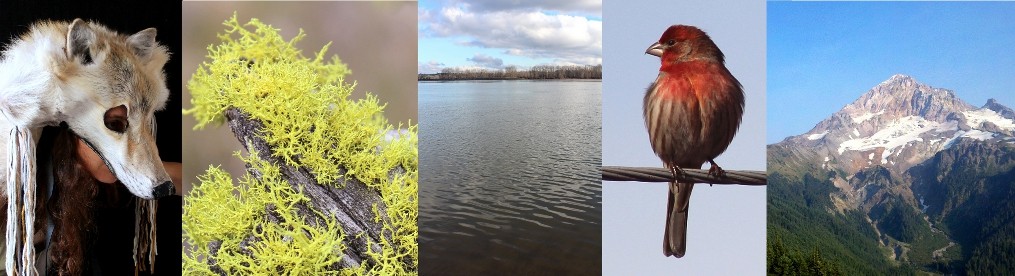
All Hail the Scavengers!

First off, before I get into the main topic of this post, I just wanted to give a brief squee of joy: I am not the only person to actively connect animism with bioregionalism! I got an appropriate comment on Bioregionalism and the Genius Locii with the above link, and having looked over the blog, I found it full of lots of good brain-foods (as well as some good ideas for further getting to know the bioregion I’ve chosen as my long-term home). Highly recommended.

So. Scavengers. A friend of mine over on Livejournal had remarked a few days ago that despite the importance vultures have had in various paleopagan religions and cultures, most notably Egyptian, neopagans really have a tendency to either ignore scavengers, or romanticize them as not-scavengers (think ravens as spirit guides–more on that in a bit). That really says a lot about the cultures that formed neopaganism; my experience is primarily with American neopaganism, so I’ll speak mainly to that.

In this culture, everything’s hygienic. Houses. Hospitals. Food production. Even the body-fluid-messy acts of sex and sexuality are presented as “glowing”. Because we are so far removed from our own bodily effluvia and that of other animals, we have the luxury of conveniently forgetting they’re there. So scavengers, animals that eat already-dead stuff that smells to high heaven, aren’t exactly the sexiest critters in the neopagan-totemic world. Well, okay–Raven’s pretty popular. But Raven’s also presented as intelligent, and with glossy black feathers, and associated with cool deities like the Morrigan. However, nobody wants to talk about the fact that ravens eat dead stuff–except for a few people who joke about ravens eating eyeballs. OTOH, ravens eating putrid, half-decayed intestines? Not so awesome. (Mmmm. I could go for some sausages right about now…)

(And let’s not get into glossy black feathers full of mites. Insects = NOT COOL according to a lot of modern totemists. Especially if they aren’t dragonflies or butterflies or other pretty bugs. And beyond that–tapeworms. Totemic tapeworms. Really.)

Ahem. I digress. But you get my point.

So yes. Nobody wants to play with the scavengers in the stinky dead stuff. Only a particular sense of humor would find this comic funny. (I laugh every time I read it–and the rest of the artist’s stuff is pretty good, if mostly more sanitary. /excuse for another parenthetical statement) Not surprising when you consider most people who eat meat have never killed or seen killed the animal they’re about to eat (except maybe crabs and lobsters, but those aren’t cute and furry and don’t count). And most of us here in the U.S. will never have to deal with what your average emergency room employee deals with, or clean up dead bodies–or, hell, see those bodies as anything other than the makeup-bedecked corpses in shiny coffins at funerals.

Lots of people don’t like human scavengers, either–again because we’re so removed from the processes involved with our basic needs. There’s a certain sense of entitlement on the part of some people in this culture. It’s the idea that because we can have access to food all the time, as well as medical care and utilities and other such things, that we’re not only allowed but encouraged to take them for granted. I see this every single time I see people leave a restaurant without taking substantial amounts of perfectly good leftovers home with them, instead leaving them to be thrown away (or, if you’re in Portland, at least they’ve a good chance of being composted). I saw it the time I was walking down a sidewalk behind a guy who was sorting out all the pennies in his pocket change and simply dropping them on the ground. I see it when people throw out perfectly good furniture and household items on trash day, instead of Freecycling it or having a local nonprofit thrift store come pick it up. Waste is a way of life here, because we think that we can get away with it.

So the dumpster divers and other people who take pains to salvage what others discard are seen as “strange” or “desperate”. I know of people who think that never buying anything used is a sign of success, and anyone who does otherwise is beneath them. Look at the trend of where our household appliances are going. Don’t worry about getting things repaired–just get a new one from the store! Anything else is seen as taking up too much time, and who’d be crazy enough to get a toaster repaired when Wal-Mart has a sale on them for ten bucks?

The thing is though…we do this because we do take what we have for granted. We assume that we’re always going to have access to food, water, shelter, safety, utilities, and other such things. We figure that the only way we can’t get a television at Best Buy is because they just had a huge clearance and everyone else beat us to it until they get the next shipment in–and even then, it was only on the one really fantastic new model that just came out. They still have televisions, but who wants those? Yet let there be one tiny hint of a shortage, and people panic. Remember what happened last year when it was reported that there was a shortage on rice? The stores couldn’t keep it in stock, partly because shoppers panicked and snapped up as much as they could. But we don’t actually have to worry about that happening for real, right?

Yet the scavengers say otherwise. They remind us of the uncomfortable truth that security is an illusion. They’re not afraid of that, though. They’re realistic. They make the most of the resources that are available. Most Americans are unfamiliar with just how precarious our situation is. Our economy is based on resources whose prices are artificially lowered thanks to government subsidies. Those resources drive our utilities that we take for granted, the things we assume will always be there that allow us to have the sort of lifestyle we have.

“How quickly you forget your history”, the scavengers say. I’ve heard people refer to the current recession as being as bad if not worse than the Great Depression. I don’t buy it. Yes, it sucks right now; I won’t deny that. But have you ever heard of a Hoover Hog? It’s a rabbit, a common, ordinary rabbit. During the Depression, numerous people, particularly in the southwest, ate rabbits because there was nothing else available. At least now we have the cheap hot dogs and burritos at the convenience store to fall back on. And if all else fails, there’s always ramen, staple food of poor college students everywhere!

And only a couple of generations ago, during WWII, we had rationing and Victory Gardens. Do you know how people would respond today if they had to ration? We’re still fighting multiple wars, and yet life goes on for most people because we don’t have any immediate reminders of the fact that there are hardships. There are still soldiers (and civilians) dying where these wars are happening–over 4,330 military personnel just in Iraq since the war began. And yet I guarantee that if rationing were imposed, you’d have more people out on the
street protesting that than were out with me and mine when the war first started. Priorities, what?

Scavengers are that reminder that we’re all gonna die. They’re the reminder that no matter how pretty a picture you paint of your life, nothing’s permanent. And it could all fall to pieces before you’re done with it. But, again, the scavengers aren’t afraid. They know what to do. They’re realistic, and prepared. And that’s their message that we so often ignore with our rose-colored glasses.

And the old pagans knew this, too. They didn’t have that luxury of being so removed from death and other unpleasantness. That’s why they didn’t just romanticize their view of nature to the point where it wasn’t real to them any more. We, on the other hand, have so removed ourselves from the reality of the way things are that we would prefer an imaginary stagnancy to the vibrant (and yes, sometimes subjectively unpleasant) variety and vigor of vida, vita, la vie!

Does this mean we should all walk around in sackcloth and ashes and bemoan our fates? Of course not. But what it does mean is (I can’t believe I’m about to use this cliched phrase) a shift in consciousness. We. Are. Privileged. The very fact that we can take basic things for granted that many, many people in other cultures–and yes, in America, too–have to scrabble for on a daily basis means that we have a metric fuckton of privilege. We shouldn’t let that be a reason to berate ourselves or, conversely, artificially inflate our importance. What we need to be doing is actively appreciating the technological and social advances that have made everything from indoor plumbing to antibiotics possible. It’s not just the basic actions we take–it’s the awareness guiding those actions that we need to start with. Many of the problems the human world faces today are due to taking things for granted and acting on some really shaky assumptions, as well as a big honking helping of deeeeeee-nial!

And we need to quit hating on the scavengers, human and otherwise. We need to stop glossing over the fact that yeah, Raven might be a trickster to some people, and a totem of a war goddess to others, and somehow a nocturnal (?) graveyard denizen to yet another, ah, demographic–but that Raven is also the totem over a species of birds that eat stinky dead corpses full of pus and other fluids, and that’s every bit as important as the mythos, if not moreso. Because whether we like it or not, they have important things to teach those of us who have our hands slapped firmly over our ears while we sing “La, la, la, la, I CAN’T HEAR YOUUUUU!!!!”

And if we can’t handle the very basic knowledge that death happens, decay happens, change happens, then how the hell are we going to be able to get anything out of the more esoteric lessons that the facilitators of those changes have to offer us in being more realistic and prepared for the things life may throw at us that we may not like, but need to deal with effectively anyway?

(Oh, and for the record, all you people with cool, impressive carnivorous totems like Wolf and Lion? Guess what? Your totems’ physical children eat carrion, too. Why go through the trouble and potential danger of injury of wandering across the land looking for animals to eat that may very well fight back, when hey–there’s a dead critter right there, ripe for the munching? It’s not just the scavengers who are practical, ya know. That’s why I don’t question whether I misidentified Wolf as my primary totem just because I love scavenging of numerous sorts–wolves aren’t going to turn their nose up at easy resources, no matter the origin.)

Okay, I’ll Play Along…

The pagan blogosphere seems to have latched onto this nifty declaration of International Pagan Values Blogging Month. It’s given me a good excuse to put down some thoughts that I’ve been having trouble putting into words as of late.

The biggest problem with trying to define “pagan values” is that, as others have noted both in this blogathon and before, is that “neopaganism” doesn’t describe just one religion–it describes a plethora of them. As Sannion pointed out, a lot of the time “pagan” often ends up being interpreted (not overtly, generally) as “Wicca, or Wicca-flavored”. Not surprising, since so many of us cut our teeth on books by folks like Scott Cunningham, and many pagans never really define themselves beyond “generic Wicca-flavored pagan”. From my experience in the communities I’ve participated in (both in person and online), and in going to a wide variety of festivals the past few years, “generic Wicca-flavored pagans” outnumber any other single group of pagans. This isn’t necessarily a bad thing; it just means that there’s no simple set of pagan values when you have that much variety.

The other issue is that values are ultimately subjective. Even among members of the same pagan religion, you may have a wide variety of values that individual people adhere to, whether due to the tenets of their faith, or other factors informing their everyday choices. And I do mean that last bit–values do not only have to come from religious sources, though the two may inform each other to the extent that they may seem inseparable.

One of the things I’ve been kicking around in my head as of late is the idea that we (not just pagans) create religion (and, by extension in many cases, values) out of whatever comforts us. We may not consciously realize we’re creating religion, and as most people view religions primarily in a literal sense, some may be offended by the idea that their experiences are anything other than direct contact with the Divine/spirits/other intermediaries. Still, people seem to match their religious beliefs pretty well; the structures within which they interact with the Powers That Be connect to things that give them some form of comfort and security. (And I’ll most likely write about this more later when I’ve brought together my thoughts on it more cohesively.)

I know exactly where my comfort in Nature comes from. I was a weird kid growing up. While all the other girls in my small town Catholic grade school class were playing with Barbies and putting on kiddie makeup and starting to get interested in clothes, I was grubbing around in the woods catching garter snakes. I didn’t really have friends, for the most part, and got picked on a lot. My family loved me like nobody’s business, but I think sometimes they just didn’t know what to make of me. My only sibling was significantly older than I was, so I ended up spending a lot of time alone.

Living in a small town, I was able to run around our yard, the neighbors’ yard, and the Big Hill across the street where the retirement home was. I even repeatedly sneaked off to the semi-wooded lot on the other side of the hill, even though I was supposed to. (After all, that’s where the best place to find garter snakes was!) So I spent long days in cool shade on mats of moss and grass and clover, under poplar trees and juniper bushes, watching Monarch butterflies come out of their chrysales, chasing (but never catching) cottontail rabbits. When I was indoors, I was reading voraciously, getting every book on animals from the library that I could lay hands on.

Nature was comforting to me. When people were confusing, or mean, or simply didn’t get that no, I wasn’t interested in doing things their way, I knew I could turn to the natural world and find a place where I wasn’t judged. Sure, the animals ran away when I came stomping through the woods, but they did that to every human, and even to each other to an extent. That’s just the way they were. They weren’t out with an agenda beyond day to day survival, and they didn’t single me out. And in turn, if I was quiet (and lucky) enough, I got to observe the denizens of the wild and witness their goings-on with wonder (though this was easier with plants, which tended to just stay put regardless of how much I looked at them). And yes, I did tell stories to myself about Nature; there was more to it than just what the books said. I never told anyone about these personal myths, but they sowed the seeds for meaning-making.

This continued well into my mid-teens. When my parents and I moved to a new home in the very early 1990s, there was one of the last farms to survive the sprawling of my town right behind our home, and I had a few acres of woods that weren’t immediately fenced in to explore. I grew very attached very quickly, especially because it was bigger, with a creek running through it (I’ve always been attracted to running water), and more variety in inhabitants and geography. Even as I entered into the awkwardness of junior high, I continued to find the most solace in those woods.

And then, one day…I came home on the school bus to find that my woods had been completely bulldozed to make way for a new housing subdivision. To say I was devastated, crushed, would come nowhere near describing how I felt. I honestly think that’s what touched off the depression I fought with for years afterward. I had lost my anchor, the place I went to when people simply didn’t understand. worse, I had lost a piece of my soul.

When I discovered paganism at the age of 17, a few years later, I immediately latched onto the nature-based aspects of it, especially animal magic and totemism. Neopaganism gave me a structure to try to rebuild the rapport I had had with Nature that had been so shockingly destroyed. In the few years between the destruction of “my” woods and discovering paganism, I had reacted so badly to the trauma that I distanced myself from nature as much as I could, and lost that innocent connection I’d had for so long. Even now I find myself having to fight seeing Nature in too many abstractions, trying to keep from mistaking the map for the territory. And yet, the older I get and the more of that initial connection I rebuild, the more comforted I am, and the more depth my relationship to Nature gains. Granted, I have a much healthier social life than I did when I was younger, but that hasn’t caused my comfort in Nature to cease.

So what’s the point to this long, rambly narrative? Where do values come in? First, I wanted to illustrate how our values–including those that are formed through religious experience–may very well be tightly linked to what comforts us. But second, and perhaps more importantly, I wanted to show where my own values come from. Because, as I mentioned, I can’t blog about “pagan values”. They simply can’t exist in a universal form, not even those based on the assumption that pagan = reveres Nature. While I can argue up and down, for example, that you can’t separate an Earth or Harvest deity from the actual, physical Earth, there are numerous pagans who will deny that their paganism is Nature-based, instead saying that their religion is “based on the worship of the Gods” (never mind that their gods are personifications of natural phenomena), or some other explanation. (My rant about the artificial dichotomy of “natural” vs. “not natural” will have to wait.) It’s not that there aren’t other pagans whose values resemble mine; it’s that these values cannot be universally described as “pagan values”. But I can confidently extrapolate on my own!

If you look through the posts in this blog, it’s pretty easy to see where my values are. While I may not always be capable of acting in the most harmonious ways when it comes to valuing being a part of an interconnected set of natural systems involving numerous beings on all levels of existence and evolution, my values most definitely do direct the decisions I make–even if that means keeping certain ones in mind for later when they’re more feasible. Now, I am not a philosopher; while I’ve done a little reading up on the differences between values, ethics and morals in order to prepare for this post, the differences are still kind of fuzzy for me. So here are the essentials, and I apologize if these aren’t properly explained as “values”:

–Nature is sacred. Not just in an abstracted, symbolic, archetypal way, but in its very immediate physical reality, from the rich dirt that I work composted cow manure into every year before gardening, to the Columbia River Gorge where some of my favorite wild places are, to the countless microflora in my body, living in symbiosis with me (most of the time). It is sacred not only for its meaning, but for the very fact that without it, I die.

–The above assertion is not antithetical to scientific knowledge. When I say my prayers in the morning and evening and honor the Earth, the Sky, the Sun, the Moon, and others, I am not only saying these things to anthropomorphized symbols. I am saying them to the Earth that is the basis of my life-support system, and the Sky that contains the necessary atmosphere to create climates and weather patterns. When I journey and speak with totems and other spiritual beings, I am not only speaking to spirits, but to embodiments of entire species and natural phenomena that exist in a very physical way.

–The assertion directly above this one is not antithetical to the existence of a meaning-making system composed of my personal mythology, as well as the elements of greater cultural mythologies that interweave with it. When I say my prayers, I do not only say them to the physical manifestations of natural phenomena. I am saying them to the archetypal energies that have been built up around them through countless years of human attention and belief, as well as through the strength of my own connection and the meaning-making activities I have partaken in my entire life. When I journey to the totems and others, I do not only limit my knowledge of them to natural history, but also interact with totems-as-archetypes, vastly complex symbols that resonate with my psyche on multiple levels.

I endeavor to live in such a way as to honor all the above assertions equally. However, I do this with the understanding that ideals and reality may not always mesh well, particularly in the physical realm. For instance, I would love to be able to have a greywater system, and a yarden (yes, an entire yard converted to veggies and fruit!), and a number of other things that require me to not be a renter. Unfortunately, we’re still several years off from being able to buy a house. While I know that going vegetarian is better for the environment, I simply do not thrive well without meat (and yes, I’m currently going through medical professionals to see about this, just to see what’s up).

But there are decisions I can make, and have made, that are in line with my values. I am in grad school to get a degree in counseling psychology, and my emphasis (though not exclusively) is on ecopsychology, as well as narrative therapy and other tools for aiding others in meaning-making activities (and, of course, better mental health!). While I’m not yet a subsistence gardener, I’m doing my best to learn better skills as I go along. A lot of my day-to-day purchases have environmental impact in mind; I’m a frequent shopper at Goodwill and other thrift stores, and haven’t bought anything from a mall or a Wal-mart in years. These things are as much a part of my values, and really, my spirituality as a pagan, as any rituals, journeying, and other activities I do.

Paganism, for me, is not limited to the overtly spiritual practices, and neither are the values I associate with my paganism. If I do not do my best to integrate what I believe into what I do to the extent that is currently possible, then why do I believe it?

A Brief Response to a Few Replies…

…on my previous post. I’ll have more specific replies later, but here’s a thought.

I had to think about it a bit, the whole “softening up” thing. It’s not that I’m going to entirely stop criticizing anything I see as potentially off. I’m definitely still going to call out people who claim their practices are what they aren’t. And I’m still going to be clear about why I, personally, will not adopt certain things, such as the bulk of core shamanism, or the more severe practices at the other end of the spectrum that simply don’t fit my worldview, and suggest to others that they take these things into consideration for their own opinions.

However, I’m not going to go so far as to invalidate all the experiences of anyone whose practices significantly differ from mine. I can’t say for sure that if someone encounters relatively safe journeying conditions that their experiences are less valid; nor will I invalidate my own experiences simply because they aren’t as harsh as others’ (or, for that matter, assume that those other folks are “going too far”). I’ve been more critical of core shamanism than others, but I’ve had my personal misgivings with conceptions of deities and spirits that in essence say that we must give in to their every demand as a way to placate them because that’s the way it’s supposedly done genuinely. Either way, softer or harder than what I do, I’m looking at things from a more practical viewpoint, and less automatically critical.

So that’s a bit of a clarification. I’m not accepting things without consideration, but I am going to say that beyond a certain point my authority to criticize only goes so far because of subjectivity and the inability to climb into someone else’s head. I think a better criterion would be “Does it work?”. There’s also the argument over semantics and who’s a “real shaman”, but for the practices themselves, I’m going to be less liable to dismiss something because it involves things I personally disagree with.

Shamanism and Subjectivity

I think I’m just going to give up on trying in any way to prove that my spirituality/belief system/etc. has any direct validity for anyone besides me, and anyone who agrees to take part in my subjective spiritual reality. The seeds for this post took root while I was detangling the thoughts for the last one. I started thinking about the subjectivity of nonindigenous shamanic experience. On the one hand, you have core shamans and their ilk who experience shamanism as a relatively safe, defanged thing compared to traditional shamanisms. On the other, you have people who are doing their best to emulate traditional shamanisms, particularly the most dangerous parts thereof. And then I thought about my own experiences, which are somewhere in the middle.

I look at where my path diverges significantly from these two ends of the spectrum. I do experience journeying as being riskier than what a lot of core shamans describe. However, I don’t do the complete submission to the spirits that I’ve seen on the other end. I do my best to not take the spirits for granted, but I also maintain autonomy–as in D/s, I have hard limits to my vulnerability, and ways to enforce them. And that is what has worked well for me, even before I began working with shamanism. I haven’t had experiences that have deviated significantly from that balance. And the thing is, the people at each end of the spectrum could probably say the same thing for themselves, that their experiences fit within a particular style of shamanism. Additionally, they could probably all find other people and sources that corroborate with their own experiences.

Really, how can I prove any of them are wrong, that they haven’t had the very experiences they claim to have had? How can I necessarily say that my experiences with shamanism are more objectively valid when in the end I really don’t have more proof of being right than anyone else? Sure, there’s looking at the shamanisms of other cultures–but that’s other cultures. To an extent, cultural context is crucial. And if a large portion of shamanic practitioners in this culture are reporting a certain way of doing things, then I should not dismiss that simply because it doesn’t corroborate entirely with the ways other cultures have described their practices. There’s something going on there, and beyond a certain point I cannot judge the veracity of what’s happening. Maybe someone really is working with harmless spirits, and another with savage ones.

But what’s the point of trying to judge the objective reality of the experiences themselves? Sure, I can discuss the conflation of neoshamanisms with indigenous shamanisms, and explain that certain practices found in the former are in no way, shape or form a part of any of the latter. But how can I judge whether someone else’s journey was valid for them or not? And, more importantly, does it really matter whether it’s valid for me if it’s not my experience (and I’m not the client or otherwise involved)?

All I can really say for sure is that my subjective reality is real to me, and that it is necessarily filtered through my subjective perceptions. I would wager that a good part of the reason that other practitioners experience things so differently in a lot of ways is because their perceptions–if not their experiences in their entirety–are also subjective. I would also add that it’s very likely that as my expectations about the world, conscious and otherwise, shape my experiences, that it’s also likely that others’ experiences are shaped by their own conscious and unconscious expectations. If you expect that shamanism is like in anthropological accounts where it’s a highly violent, dangerous thing, then that raises the chances that your shamanic experiences are going to be violent and dangerous. Likewise, if you expect that journeying is safer than dreaming, then you’re more likely to have safer experiences.

I can clearly see where my own expectations about reality, and spirituality, and related concepts, resemble my experiences as a shaman. And I can see where my perceptions also shape these experiences. Therefore, at this point I’m going to maintain that while it’s not impossible that there’s an objective spiritual reality, I strongly believe that spirituality is heavily subjective regardless of the existence (or not) of objectivity. I can see the physical world around me, the trees, the stones, the animals, and can agree on that objective reality for the most part with other people–but the animistic
end of things, that’s another story entirely.

And I’m okay with that. I’m tired of the endless wrangling over who’s right, regardless of what spiritual reality is being argued over. I’d rather focus on developing my subjective spiritual reality, which I know is real for me, and which is effective for me. I’m not sure I really care how real it is for anyone beyond those who have agreed to take part in it, whether to learn more about it, or even adapt it to their own practices. Beyond those functions and practicalities, is it really all that important that I try to prove that the journeys and so forth that I describe here actually happened beyond the scope of my own perception? And is it important for me to measure my shamanic practice up against those of others for experiential (rather than historical or other factual) veracity? If I didn’t have the exact same sickness, or have the spirits treat me the same way, does it really matter?

I look at all the time people spend trying to get external validation. And I’m really thinking it’s a waste of time, at least for me. The need to prove an objective spiritual reality has been a weight I’ve been carrying too long. So–at this point, my running theory is that spiritual realities are largely subjective, and any objectivity is hidden to some extent by subjective perceptions. The quest for objectivity, in addition, is overrated. (YMMV, of course.)

Coming Up For Air

I haven’t journeyed since late January (in my defense, February is a short month!). But I did manage it anyway, despite the crazy schedule (more on that in a bit). When I arrived at my starting point, Bear (I primarily work with Alaskan Brown Bear, to be specific) was waiting for me intently. As soon as I arrived and we exchanged greetings, s/he led me off down the mountainside. S/he had me stop at a particular tree to rest, and told me to wait. Then she introduced me to (Sockeye) Salmon, who could show me the way to the Lower World, and how to get there when I needed to. I was surprised to find myself there, especially because there hadn’t been much in the way of a draw towards there, but I found myself suddenly plunged into the belly of the River Dragon of the Columbia, as it were, with Salmon taking me to the opening to the Lower World. I had to make myself tiny to get in–I could see the parasitic worms on Salmon’s side–but I made it through.

When I got there, (Grey) Wolf was waiting, just as anxiously as Bear had been. S/he took me to a place s/he had prepared, up on a ledge. There were blankets there on the rock. Looking around, I saw that the Lower World (what I could see of it) looked very similar to this one, though Wolf said that part of that was because I was on the boundary between the two, and it got weirder the deeper in you go.

We talked a good bit about my current state, how I’ve been run ragged by school and other things, and how since the move to the new place back in December I’ve been feeling disconnected from the Land. I haven’t really made the time to connect beyond the streets here, even though there’s a wetland a block over. Things keep seeming to come up. It hasn’t helped, either, that it’s been too cold to go out hiking; many of my favorite places are inaccessible this time of year. And it being winter, I simply don’t go outside as much as I do in warmer months.

I’ll talk more about the specifics of the previous paragraph in a moment; needless to say, Wolf’s advice to me was to spend time reconnecting to the Land, and engaging in my spirituality more. It’s good advice–the disconnection hasn’t been helping the situation. I also received offers for help from a couple of other totems regarding specific areas where I need some help, including one totem I’ve never been approached by before.

So–the problems at hand. There are a number of ways in which grad school has changed my life. One of the more obvious is the manner in which it manages to consume my time like the personification of Famine. While the commitments tend to ebb and flow over the course of the semester, there are weeks where all my free time belongs to assignments and readings and essays. This is mainly fixed by careful time management, and sometimes giving up fun things temporarily, but I also need to deal with my own stress when perceiving myself as more crunched for time than I actually am.

However, another effect of graduate school is that it’s caused me to become much more deeply immersed in my psyche. I’ve always been very self-aware; I’ve spent many years digging through my own wiring and conditioning, trying to figure out what makes me tick, and doing my best to replace bad conditioning with better. In fact, a lot of the magical and spiritual practices I’ve done have been aimed at personal metamorphosis through ritual psychodrama. This has generally worked well–not perfectly every single time, but I’ve made a good deal of progress.

It’s very common for psych students to do a lot of introspection, and I’ve been finding all sorts of new tools to mess around in my own head with (as well as potentially help others with down the line). The program I am in is particularly focused on self-awareness to the ends of self-care and being a better therapist, and so a lot of the classes deliberately challenge us to know ourselves better and more fully. Combining this with the fact that I’ve already done a lot of internal work, the result is that I’ve been spending a lot more time than usual processing things, and digging deeper into my own head. As I’ve already gotten rid of a good deal of the surface issues, I’ve been frequently hitting a lot of deeper, root issues, things that are a lot more painful–and a lot more firmly entrenched.

No, this hasn’t been easy. I’m pretty independent, and I’ve done my best to self-regulate, but I’m taking the opportunity to avail myself of the university’s free counseling services–at least once they have an opening for me. Until that point I’ve been utilizing a lot of self-care techniques, and relying on a few friends who are willing to help me work through some of the tougher moments. All of this is coming to a good result, but it’s been a challenge.

This all makes me think about the motif of the shaman’s sickness in conjunction with the cultural context I’m coming from. I’ve had a lot of cause to think about my cultural context–my social location, as it were–as I’ve been taking my Counseling Diverse Populations class, which has a very strongly emic perspective on working with clients from cultures and perspectives other than your own. For the first time, for example, I’ve been called on to actually think about what it means to be white, something I’ve had the privilege of not having had to think about before. It’s definitely made me think more about the concept of mainstream/dominant American culture, and how there are even more alternatives to it than I had originally conceived of. And I’ve been thinking more about shamanism within that cultural context.

I still maintain that “psychologist” is one of the roles that most closely mirrors that of the shaman in my culture, even though my understanding of my culture has changed. And I look at the sometimes agonizing experience of digging deeper and deeper into my psyche, into the Places That Hurt, and I wonder if that is a parallel to the shaman’s sickness found in some shamanisms (again, with the reminder that “shaman” in this instance is the borrowed-by-anthropologists version, not only the original Evenk usage of the term). I don’t have any major, disabling physical diseases; the few relatively minor chronic issues I have are easy to maintain. However, I can see where it took me years to overcome depression. And while I’m not sure a therapist would classify me as anything more than “stressed–please refer to graduate school for causes” at this point, some of the hardest moments in my life have been in the duration of working through the issues I’ve been dredging up as of late. Does it count as a sickness if it isn’t a long-term or permanent thing?

Of course, that also makes me wonder if, in a culture where physical illnesses are generally easily treatable (though a lot depends on insurance, etc.–that’s a whole political rant there), the shaman’s sickness isn’t necessarily a physical thing. And many cases of sickness were temporary, though severe. We know a lot less about the treatment of the psyche, in a lot of ways, than we do about the treatment of the body–especially if we’re trying to not just rely on pharmaceuticals to “maintain” an illness. So the psyche is more of a cultural vulnerable spot than the body in a lot of ways. Would it make sense for the challenges to come at that level more frequently in this culture, then?

I do know that what I’m going through is most certainly making me better prepared for my roles both as a therapist and as a shaman. In some indigenous cultures, if a shaman suffered from (and survived) a particular illness, s/he was seen as an expert in curing that illness. Does the same thing hold true for having survived repeated excursions into the depths of the self, with the result being a stronger, healthier person overall?

I won’t play the dogma card and try to say that this absolutely must be the experience of a “true shaman” in this culture. But I believe that shamanisms adhere to the contours of the cultures they are a part of; the general themes and purposes may be the same, but I’m not sure I believe that a practitioner in the urban United States has to have the exact same experiences as a genuine Evenk shaman. My thought is that it’s up to us to create our own relationships with the spirits (albeit with a more realistic perspective on what nature and spirits are); looking to other cultures helps to an extent, but beyond that we need to remember where we are, and who we are working with.

I’ve said this before, but it bears repeating. I am not an indigenous anything. I may be of European genetic makeup (as far as I know, anyway), but I am not European culturally. I am a white American, generally middle class of some sort, university-educated, geeky, neopagan, an urban dweller, and so forth. Ultimately, that is the cultural context I am coming from, and that is what needs to most inform my practice; even if my clients as both a therapist and a shaman end up being from different social locations, I need to have a firm understanding of where I am, so I can better orient myself to them. And the same thing goes for the spirits; the relationships that I have with them are largely informed by the people I come from, and solving the problems that result from a culture largely detached from nature.

Shamanism and Psychology

This is something I originally wrote up in a locked post on my Livejournal. I figured since it has some related ideas, I’d share it as well. Enjoy!

**************

I’ve noticed that since I started grad school, that (not surprisingly) I’m leaning more towards psychological explanations for spiritual things, though these have always been important to some extent. I haven’t entirely abandoned the concept of a relatively objective, autonomous spiritual reality of some sort. I’ve been down the road of entirely and exclusively embracing the psychological model of magic, and found it to be emotionally and spiritually unfulfilling. Additionally, there have been experiences I’ve had in my path that have given me cause to believe that it’s not just in my head, that to an extent I’m interacting with something other than myself, but interacting in a subjective manner.

I am less likely to surmise about the reality of spirituality outside of my own experiences through the lens of my subjective perception, however. There are certain things that are pet peeves, admittedly, like Michael Harner claiming that journeying is safer than dreaming (which, if you’ve ever read Eliade or any other accounts of traditional shamanism, is bullshit). But even so, I also factor in that my own experiences with journeying are filtered through my own mind, and so have to be subjective to some extent out of sheer necessity.

Even with the Harner thing, though, there’s a certain amount of leverage that psychology provides my basic argument against his claims. Let’s limit, for the moment, my shamanism to my psyche, regardless of what may or may not be going on outside my brain. In dreaming, most people are simply processing the events of the day. We may have nightmares, but most people are not trauma survivors dealing with debilitating flashbacks. For the majority of people, ordinary dreaming is a relatively benign, if occasionally weird or unsettling, experience. We can say that it’s “safe” for the most part.

Journeying, however, is something entirely different. Psychologically speaking, a shaman is a person who alters hir state of consciousness (usually, though not always, deliberately), often through potentially hazardous methods–entheogens (which, at the wrong dosage, may be very harmful), dancing and other physical exertion, deliberate mortification of the flesh, etc. Apart from the physical effects this may have, if you assume journeyers travel inwardly instead of outwardly, you are talking about someone who is exploring the depths of hir own psyche. The archetypes and motifs experienced along the way are the brain’s method of structuring the psyche.

In many indigenous societies, shamans are trained by their predecessors. This includes methods of not going batshit insane (and yes, these cultures generally know the difference between a shaman/holy person/medicine person/etc., and someone who is simply mentally ill to the point of impaired functioning). However, most core shamans don’t have a psychological background of any sort, and core shamanism such as it is is a woeful substitute, comparatively speaking. While this doesn’t render all core shamans ineffective, it does mean that often the seriousness and potential danger of journeying is underestimated.

Part of why I went into psychology as a career is to be a better shamanic practitioner. It’s also because “therapist” is one of the roles in this culture that approximates that of the shaman in indigenous cultures. However, honestly, I went into psychology for the significant reason of my own mental health. Specifically as a (neo)shaman, I know that I’m doing a lot of messing around in my head, regardless of whether that’s all there really is, or whether it’s a bridge into another reality external of my mind. Definitely not as safe as dreaming is for me.

I don’t see psychology as being diametrically opposed to spirituality; on the contrary, I see the latter as necessarily including a healthy dose of the former when it’s at its best. And, because I don’t agree with the claims that core shamanism is “culturally neutral”*, I believe that I need to have a paradigm for working as a shaman in this culture, the one I am a part of–and core shamanism doesn’t cut it. Yes, I know there are core shamans who are also psychological practitioners. That doesn’t mean I agree with their approach to shamanic practice.

* There’s no such thing as “culturally neutral”. The people who espouse “cultural neutrality” are generally middle class, often but not always academically trained, white people of privilege who deny that they have a culture because they’re blind to the fact that they are the dominant culture. Core shamanism is, at its root, an academic white guy interpretation of shamanism.

Shamanism and the Modern Attitude Towards Nature

I was talking over lunch with someone about what shamanism actually is, and specifically what I think it is. My initial explanation involved contrasting indigeneous shamanisms and modern neoshamanisms, especially core shamanism. My general working definition of a shaman is someone who is an intermediary between humanity, and the spirit world/nature. I equate the spirit world with nature, because I am an animist. However, I also perceive the dichotomy between the spirit world/nature, and humanity, as artificially created and perceived rather than actual. (I will sometimes refer to spirits and nature separately for the purposes of this essay.)

In indigenous cultures, particularly prior to industrialization, life was/is a lot tougher, with shorter lifespans. While there was/is certainly natural medicine, herbal remedies, etc., there’s still a higher chance when you’re in a remote area of dying if, say, you get a cut that gets infected. Nature wasn’t/isn’t just something pretty that you look at out a window; it’s your life. It’s what you rely on. And you’re aware of that. This does not equate a romanticized view of nature as being all-loving and awe-inspiring. What it does entail is a more realistic perspective, and a rougher view of animism–spirits (nature) are to be placated because they can fuck you up. Spirits don’t exist just to help us happy little humans progress on our spiritual path. While indigenous spiritualities may involve structures for individual growth and change, they aren’t anywhere near the same as a lot of the crap you get out of New Age conventions and so forth.

What I’m trying to get at is that nature was never traditionally seen as nice and pretty to the exclusion of also being harsh and dangerous. This is completely a modern creation. And it is possible only because we postindustrial humans have convinced ourselves that we are separate from nature–and therefore we believe that nature’s nature has changed accordingly. Nature hasn’t changed, though. We’ve beaten it back to an extent with our technologies. However, if you put most modern citizens of the United States in the middle of a forest without a cell phone or other form of getting help, they’ll die. Natural disasters such as hurricanes, wildfires, and so forth are a reminder that we can still be very vulnerable to nature. All it takes is a dam breaking, a wall not holding, a lightning strike (or human error) in an area where brush has been allowed to build up, and you have something out of our control that we thought we had handled. Which is part of why these occurrences are so traumatic for the people they happen to–not just because bad things have happened, but because bad things have happened that we’ve convinced ourselves aren’t really a danger any more. Our illusion is safety has been shattered, rudely and violently. While I will agree that we’ve managed to insulate ourselves from certain effects to the point where we have longer lifespans and better overall quality of life (at least some of us, anyway), our place is pretty damned precarious.

And it’s the same way with spirits. I don’t agree with the core shamans who say that journeying is safer than dreaming, any more than I agree with people who think that nature can never hurt us because we have cities. The spirits haven’t changed much, just as nature in and of itself hasn’t changed. What has changed has been our attitudes towards them. Look at most books on totemism, or neoshamanism, or spirit work in general, and you get the impression that anybody can work with these beings with no problem, and that they exist to help us along our spiritual journeys–or at least are uniformly willing to do so because we are special little snowflakes. Yet when people read Eliade, or Vitebsky, or any other anthopological recording of traditional shamanisms, what gets glossed over are the dangers inherent in journeying, and the fact that in many traditions the spirits aren’t automatically your best friend.

In this culture, spirits and nature are seen in highly romanticized, “safe” manners, because we have fooled ourselves into thinking we can do so–just as we have fooled ourselves into thinking we no longer need to worry about nature, and are no longer part of natural cycles. Yet part of the reason I am being so damned cautious when starting out in my journeywork is because the shamanic practitioners I respect the most very often report that the deeper your experience journeying is, the more risk there is. In the same way, the more immersed we get in nature as it really is, the more risks there are. You’re less safe in the mountains than you are in a well-manicured lawn–but you’re also getting a diluted experienced of nature.

In the same way, I would argue that shamanic practitioners who “play it safe” aren’t getting nearly as much depth of experience as they could. While I’m still a relative neophyte specifically to shamanism, I have had years of experience with working with totems and other spirits in multiple spiritual and magical paradigms. And I know from that experience that the deeper you go, the harder and more potentially dangerous it is. The spirits that are working with me in therioshamanism are deliberately going easy on me for the time being, but it won’t always be that way.

So I have to wonder, when people talk about how loving and good and nice the spirits are, and how lovely and romantic nature is, just how deeply they’re opening themselves up to those phenomena. When core shamans talk about how safe journeying is, are they really getting that deeply into the Otherworld, to the point where they’re able to significantly detach from their own expectations? When people talk about how wonderful nature is, are they going out into places where they could ostensibly die–or at least being aware of them?

This is not to say that every “real” shamanic experience must automatically be a “KILLYOUANDEATYOU!” one. But we as modern shamanic practitioners in nonindigenous cultures need to be damned well aware that these things can and do happen, including during journeying. It is NOT safer than dreaming. It is NOT the same as guided meditation. And the fact that people, even in hospitals, and even spiritually “advanced” people, die from bacterial and viral infections, shows that nature surely isn’t always nice and loving to us special humans. I don’t think we need to resort to doing nothing but placation and DOOM. However, some healthy respect to balance out the “the spirits love us and just want to help us!” attitude would be a good balance.

You Mean I Have To Give a Reason?

I’ve started journeying again since the year turned over. Only once, but it was an important one.

I showed up at my starting place, in the form of a wolf per usual, and was met by the Animal Father. He carried me inside himself up the mountain to his home (no, it wasn’t squishy and I wasn’t making elbow room amid spiritual internal organs or whatnot–more like floating/flying up the trail, but feeling surrounding by the energy I associate with him). Then he set me down on the ground, and we began to talk about why I hadn’t journeyed in four months–or, rather, he began snarling at me about it. In fact, he ended up turning into a significantly larger wolf, bared fangs and all. This served primarily to put me on the defensive, rather than listening to what he had to say.

So he ended up turning into a mouse instead, which relaxed me quite a bit. We discussed the need for me to be journeying much more often–short version is, no more four month absences. This being the first week of school, I didn’t do the best job of increasing the amount of journeying I do, but now that I have a better idea of what my time commitments and schedule will be like, I have a better idea of where I can fit it in.

After this, he asked me how my progress on getting to the Upper world was, since I’d been trying to figure out that conundrum. I told him I was still stuck, and he suggested talking to the resident Owl, one of the totems specific to the area I start my journeys in. So he called hir to show up, and we were joined by Great Grey Owl (totems, for me, are species-specific). S/he and I had a conversation about the Upper world, and why I was having trouble accessing it.

The main thing s/he asked me, and which I puzzled over afterwards, was “Why do you need to get up there, anyway?” And I honestly couldn’t give hir a good answer beyond “To find information”. Owl told me to come back when I had a better answer for hir, and flew away. For my part, I ran back down the mountain with this question burning in my mind. Scrub Jay (the totem this time, not just a scrub jay spirit) and Red Fox both showed up. They offered their help in navigating this world, and Scrub Jay additionally told me s/he could help with the Upper World when the time came. I noted this, thanked them for the offer, and ended up needing to head back home.

For a few days, I couldn’t really come up with a decent answer for Owl’s question. Then one day, as I was on a walk, it hit me–why did I need to get to the Upper World, anyway? I didn’t have a specific reason, a particular piece of information to seek out. The only reason I could think of was “Because it’s part of what shamans are supposed to do–right?” Same thing with the Lower World. And here we get to one of the downsides to not being a part of an established shamanic paradigm–there’s no one to explain why, specifically, I might need to go to one or the other, or neither for that matter. I could read books, but even there the material is limited. I can talk to other practitioners, but how much of what they experience will be relevant to me?

To be sure, journeying is intensely personal, and I think there’s more subjectivity to it than a lot of practitioners want to admit. This means I can potentially look at the different worlds in the shamanisms of other cultures. But would these motifs and experiences be relevant to me, in my cultural context? And how much standardization is there, really? After all, there are other things that are “supposed” to happen in shamanism that haven’t quite matched my experiences. For example, according to most texts on neoshamanism, you’re “supposed” to climb up and down a tree to travel to the various worlds. I climb a mountain instead, one that I’ve visited frequently in waking time. And what I am practicing isn’t necessarily what other people are practicing; I am developing my relationships with the spirits from scratch, not following someone else’s template of expectations. In fact, most of the examples of neoshamanism I’ve seen have a lot of fundamental differences compared to what I’m doing.

This still left me with the problem: if I don’t know what’s in the Upper World or what to expect there, how do I know why I would want to go there? And then it hit me, as I was walking–right after I was presented with that problem, Scrub Jay and Red Fox offered me a solution: Don’t worry about the Upper World right now. Look for answers and explorations in this world first. It’s the closest, and the one I’m most familiar with. Where better to get more practice with journeying than the layer of reality that I’m most accustomed to? Not that everything will be a cakewalk, of course. But it makes a lot of sense.

I’m willing to bet that I’m not the first novice (neo)shaman to get caught up in the “Oooooh, I get to explore the Other worlds!” thing, to the point of neglecting this world. Now, I do tend to be a fairly pragmatic person. I’m the kind who will take mundane solutions before leaping into magical practice. So it’s not surprising to me, this concept of checking around the spiritual portions of this world first, before travelling further afield. I think I just got caught up in that whole “Shamans travel to the Upper and Lower worlds” concept a little too much.

Some of the Middle world stuff will no doubt be “mundane” things–like my venturing into psychology as a profession, for example, or finding other “everyday” solutions. However, I would imagine that journeying, as with various forms of divination, will help expand my perception of possible solutions (altered states of consciousness are good for that). I won’t make too many assumptions, but I think for now my journeys are going to be focusing on what Jay and Fox have to show me. They’ve offered, and I’ll follow. I should probably go to Owl and let hir know my current answer (“I actually don’t have a need to go there yet”) as well.

Look! A Post! A Long Post, Even!

I apologize for those on the LJ feed for this blog; there’s no way I can LJ-cut this post to make it shorter. Bear with me–I’m just trying to catch up after so long! Graci 🙂

I know I’ve been exceptionally quiet here (and elsewhere) lately. It’s been over a month since I posted, and over two months since I last journeyed. There’s been good reason for this. As I mentioned earlier this year, I was accepted into the counseling psychology program at a local graduate school, and am working on my Master’s degree. I don’t think I quite realized just how much of my life grad school would consume, and as my first semester progressed I found myself working harder to try to maintain equilibrium with the increasing demands on my time. It’s all been worth it, but it does mean that my active practice sort of fell to the wayside.

Fortunately, the spirits have been understanding. While grad school isn’t something that’s strictly shamanic, it does tie in with my practice on a number of levels, and so I am putting effort towards my shamanism even if it doesn’t involve drums and totems and so forth (most of the time, anyway…). In fact, I’ve been learning a lot of things that are highly applicable to my practice.

The most obvious is ecopsychology. Ecopsych involves the psychology of our relationship to the natural environment. An ecopsychologist may be concerned with the psychology associated with how people approach the environment, whether in positive or negative manners. Additionally, wilderness therapy and other practices focus on using the environment for therapeutic purposes. Ecopsychology is about as close to animism as you get in the Western mindset; it uses the language of psychology rather than religion, though there are some very strong spiritual themes within ecopsych.

I’ve been very interested in narrative therapy as well, which isn’t surprising given my background in English. Narrative therapy can refer to the use of storytelling–whether through writing, visual aids (artwork), or other creative means–to aid a client in being more open in talking about what s/he needs to work on. Additionally, the use of narratives can help a client find meaning in hir life, particularly when s/he may feel there is little connection between various events and entities that s/he encounters.

And I’ve also had some curiosity about Gestalt therapy. Some people primarily think of some of the more dramatic techniques, such as the empty chair. (I remember in high school seeing a film of a session where the client became angry enough to begin kicking the chair across the room!) “Gestalt” literally means “shape”, and like the Kanizsa triangle, Gestalt therapy demonstrates the whole of something, not just what is obviously “there”. It takes where the client is at the time and explores the context of the situation in detail–the people, places, and other influences that affect the client’s situation, as well as the manners in which the client acts upon the situation.

I’ll also admit that I found some bits of systems theory interesting. However, I’m still trying to wrap my head about Bradford Keeney’s Aesthetics of Change, which was by far my most challenging textbook this past semester. I’ll need to get a firmer grasp on it through Keeney and others before I can say for sure how much I want to incorporate it into my therapeutic practice in the future.

All of these areas of therapeutic practice focus on interconnection, something that is central to my shamanic practice. In the dominant cultural paradigm of the United States, we are encouraged to be isolated beings; we have the hyperromanticized “rugged individualist”. Yet we are part of numerous systems, whether we want to admit it or not. Everything that we do has an effect on something besides ourselves, and while many of these exchanges may seen to be insignificant, they can add up to create quite a change. (Or series of changes, really.)

Therioshamanism is much the same way. While a lot of my work focuses specifically on animals, I do not consider them to be separate from the rest of the world, and I do acknowledge the connections to everything else. Part of what I do is to act as an intermediary between the spirits and the human community. This need not always be direct things, such as journeying on behalf of another person. It can include passing along something that the spirits would like to have manifest in a way that is understandable to people I interact with. Often this happens simply through leading by example.

Take the gardening, for instance. Gardening promotes sustainable living, which eases the pressure on the environment in numerous ways–which is an effort that I’ve found is appreciated by the spirits I work with. Simply by geeking out about my garden on my personal blog, I managed to inspire a few other folks to start their own gardening projects this year. (It’s going to get worse this year–I have a yard now, and I still have room for all my containers. There shall be much growing of green vegetable-type things, and the blogging thereof!)

Of course, there’s a fine line between creating the world you want to see, and pushing an agenda on others. I learned a lot about boundaries in my ethics class this semester. While the boundaries are nowhere near as strict with something like shamanism (which isn’t regulated by any governing bodies or associations), it still gave me some good food for thought. And my primary focus as a therapist (and, for that matter, as a shaman, once I start actively working on others’ behalf) will be on aiding my client, not on making people see things my way. On the other hand, happier, healthier people are a part of the world I want to create, so hey–maybe part of my “agenda” will end up manifesting anyway!

Okay, so enough about graduate school. I’ve had a small group of students I’ve been passing along the basics of my practice to for the past couple of months. Weather, illnesses, scheduling conflicts, and other issues have given things a bit of a rocky start, but I’m pleased overall with how folks are doing. For privacy’s sake, I’m not going to talk much about the classes; needless to say, it’s a good group of folks that I look forward to working with for some time.

There are definitely challenges to trying to arrange even monthly meetings, as opposed to one-shot workshops or limited workshop series. While it’s been worth it so far with this group, I’m not 100% sure I’m going to make this sort of thing a regular occurrence. Some of it’s time issues; however, some of it’s also that so much of this stuff works best when self-directed, as it was created. I’m certainly not going to abandon my current group of students, but I may just eventually end up doing what I do best–write a book about it and let the readers take it from there.

Teaching students has been my main activity associated with therioshamanism. As I mentioned, I haven’t journeyed in a couple of months. However, now that I’m on break, I have more time for such things. Unfortunately, since Taylor and I just moved to a new place, most of my stuff is still packed up. My plan for this weekend is to try and get it unpacked; I need to be journeying again. I’ve missed it, and I have some things I need to do.

I don’t think I realized just how grounding my practice has been for me. It helps to promote deeper connections with the world around me; instead of journeying, I’ve been going for a lot of walks, and otherwise engaging in a lot of little, everyday activities that remind me of that connection. I’m going to try to reach a better balance this coming semester so that I can have more time for my practice, even if it’s not as often as I’d like. Yes, the grad school stuff works into it, but the journeying in specific is irreplacable.

One last thing, speaking of connections. Back in November, I had some tattoo work done. When we first moved to the Pacific Northwest, I got my second wolf tattoo, this one on my left arm, not long after the move:

It symbolized the beginning of my relationship to the Land here. At the time I was in Seattle, where I ended up having less of a connection than I expected. Too big, too crowded, just didn’t sit well with me. However, it got me started, and a year later we moved to Portland–a much better fit for us.

So as part of an ongoing day-to-day ritual of connection, I had more work done to my left arm:

This is partly a portrait of Multnomah Falls (I had the artist take out the bridge; the Falls themselves will be added in later). It’s one of those places that I really connected with, and it was a fitting representative of the Land out here. The work isn’t done yet; this was about two and a half hours in the chair, after which I simply couldn’t take any more, even with the topical anesthetic. So I have an appointment come May to get it finished up. (If you’re interested, by the way, Alice Kendall over at Infinity Tattoo in North Portland is the artist; I highly, highly recommend here.)

While I was getting inked, I did do some journeying (so I suppose I can’t say I haven’t done any in the past couple months–just no drum journeying). I started off at my usual starting point, and travelled all around the general area, both Portland metro and the surrounding areas. I spoke with the Land about my relationship to it, as well as the various entities–human, other animals, plants, etc.–that I could help through the things I am developing. I don’t want to go into any more detail, but needless to say it was confirmation of a number of things. It was, to say the least, an incredible rite of passage–and it won’t be done til May.

So that’s what I’ve been up to lately. I should be able to do some drum journeying in the next few days, to get back into practice.

Fried Brains and a Side of Expectations

Ugh. This grad school thing is quite possibly one of the most challenging endeavors I’ve ever taken on. I spent last Friday through Monday spending every day, all day, at school, getting my brain stuffed full of information. Not that this is horrible, of course, but other events have left me with little time to process all of it.

Saturday and Sunday were all ecopsychology. I got a LOT out of the two days, both theoretical and experiential. I’m already finding ways to weave it into my shamanic stuff as well, and in fact was able to work some of the material into my 21st Century Animism workshop at esoZone on Saturday night. I haven’t been doing much in the way of journeying and other formalities this month, since school has taken precedence. However, part of the reason I’m in grad school in the first place is to help integrate my spiritual/magical life in with the rest. The role of therapist is about the closest this culture has to a shamanic figure, and so it fits in neatly with everything else in my path. That being said, I’m not going to stop journeying entirely; however, I’m not going to kick myself too much for going a few weeks without when I’m occupied with activities that also contribute to my work with spirits. (The spirits themselves haven’t complained, either, FTR.)

As for expectations…I was thinking a couple of weeks ago about the motif of dismemberment and rebirth in shamanic practice. This is something that neoshamanisms have really latched on to; some people swear up and down that you cannot be a True Shaman (TM) unless you have gone through this experience–never mind that there are traditional shamanisms that lack this experience, or even any ordeal whatsoever.

I’ve seen this motif pop up in neoshamanic literature to the point where it’s become almost a cliche’. Often it’s used as part of guided meditations (not journeys), which are carefully scripted and there’s not a lot of room for individual experience outside of the script. I’ve even had it happen to me in things that clearly weren’t Major Initiation Rituals wherein my life was changed forever and I became a Real Live Shaman. Nor did I spend days and days recovering from the experience, and I’m guessing that most neoshamanic writers aren’t going to lead people through things that can potentially leave them insane and/or otherwise fucked up long-term.

So is this merely a watering-down of yet another traditional shamanic experience brought on by softer living? Or is it because this is one of the motifs that shows up commonly in anthropological literature about traditional shamanism, and therefore since the experts say it’s so, we come to expect it as part and parcel of any shamanic experience? Do we just expect that if we go through the right paces, say the right things, do the right rituals and read the right books, that we’ll someday find ourselves being eaten by bears, down to our bones, only to be recreated into an authentic being?

I have to wonder, too, about other patterns that neoshamans often expect to be there. Take journeying, for example. This is par for the course for Siberian and other shamanisms. However, it’s not universal. Korean shamans, for example, are more prone to channeling than flight, taking in rather than going out. And the same could be said for “sucking shamanism”, healing through the removal of illnesses by literally sucking them out of the patient’s body; or drumming; or the Upper, Middle and Lower Worlds attached by a World Tree; or shamanic sickness; and so forth.

Do we experience these things because they are objectively and near-universally shamanic? Or do we experience them because we expect to, because that’s what other people have experienced and we want to be like them? How much do we, even subconsciously, let our expectations control what we experience?

Food for thought…