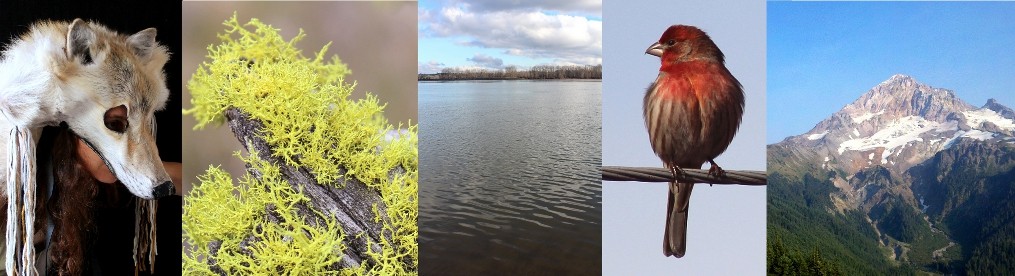
Wolves and Dogs and Therianthropy

Part of my personal mythology involves identifying myself as a wolf therian–basically, I believe that on some nonphysical level of myself, I am more wolf than human. This is something that goes wayyyyyy back to a very young age; therianthropy is just the general framework that I’ve been using to explore and explain it in the past several years. I’ve been evolving into more a personal mythology framework the past couple of years–but not completely disavowing “therianthropy” as a concept. I’m currently explaining it (in my case) as a part of the metaphorical story (that is also true–more on that in a minute) I tell about myself, rather than trying to take the (relatively) literalist perspective of “There’s something wrong with my neurobiology, and that of every other therian, that causes a fundamental miswiring related to identity/senses/etc.”, or the other popular opinion, “I was a wolf in a past life/my soul is that of a wolf”.

Let me make something very clear: I believe that metaphor and mythology are not “just made up”. They come from a complex interplay of the mind and the environment, to include what I believe to be autonomous beings. The modern Western conception of myth/metaphor is that it’s “all in the head’, with no bearing on the real world. I believe these are as much a part of the fabric of reality as physics, and other more materialistic things. I choose to believe that metaphor/myth have autonomous existences independent of the human mind, but that there is interdependence as well. This is a case of both/and instead of either/or. I make this choice A) because I have experienced things that prove to me as an individual that this is true in my subjective reality, and B) because my spiritual path functions much better when I believe this is true.

So. Back to the topic at hand.

As I said, myself-as-wolf is a significant part of my personal mythology. It explains to me a number of traits that “human” doesn’t quite fit–or, at least, that “wolf” fits better. Taylor brought up to me a few weeks ago the concept of myself-as-dog, however. I have a lot more experience working with dogs than I do with wolves, and being a somewhat domesticated critter myself, “dog” may be something to explore in more depth.

What is a dog? One way of looking at it is essentially a domesticated wolf. That’s a very simplistic explanation, but it’s a starting point. A dog is what happens when wolves interact over a long period of time with humans, becoming interdependent. If I am a wolf in human form, interacting within a human paradigm for a lifetime, wouldn’t that create some kind of change in the self-as-wolf? After all, I can’t say that I am only wolf, and while I can guess at how close I am to the experience of being wolf, it’s all conjecture in the end. No on can prove that my experiences when I am in a more wolfish mindset are anything more than my mind’s approximation of what I might assume to be “wolf” things.

Dogs, though, are more of a known quantity. Again, I can’t get inside the head of a dog, but I can observe doggish behavior more often and have a better idea of what a dog is. And from a purely analytical viewpoint, I can compare the outsider’s perspective on wolves and dogs to see where the similarities and differences are.

So working with Dog energy may be an interesting way to get a better handle on myself-as-wolf, filtered through myself-as-human. It’s not a complete parallel, since that part of myself still identifies as wolf rather than dog. However, dogs are the closest things to wolves I have access to on a regular basis. It can’t hurt to at least explore the connections.

Totemically, I may also try working with the totems of different breeds of domestic dog. I’ve always had a particular fondness for more primitive, wolfish breeds–I had German shepherds growing up, and also like malemutes, huskies, and other such breeds. I’m still undecided about what I think about wolf hybrids; I haven’t had much experience with them, and I’ve heard lots of both good and bad testimonies to their temperaments and safety. Still, I’d much rather be around a German shepherd than a Bichon Frise.

I don’t think that I’ll ever give up embracing “wolf” as the primary theme in my life, though the work with “dog” may bring some interesting perspectives. “Wolf” is too deeply ingrained in my fundamental self, and there are certain things that I know will always fit “wolf” better than “dog”. However, I’ve also been embracing the concept of feralness again, the idea of a once-wild being (or lineage of beings) that has been brought into captivity, and then released to the wild again. Your average dog is not feral, but has the capacity to be. It may be that I can find some parallel patterns in my own life as I find once again the part of myself that was born wild, was made captive, and is only now finding itself free again. Given that this part of me is very closely tied to myself-as-wolf, this work with wolf and dog and related concepts may be valuable indeed.

Current-surfing

Okay, okay–I know I’ve been damned quiet lately. I’ve actually been taking a temporary hiatus from “active” shamanic work (e.g., journeying) the past several weeks. Between returning to school, and a few other significant shakeups in my life that have required me to adjust my equilibrium, I’ve taken a break from active shamanizing. The spirits haven’t been particularly upset about this; considering it’s my belief that they’ve had their hands (paws? wings?) in on at least some of the changes, it’s not surprising that they’ve been patient while I’ve gotten my bearings. Shamanism is still on my mind, though, and once the time is right I have a whole slew of things I want to do. I was pretty active for an entire year, so a break isn’t such a bad idea anyway.

One thing I have been thinking about is my approach to magic. Many pagans think of magic as only something you do through a specific ritualized process, whether it’s a simple spell, or pulling out the stops for a high ceremonial explosion. Either way, it’s an action in which to some extent you step out of your everyday process of doing things, and do something you normally wouldn’t do–how many of us, for example, routinely stitch together little poppets of herbs, or utter intonations in various languages while walking down the street? (I fully expect some smartass answers to that particular question.)

While I do very much enjoy the process and art of ritual, I’ve found that the older I get, the less ritual work I do. However, I’m still working a good bit of magic. Let me see how I can explain this best–it’s hard to find words for something that more makes sense to me in visual images in my head, and quasi-tactile sensations. A metaphor that I use for explaining reality is currents. Basically, a movement/energy/recurring pattern of a particular, unique type. All currents weave together into what we know as reality. A decision may change the current one is in, even if only slightly.

Magic, for me, has become a process of trying to live my life with the greatest possible awareness of the current I am in, and the currents that intersect it to create possibilities. What ritual work has done is trained me to recognize these currents, to the point where I don’t need a full ritual to be able to work with them. Instead, it’s a process of “tasting” (if you’ll forgive the inaccurate sensory comparison) the currents to see which one will work best for my purposes. I then act–in my everyday life, not in a ritual format–according to what my observations tell me. It’s worked quite well–in fact, I’m often getting better results for less effort this way.

See, what I’m doing is instead of dictating how I think reality must be, regardless of what the extenuating circumstances are, I am getting a sense of the extenuating circumstances, and then acting based on the information I have. Instead of trying to bend reality to my will, I am learning to harmonize myself with it. This allows me to take into account not only my own needs, but the needs of other beings/intelligences/etc. that are potentially affected by my choices. That is the information that the currents carry; they are interconnection.

How does this come into play with shamanism? Well, for one thing, magic is not the primary focus of my practice. It’s still important, but the single most important element is the relationships that I am developing with the spirits. Apart from the everyday current-surfing I do, the ritual work that I do is dependent upon healthy relationships with the totems and other beings I work with. It’s not that I couldn’t do other forms of magic; if I wanted to, I could pull out some good old Chaos magic and work from a purely psychological perspective. However, because I have a specific aim with therioshamanism, it best behooves me to stick to the spiritual model of magic and to focus on the relationships with the spirits.

See, that’s the thing about shamanism. Core shamans have this tendency to elevate the techniques above all else–open most books on core shamanism, and you get a bunch of how-tos. You might get a few techniques for how to meet your power animal, and maybe a few other guides, but there’s precious little material on how to actually develop relationships with these beings–and why it’s so important. In my experience (such as it is), the techniques come out of the relationships with the spirits, not the other way around. If I work with a particular totem, for example, I want to get an idea of how s/he best operates. I don’t want to just come in with a bunch of preconceived notions and hope s/he’ll agree. (A well-rounded magician of any stripe has a wide array of techniques in hir arsenal to begin with, and this is one reason why–what if your one-trick pony doesn’t work?)

Current-surfing allows me to get a sense of when it would be a good idea to work ritual magic, take a journey, etc. It also helps me to keep tabs on the spirits I work with, since my relationship to them includes aligning my own current to theirs. (Hmmm–this sounds a little like an RSS feed 😉 ) I then already have a good idea of what sort of context I’ll be working ritual in, as well as what I perceive to be the best way to focus said ritual. I also find that I don’t do rituals for things that simply require me to make everyday decisions in a conscious manner.

Less effort, better results. Works for me.

Journeying vs. Guided Meditation

I know I’ve been a bit quiet lately. I have been journeying, though, primarily exploratory journeys to get used to the practice of it, and to also get an idea of the “geography” of the Otherworld, so to speak. I don’t really want to talk about a lot of the details, since this is part of the more private end of the path. However, here are a few highlights:

–I have a consistent starting point where I begin all my journeys. Physically, it’s a place I have a good connection to, though not what I expected. I’ve found myself starting here every time, so I think it’s a good sign.

–My “world tree” is actually a mountain. I’ve located the general vicinities of the entrances to the Upper and Lower worlds, but I can’t actually get to them yet (I’ve been presented with them as puzzles). None of this is at all what I expected, but it works.

–I have at least one, possibly two local-to-the-Northwest totems who want to work with me. One I was pretty sure about; the other one was a big surprise.

–I’ve encountered both totems and individual animal spirits while journeying. The totems are definitely more powerful; however, the spirits should not be ignored or dismissed easily.

Journeying is definitely not the same as guided meditation, IME. Guided meditation, from what I can tell, takes me into a “neutral zone”, where neither the spirits nor I have a distinct advantage. I have a lot more control over what happens, what my form is, what I do, etc. and it’s a lot easier to enter and exit.

Journeying, on the other hand, has turned out to be a lot more intense, and I am definitely out of my element there. I’m on the spirits’ turf, so to speak. I find that I tend to take one particular form there, and shapeshifting is much harder. Also, traveling is more difficult. Whereas with guided meditations I’ve been able to easily bypass blockages and manipulate the landscape, there’s no doing that with journeying. If someone says I’m not going past them, then there won’t be any sneaking, or flying up and past–at least at this point. Things that were feasible in guided meditations, aren’t so easy with journeying.

The other thing that I noticed is that the totems in particular are “more themselves” when I journey, especially when compared either to evocation rituals here on the physical plane of reality, or even guided meditation. I’m trying to figure out how to describe this…it’s not just that they’re bigger and stronger. It’s that when I journey, I can observe more of who and what they are, because this is where they’re native to. Conversely, I am more limited; only part of me travels, leaving my body behind. I never realized just how much of myself is wrapped up into my body. I wonder if there’s a spiritual counterpart, something that gets left behind when a totem or other spirit leaves to go to a neutral place, or to visit here through evocation/etc.?

Aside from the journeying, I’ll still be practicing songs; I still need to do songs for Bear and Small Bear. The songs and journeying are creating a nice variety for me that’s keeping me more engaged, especially as I’ve been getting busier.

A Slight Change in Plans

One thing about not being a part of a culture that has an ingrained shamanic path is that would-be shamanic practitioners don’t have much of a standard framework to go on, relatively speaking. A lot has to be done from scratch, including things like cosmology, relationships with spirits, ritual practices, and so forth. On the one hand, this can make it frustrating if you tend to worry “Am I doing this correctly? Should I maybe do it like those people over there? Or do I just read another book and keep listening to the spirits?” However, it can be advantageous in that it offers a decent amount of flexibility.

I did a drum journey to meet with the Animal Father tonight to try to confirm some murmurings I’d overheard from a few of the totems in the past several days. I first found myself clinging to the trunk of my tree, unsure whether to climb up into the branches, or down into the roots. However, I was told to simply drop off onto the grass, and start walking. I found myself in a forest that eventually led to a place here that is very special to me as well as to the Animal Father, but whose exact location is to be kept secret. I proceeded to a particular place, and made myself comfortable.

As I did, numerous animals came out of the trees. Some were native to the area, some were not. As they congregated, the Animal Father appeared as well, and approached me. He was smaller than I sometimes see him, maybe the size of a small black bear. He sat across from me and held my head in his paws and gave me a gift. Then he told me to stop drumming, and to lay back. I did, and he sat behind my head and held it in his forepaws again.

The short version of our conversation involved my work for the next several months. While I’m to continue creating songs and dances for the various skin spirits and corresponding totems I’ll be working with, I also am supposed to start doing more formal work with the totems and skin spirits who already have songs–Wolf and Small Wolf, Badger and Small Badger, Deer and Small Deer, and Coyote and Small Coyote. Additionally, I need to create songs for Bear and Small Bear as soon as possible.

Of these five, only Coyote and Small Coyote are of a species that I haven’t had much experience with. The others are ones I’m quite comfortable working with. In addition, I’ll be working with Horse, and my Small Horse will be my next drum. I’ve been pondering what sort of skin I’ll have on my full ritual drum (as opposed to the small practice drum I have right now), and last week I went to a drum circle where I had a chance to play drums of various sorts. The one that really stood out to me, both in sound quality and in spirit, was a 20″ horsehide with a cedar frame. I’ve had a relationship with Horse since I was a young teenager; it hasn’t always been a good relationship on my end, but Horse has been steadily, patiently there. Add in that Horse has historically stepped in on matters of travel, as well as crucial periods of growth, and it’s not surprising that I’d be drawn to a horsehide drum for journeying.

So, back to the journey at hand with the Animal Father. Once he said what he had to say, he went back into the woods, and the animals began to depart as well. I did stop Badger, though, to ask hir if she would be willing to work with me in a formal ritual. S/he asked me, “What will you offer me?” I replied “What do you want?” S/he stopped then, and looked very pointedly at me, then said “That’s a dangerous response at this level of the game. You’d be wiser to come in to such a situation with something already in mind to drive your bargain with. Come back when you have something to offer me”. Then s/he shuffled off into the woods.

This startled me momentarily, but in retrospect it doesn’t surprise me. While in the past the totems and other spirits I’ve worked with have been relatively lenient with me, shamanism is much more…hmmm…intense than my previous work, relatively speaking. There’s less room for errors (though I wouldn’t say no room for errors). And it was a good reminder to me to take care, that what worked before may not be the parameters I’ll be working with from here on out.

I drummed myself back home, as it were, and got myself grounded with some good food. I’m going to have to think of something significant that I can offer; what I’ll be asking for will be bigger than what I usually do, and more will be asked in return. I’ve had a lot of leeway in the past with regards to offerings, but if I’m going to be stepping up to do more serious shamanic work, I’m also going to have to accept the changes in how things work.

Which is fine; I expected this would happen. Am I worried? Some. As I said, there’s less room for errors. But I wouldn’t be going forward if I didn’t feel confident in my ability to adapt and grow. And the timing isn’t surprising. Next month it’ll have been a year since I started on this path; before that I’d been working with totems and animal spirits for a good decade from a neopagan (and sometimes Chaos magic) perspective. So it’s probably to be expected, at least to an extent.

I’m still here, amazingly enough, and as far as I’m concerned, that’s what’s most important.

Locos and Locals

My efforts towards creating songs for my dancing skins and their respective totems continue apace. I haven’t been blogging much about it, because it would essentially be “Today I practiced Deer’s song more, and came up with a drum rhythm for Small Deer”. Not particularly riveting when you’re not directly involved. However, I thought my recent work with Coyote was noteworthy.

For all my work with the Big, Impressive North American Birds and Mammals (BINABM), I’ve only worked with Coyote in a limited way; once was in a ritual to help protect hir physical children. I also sporadically worked with hir a few years ago when I was more heavily into Chaos magic. At that time Coyote was teaching me a bit about facing my fears, with one particular memorable incident where s/he helped me as I drove my car down a very steep icy hill one winter without panicking! Coyote and Small Coyote were the most recent volunteers to step forward in this endeavor, and so I started with Coyote’s song.

When I speak of Coyote, I don’t only refer to the Coyote referred to in the myths of a number of Native American tribes. Coyote-as-totem, to my understanding, shares some overlap with that other Coyote, but is not one and the same. My experience with totems has been that while they may have a number of bailiwicks, their initial connection with me has a more specific focus, and then as we work more I learn more about what that totem has to offer.

This time, Coyote mainly told me to sing about change and adaptability, as well as the illusory nature of subjective perceptions of reality (though not in those exact words!). While s/he briefly touched on creation myths and the Trickster archetype, these plugged into a main theme of Change. To be honest, I was a bit worried about working with Coyote in a deeper sense. Some (not all) of the Coyote people I’ve met have been chaotic in a very unhealthy, destructive manner; other people talk about Coyote the way that some practitioners of Asatru talk about Loki–a dangerous being that you shouldn’t bother with if you can help it. However, this initial reconnection with Coyote seems to be on common ground that I can understand and have experience with. I don’t expect everything to go smoothly or perfectly–but I don’t expect that with any of the totems or other spirits I work with. Sometimes the lessons we learn are difficult; and if Coyote will be dealing with Change, then it won’t be surprising if there are tough things to learn. However, if I can learn more adaptability, so much the better–that’s one thing I need more of. While I can roll with the punches, I could stand to be less stressed about life’s ups and downs. I think, perhaps, the fear of chaotic change may make some people afraid of Tricksters in general–who wants their lives entirely shaken up? What I understand so far, though, from my work with Coyote is that she’ll help me to learn ways to cope with chaotic changes, both in myself and in others.

I’m also slowly beginning to shape very rudimentary connections with the locals, as it were. Living in urban Portland, the vertebrate animals I tend to see the most are scrub jays, crows, and fox squirrels, with the occasional robin or kestrel. I don’t even see that many insects beyond the pollinators in the garden.

I’ve seen criticism in various online communities of neopagan totemism, specifically regarding the fact that many people seem to have totems whose physical children they’ve never seen. I’m a good example. Wolf’s been in my life since I was very young; however, I’ve only interacted with wolves at rescue facilities, and only on the outside of the pen. I’ve never seen a wolf in the wild, and never really been to a secluded enough place that could realistically support them. Yet Wolf has been one of the most persistent presences in my life over the years.

I did read something that actually makes a good deal of sense to me in Totem Popularity Contests: Why Some Totems Are More Popular Than Others, written by Ravenari. While all of her points are excellent considerations that I think should be talked about more, I particularly am interested in the last one, the idea that “Some animals are popularity-contest winners”. In my experience, there are totems who are more outgoing than others, and there are some who couldn’t care less whether we work with them or not.

While it’s a very, very rough comparison, and should not be seen as a one-to-one parallel, I think we can look at some pre-Christian religions that had large numbers of deities, including a major pantheon. The Romans are a good example; while they had their major pantheon including Jupiter, Juno, Apollo, etc., there were also countless minor deities, local deities, demi-gods, and so forth. It’s not entirely inconceivable that within a neopagan context, where we have the influence of that somewhat tiered structure, that there could be some totems who roughly correlate to a major pantheon, perhaps due to a greater tendency to interact with more people.

Continuing with the pantheon comparison, and especially within a neopagan/modern pagan context, most of the people today who work with the Olympians have never been to Greece, or any of the places where these deities originated from in pre-Hellenic times (or, for that matter, where they travelled to in ancient syncretic blending). So is it really surprising that many people haven’t actually ever “met” their totems “in real life”?

That being said, I do think there’s a lot of value in working with local spirits; some would argue that in order to really practice shamanism that it’s a requirement. I’ve spent much of my time, especially since last spring when I went to Arizona, connecting with the Land here as a whole. However, I’m beginning to make more specific connections. Scrub Jay in particular stands out to me, though Squirrel has also made hirself known, albeit in sometimes irritating ways (squirrels in the attic, squirrels in the garden!). There are a number of plants, one tree in particular, that have become particularly important. And, of course, there’s my ongoing “romances” with several individual places, such as Laurelhurst Park, the Multnomah-Wahkeena trails, and Mount Hood.

I’m willing to bet that the quality of the relationships that I create locally will be different–not necessarily better or worse–than those that I’ve created with the BINABM. Historically my work with the BINABM has primarily involved more overarching concepts, especially involved with personal metamorphosis; for example, Deer has always been the Dreamkeeper for me, and Bear has taught me a lot about healing and balancing it with the ability to bring harm. It will be interesting to see how working with the totems whose children live in the same environment I do will go. Of course, this is mainly conjecture at this point, and the actual results remain to be seen. But that’s what this journal is for–recording of my thoughts as I go along, and later on I can look back and see whether I was right or not!

For now, I’m going to continue focusing mainly on the songs I need to be writing. I’ve asked the Powers That Be whether I should be doing something else, but the message is generally “Nope. Keep writing the songs. Once you have them, then we’ll get into more detail of what you can use them for. Still, keep your eyes and ears open.” Which is fine; I tend to do better focusing on one main thing at a time, building on what’s come before.

The Caretaker of Critter Bits

I know a number of pagans of various flavors who have things they are essentially required to do by the deities/spirits/etc. they work with. This may be restrictions on things they eat, or a particular ritual they need to do at an appointed interval, or certain requests from others that they can’t refuse. The consequences for not following directions may range from losing a chance to grow and learn, to dealing with angry deities/spirits (and all that entails).

I don’t have anything that I feel I have absolutely no bargaining power on; if I feel my safety, health, or relationships with others may be potentially compromised by something in my path, I do my best to reconfigure it while still accomplishing what I need to be doing. (Considering that most of what I need to be doing includes things like singing songs, planting a garden, and removing invasive species, there’s not much of a chance of my tasks ending up, say, causing a divorce–unless, of course, I decided to practice my singing and drumming in the bedroom at three in the morning every day.)

However, one thing I do feel is a strong calling/suggestion/you need to do this is working with animal parts in artwork and magic. This is something I’ve been doing for somewhere in the neighborhood of a decade. It entails making ritual tools, jewelry and other sacred artwork, but also my work with skin spirits on a more personal level.

I’ve questioned the ethics of what I do a number of times; I’m well aware of the realities of fur farming and trapping, as well as factory farming for meat. There’s part of me that wonders if I shouldn’t just give up the work with animal remains, because I’m one of many people feeding money into the industry, even if I do buy a lot of things secondhand (fur and leather coats, taxidermy mounts, etc.). And a number of times I’ve even asked the spirits whether it would be better for me to retire this part of my life.

Yet every time I’ve been tempted to walk away, both the skin spirits and others involved in this part of my practice have said “Whoa! Hold on! We need you here doing this. If you aren’t working to give these spirits a better afterlife, who will?” And that’s always brought me back. Often it’s the spirits of the animals that have had the worst deaths that need my help the most. While I believe the soul of the animal departs upon death, there are still spirits left behind–the spirits of the skin, of the bones, of the other remains. Whether these are “complete” spirits, or merely memories and energetic impressions, they have enough awareness to be able to communicate with me. And I help them by passing them on to people who will appreciate them, usually through my artwork.

So I compromise. I try to bring on a lot of secondhand remains to try to minimize the money going directly into the industry (though I help whoever needs my aid, regardless of how/when they died). I also do a good bit of barter, and I’ve even had people give me things like old coats, stoles, etc. because they figured I could take good care of them. I also do my best to be up on current legalities and to stay within those parameters.

And I try to educate people on the need to have respect for the remains–as well as the living animals. The thing is, if I stop working with animal parts, it won’t stop the industry. People will still wear leather and fur, and will still eat meat and eggs and cheese. People will still hunt and fish–some for trophies, some for food, some for both. And PETA-style guilt-tripping will just make a lot of people resentful, reactionary, and even less responsive than before.

I would be content if the animals that died for food and other products were well cared for during their lives, and died the quickest, most painless deaths possible. I would be happy if people in general were aware of the animals–and plants–that die to feed them, clothe them, and so forth. I would be elated if non-anthropocentric animism became a wider part of the way people work, or at least some secular version thereof. Within the pagan community, at least I can remind people who believe in spirits that these are spirits, too, and not just shiny objects.

Of course, all this is dependent upon my subjective interpretation of my spiritual path and my interactions with the powers that be. I know animists who have never experienced a plant suffering as it was uprooted, but who refuse to harm an animal. I know pagans who have no regard for the spirits of animals or plants. And I know people who think animism is a reason to suspect insanity. I am fully aware of the subjectivity of my path, and my decisions that are based upon that.

And I will continue to reevaluate what I’m doing periodically–it’s a good idea in general when dealing with spirituality. Faith is one thing; faith without ever questioning is another entirely, and something I’d like to avoid. With something as controversial as working with animal remains, it’s important for me to remember that.

Bear as Mediator, and Belief as Psychology

I’ve taken a break the past week from drumming and other shamanic practice, as a number of other things have hit me from a variety of directions. On one hand, the Animal Father has been persistently reminding me of my responsibilities, particularly my primary project right now with the drumming and dancing. However, Bear has been countering some of his demands, reminding him (and me) that I need to rest sometimes, and that it’s okay to take a break now and then. Bear has always been supportive of me taking care of my health, and not just physically. This isn’t surprising, as I’ve always associated hir with healing. However, s/he’s really stepped up as I’ve been on this path, which is more demanding than what I did in the past, to remind me of balance and burnout.

I was thinking the other night–what if Bear, and the Animal Father, and all the other spirits I work with, are just aspects of my psyche, figments of my imagination? What if there’s no objective reality in what I’m doing? And I thought about it for a while, and realized that even if that were the case, I’m still happy that the Animal Father and Bear are talking to each other. While I don’t believe, personally, that they’re all in my head, I do see their influences in my life, and the corresponding behavior patterns I have. I do tend to push myself pretty hard sometimes, and I need to remember that I don’t always have to stuff as much activity and achievement into one day that I possibly can. (Not surprisingly, one of the biggest advocates of me remembering this has been my husband, Taylor, who incidentally is one of Bear’s own.)

Back when I was more heavily practicing Chaos magic, I spent some time stuck pretty firmly in the psychological model of magic, the idea that it’s all a part of our minds, complex as they may be. I eventually gave up on that model, and also distanced myself from Chaos magic somewhat, because for me personally I found it to be an ultimately empty and disheartening perspective. While I value psychology quite a bit (as my current studies and entrance into graduate school should indicate), I see it as just one layer of reality. I see reality as being multilayered, and the layers are more a convenient form of description than a concrete structure–they aren’t exclusive of each other. So I can look at something from a psychological perspective, and then examine the same thing as an animist, and then combine the two together for a third viewpoint. And I don’t believe that the psychological perspective is superior to the animistic one, or vice versa. Each perspective is a set of tools and pictures that allows me to better understand whatever I encounter, and the more perspectives I have access to, the more thorough my understanding. This is why I draw from multiple wells–psychology, neuroscience, animism, both traditional and neo shamanisms, basic quantum physics, and so forth.

However, it is not my knowing these things that is important alone. Instead, what also must be taken into consideration is how I utilize them–and that’s something that doesn’t necessarily come out of a book. I can theorize all I want, but unless I actually use what I have learned, all it is is a bunch of words. It’s taken me a while to loosen my grip somewhat on my enamorment of academic understanding; I haven’t let go entirely, and I still find value in it, but I don’t place it on the high pedestal I once did.

And I look at my situation, and I consider what’s more valuable. Is it more important that I should scrape together whatever mythological, psychological, and historical evidence to support the eclectic, syncretic path that I am composing as I go along? Or should I value the experience and the lessons learned more than that? While I don’t believe that we should ignore the experiences of others as they’ve been recorded over time, I do think that subjective, personal experience has an edge in one’s personal practice. Even if it isn’t corroborated by any known, previously existing religious path, if it’s leading the person who follows it to become a better person and/or make the world a better place, then I don’t think that its novelty should be too weighted against it.

To be sure, I don’t support the deliberate misrepresentation of one’s path. However, I think sometimes people try to separate out the historical/factual/etc. correctness of a path while failing to consider the experiential value of it. And you can’t separate the experience from the facts when judging the path as a whole.

So I accept the distinct possibility that there’s no way to prove that what I’m doing is anything beyond my subjective perceptions, and that the connections to other shamanisms are ultimately tenuous at best. However, that possibility is only part of the story, and it surely isn’t enough to discourage me from having experiences that I find to be not only personally beneficial, but which encourage me to be more aware of the world around me and what I can do to improve it.

Something Bigger

Recently I had cause to be part of a discussion as to whether anyone else had been feeling currents of change building up towards Something Bigger. I see this a lot in the various spiritual subcultures I’m a part of. Something Bigger is usually seen as a mystical/spiritual trend beyond our ken, sometimes with an apocalyptic bent that grows more common as we approach the legendary 2012. The general pattern is this:

–Something bad or otherwise significant happens to someone; or, someone starts to feel fluctuations in the energy around them.
–The person(s) then goes into hyperawareness mode, looking for any potential explanation for what’s going on beyond mundane explanations.
–This may then spiral into a huge self-reproducing cycle of worry, anxiety, and speculation that defies any more down-to-Earth theories of what happened.

Now, I know damned well that there’s more to reality than just what we can interpret with our (subjective) five physical senses. What I disagree with about the above cycle is that although such occurrences may indeed be linked to Something Bigger, that Something Bigger is often closer to home than we may suspect.

A good example is this past week. Last Tuesday, I took my GREs, having graduated from college seven years ago almost to the day–I did well, but it was a significant event for me, and it wiped me out quite a bit. Since last Thursday, I have developed and been recovering from a bad case of strep throat (I don’t recommend it, by the way). During my recovery, we had a squirrel get caught in our upstairs, and I had to do some fancy maneuvering to get it back outdoors. Needless to say, it’s not been a fun few days, but I managed.

It would be easy for me to blow this whole week out of proportion, given that most of it wasn’t so great. However, I’m really a fan of Occam’s Razor–the simplest answer is the most likely. Not the only answer, but the first one I look to. In the case of my week, there is a very simple set of explanations:

–I have a weak respiratory system to begin with; I was that kid who caught every single cold and other upper respiratory bug that came through (except, amazingly enough, chicken pox, unless I managed to get a “spotless” version thereof). Saturday night my husband and I went out to a club, where you have a whole bunch of people in close quarters, so that’s most likely where I picked it up, though I may even have gotten a quick-incubating version when I took the GREs. Needless to say, respiratory germs love me; I can’t say the feeling is mutual.
–Taking the GREs stressed me out some, and additionally my sleep schedule got a little wonky, which meant there were a couple of nights where I didn’t get as much sleep as I needed. Additionally, I began my period last week, which also can temporarily lower the immune system.
–As for the squirrels, we’ve been dealing with them since last year. It was only a matter of time before they actually got inside.

I did talk to Squirrel, just to be sure. At most, the situation with the squirrel in the attic was a good lesson in observing how I deal with stressful situations, but for the most part, it was just a matter of an urban squirrel finding a cozy spot to live (albeit an inconvenient one). That I managed to learn something from the situation is a good sign, but I can learn from just about any experience–life is a process of learning, something you’ll hear from everyone from shamans to neurobiologists.

I think there’s a lot to be said for one’s perception. Say you have a crappy day, where nothing seems to go right. You may actually have some good things occur, but you’re so focused on the things that have gone wrong that what’s gone right goes unnoticed. In this case, your perceptions may have much more to do with your luck than any outside force.

Do I think there’s Something Bigger? Absolutely. However, I don’t believe it has anything to do with me in specific, any more than anyone else. Too often the kind of cycle I mentioned in the beginning of this post is accompanied by a feeling of “Ooooh, I can sense something, what does it mean for me? What is it about me that makes me able to sense this, while no one else knows what’s going on?” People try to make a bigger deal out of the situation than they really need to.

When I think of Something Bigger, at least in regards to the human species, I think less of apocalyptic myths, and more about the concrete cumulative detrimental effect we’ve had on the environment, on each other, and on ourselves. Perhaps the energy, the soul, of the Earth is changing. Perhaps we are feeling large-scale shifts in what we’re perceiving. However, I figure it’s less about the potential for a whole slew of angels and demons pouring out of a rift in the sky for a huge battle, and more about the building damage we’re inflicting on this world and its inhabitants (ourselves included), physically and energetically.

And if we perceive more unhealthy patterns around us, shouldn’t that tell us to look at our own health? Remember what I said about how having a bad day can contribute to feeling like everything sucks? Given how many people just in the U.S. suffer from a host of bad experiences and resultant conditioning, and how psychologically damaged even healthier people can be, it’s not at all surprising when people project that outward onto the world around them. We aren’t raised to have healthy relationships with ourselves, or with others, or with the environment, and it’s hard to keep ignoring the result of this lack of social health. While some people have done a lot of healing in this regard, it’s tough to find someone who is completely untouched by some trauma or issue.

The obsession with a mystical, out of our hands Something Bigger is simultaneously self-centered and self-denying. It focuses on the perceptions of the self, and the idea that the self may be more special in hir unique perceptions, or even more special by virtue of the Universe caring enough about the individual to enmesh hir (and maybe a few friends) in some vast cosmic plot–or even that the plot has to do with humans in particular. However, it is self-denying in that it neatly removes responsibility for any major changes from the individual. Angry spirits? Explain them away as an impending apocalypse on the spiritual planes rather than pissy land spirits who aren’t happy about the pollution and being ignored by most people, and ba-boom! No more responsibility! Or, alternately, explain it as something that’s absolutely fated and inevitable and there’s not a damned thing we can do to change it–again, we’re left free and clear (relatively speaking).

This is not to say that there’s absolutely no truth or possibility to the idea of an apocalypse. However, when I think of Something Bigger, my first thoughts go to things that directly tie it to the simplest answers. Only after definitively ruling out these possibilities will I look further. The exception may be if I get a direct message from a spirit that gives more complexity, but even then I don’t automatically believe everything I hear, no matter who it is. And I still test what messages I get against Occam’s Razor.

In my experience, when something is decidedly not simple, there’s no doubt about it in my mind. I may have to ask around for specifics, but there’s a certain “feel” to something that’s More, and it’s different than something that’s important to just me, even something so important to me that it feels Earth-shattering. We are capable of feeling very deeply on our own, but that doesn’t mean the rest of the world is involved. Lose a partner through breakup, divorce or death, and you may feel that your life has no meaning–but the world goes on anyway. There doesn’t have to be any significant impact beyond the people immediately affected by a situation; while our actions have ripples, not every action ripples indefinitely. My getting sick and dealing with a wayward squirrel in the space of twenty-four hours doesn’t have to mean anything more than a few germs and a wild mammal converging on me at the same time.

I do think that the culture I am a part of puts too much emphasis on intellect and ignores a healthy approach to intuition most of the time. However, tossing intellect out the window with the bathwater is not the solution to salvaging intuition’s damaged reputation. You are not more spiritual the more wacky your stories get; healthy spirituality is that which can still interface with the rest of reality, rather than running at odds with “mundane” reality. Something Bigger does not have to be about the improbable–look to the very possible first, and then work your way out from there (if it’s even necessary). Even if Something Bigger ends up being more than meets the eye, at least you’ve made yourself aware of the more immediate issues and can work on them as well as the weirder ones.

“An Orthodoxy of Fear”

First off, I have updated the FAQ page; some things have changed since I last poked at it, and it’s worth taking a peek, if you like. Ever growing, ever changing, and all that good stuff.

My dear friend (and all around awesome person) Erynn wrote this wonderfully thought-provoking post on what she terms “an orthodoxy of fear”. She is one of the foundational folks involved in Celtic Reconstructionism, and the above essay details her thoughts on the growing trend in CR (and which can be seen in other recon religions) where certain tight-laced members will essentially bully anyone who is “out of line”, so to speak. Read it before you go on if you haven’t already; it’s a great set of thoughts, and this post is my rumination on what she said.

I’m not a reconstructionist by far, believe me. I know damned well that what I’m doing is my own creation, and not specific to any culture other than modern mainstream American. However, the concept of shamanism has become particularly contentious these days, especially within dialogue about cultural appropriation, and how much borrowing/inspiration is too much. As I wrote last month upon my return from Arizona, one bad habit I’ve worked to break has been worrying overmuch about proving my authenticity. What Erynn described hits home for me in that regard, because I think I really hobbled myself sometimes for fear that the cultural appropriation police would come along and scream “PLASTIC SHAMAN!!! OMG!!!” Now, don’t get me wrong–I do believe strongly that appropriation is something we do need to continue discussing, and taking into account in our thoughts and actions.

However, reading through what Erynn said about people being afraid to talk about what they’re doing for fear of destructive criticism reminds me very much of myself at times. You know why it took me so long to accept the calling to shamanism? It wasn’t because I was afraid of the hardships (though I know those are a very real possibility). It was because I’d heard so many times that because I was white, because I didn’t have any connections to any indigenous culture, and had no one to teach me, that I shouldn’t ever call myself a “shaman”.

And what did that get me? A lot of years where I could have been answering the spirits when they repeatedly asked me to take up this path, but instead got distracted by other things. Now, I don’t think that my time was wasted; I learned and did a lot of neat things in that time. However, I have to wonder what might have been if I’d answered sooner; would I have been able to make more of a difference? I’ll never know for sure; what’s important now is that I am doing what I need to be doing, and learning more about what I can do further.

I understand the need for accuracy, believe me. We don’t need more “Fiftieth generation family tradition witches” and “Atlantean Crystal Loa Celts”. We don’t need more questionable books talking about how nine million Wiccans were burned at the stake at Salem. And we don’t need more people taking New Age beliefs and calling them genuine indigenous practices. However, how far do we really need to go when making sure that good information is put out there?

We need to stop discouraging non-indigenous people who want to practice a form of shamanism. If any culture could use shamanism–as well as the belief infrastructure that comes part and parcel with it–it’s the U.S. We are the most wasteful, destructive, screwed-up society out there. We consume more resources than any other country, and since the current administration came into power, we have alienated more and more countries (though Bush’s predecessors were far from innocent). We are a society stuck in long-term adolescence, lacking in true rebirthing rites of passage (and no, getting drunk on your 21st birthday doesn’t count). The fact that so many Americans are seeking something beyond what we currently have is a good sign; that many of them “steal” indigenous beliefs because they feel those are the most spiritual is usually a matter of ignorance, not deliberate malice. I think sometimes the critics come down too hard on neoshamans as a whole; don’t throw the baby out with the bath water (no matter how dirty that water may be). I may have a personal dislike for core shamanism as a freestanding system, but this is for me alone–I can’t say that others can’t practice it or get anything out of it.

Discouraging people from taking indigenous beliefs without understanding their context–or the people they originated from–is a good idea. Telling them “Look to the culture of your ancestors” only does so much good–the ancient Celts, Slavs, and other such folks did not have the same culture that we have today. Encouraging people to create a shamanism for this culture–that’s where I believe the answer is. I think sometimes many seekers distance themselves from American culture because they can’t see past the strip malls, and maybe they’re afraid of the immense amount of work that’s needed. But telling them “You can’t be a shaman” isn’t the solution. Then you just end up with people who A) become sick with despair, or B) take what they want anyway.

Being a rabid critic doesn’t help the situation. Setting yourself up as an uber-authority, telling people what they can and can’t believe or do, just makes you look like an insecure wanker with a chip on your shoulder (whether that’s what you are or not). Destructive criticism just turns people away; one can only handle being told “You’re doing it ALL wrong!” so many times before they stop listening out of self-defense. Cultural appropriation is given birth by a sick society seeking healing; if you want to help put a stop to it, there’s a better way than intimidating people to the point where they take their ball and go home.

For that matter, if you are a modern, nonindigenous shaman, take a good look at your cultural influences. How are you interfacing with the culture you are a part of–not just one halfway around the world in a remote area that has unblemished secrets, but whatever industrial/postindustrial, techno-heavy culture you may or may not enjoy living in? How is your shamanism helping the people around you–not just the pagans and the New Agers, but the folks next door, or the people in the local homeless shelter, or the schoolkids down the street? For that matter, how are the local spirits doing these days? Have you even talked to them? What about the Land you live on?

If someone is criticizing you, how are they doing it? Are they being openly antagonistic and insulting? Then chances are there probably isn’t that much to what they’re saying. Are they being calm (if opinionated) and supporting their claims with various sources and commentary? Read it over, think about it, and draw your own conclusions. Consider the possibility that they may very well have a good point; it’s easy for us to get defensive when we perceive someone criticizing us “for no good reason”. However, the method of conveyance can be a major tip-off in how much you really need to listen to someone. Hurling insults just turns people off; making a measured, calm argument is more likely to get a constructive response (honey and vinegar, folks).

In the end there are more important things, I think, than worrying that someone will attack you for daring to use the “S” word; with all the problems in the world, a label doesn’t seem all that important, especially if you don’t attach someone else’s culture to it (one in which you are not actively involved in any way). And I have to wonder if time spent surfing the internet criticizing anyone who is wrong wouldn’t be better off put to more constructive uses. There are bigger problems out there than making sure people stick to the standard dogma. Yes, we need to be aware when we’re overstepping our bounds when it comes to factual claims, and we do need to be aware of the impact on others. However, those of you who feel the need to terrify anyone who doesn’t do things the way you think they should, perhaps you ought to be more concerned with the impact you are having on others, as well. Because in the process of intimidating others, you may very well be contributing to the hindrance of people who could be very instrumental in improving the lot of us all.

Ever a Student…

Sunday afternoon, my husband Taylor and I went for a seven mile hike out at Multnomah Falls. It was the first time I’d been out there since last November, and I really had missed it there (it missed me too, apparently!) We went on a trail I hadn’t walked before, though Taylor had been there on his own. The weather was perfect, and I felt rested and energized–I didn’t really feel tired at all until the last mile. Of course, such a long hike called for a post-hike trip to Burgerville, the Pacific Northwest’s regional chain of sustainably produced, not-full-of-ick-and-grease, burger joint.

But I digress.

It being the first really nice weather we’d had in a while, and being a Sunday, people were out in force; Multnomah Falls is a popular place, and you have to do some hiking to get past the touristy areas. It took longer than I expected, and I started to get grouchy. For me, hiking is a way to get away from most people, not hang out with them. I started getting snarly after a while.

At one point I complained “I wish these people weren’t here. The sad thing is, they’re probably mostly just going to go back home and keep living their usual lives, never thinking about the connection between the pristine condition of this place, and their environmentally unfriendly actions every day”. To which Taylor (who is used to my rantiness on the occasions where my temper still gets the best of me despite my efforts to the contrary) replied, “So how do you know that’s what they’re going to do?” I think I sputtered something about the litter on the ground, and other such things. I tend to be territorial about places I like, even when I have absolutely no claim to them whatsoever (yes, it’s silly of me).

Tay then said, “You don’t know what these people will do. Maybe they are learning and gaining an appreciation for this place. And after all, if your role as a shaman means teaching people to appreciate the wilderness, maybe you need to remember that people need to have this opportunity. Maybe, like me, they’ll get it figured out in time”, and he had a point. When I met him, he wasn’t all that interested in environmentalism, though he wasn’t against it, either. However, I’ve had a pretty solid impact on him in our relationship, and he’s adopted a lot of the same practices and mindfulness I have. We’ve had some good discussions about it, and that’s gotten us both to think.

Then I decided to talk to the Land. I went on a side trail down to the river we were walking along, and opened myself to the Land. What s/he said supported what Taylor had told me. S/he said that hir role at this point was to teach people to appreciate what was still relatively clean, though a bit of pollution had taken its toll in recent years. S/he told me to bring people to hir and to help teach them that appreciation and to make that connection with their everyday lives, that places just like hir had been destroyed or were in danger from our everyday practices.

S/he talked to me further about the concept of teaching, and basically explained that I did not (as I had been concerned in the past) have to take on full time students at this time. Instead, I mainly need to be teaching various lessons through various means as I learn and become comfortable with them. So, for example, my Three Seeds workshop that I held a couple of weeks ago, wherein I brought paganism, environmentalism, and community building all together in the process of gardening, counts as one way of fulfilling this need. Another is a proposed series of animal magic classes I may be teaching later this year in Portland. I can start with relatively short-term, low-commitment things like this, and then work up to more intensive things as I go along. This is a huge relief, believe me!

So that was a good reminder to me, that if I am going to help other people to understand that the Land and all hir denizens are sacred, then I have to accept that they all have equal access, and that some of them unfortunately will still do dumbass things like litter, and break down saplings for no reason, and so forth–but others won’t. It’s a good reminder of one teaching of Wolf’s that really rings true to my experience–Wolf connects with all to connect with a few. One would hope, though, that more than a few would “get it”!

It is good to also be reminded that lessons come in many ways and many forms. (Another one of this basic things that is good to remember no matter how long you’ve been practicing!) Just another good reason to keep one’s ears and eyes open (and, sometimes, one’s mouth shut as well).

Later on, as we stopped at our usual crosstrails to rest before descending the mountain, I heard an owl hooting slowly and quietly maybe 200 or so yards away in the woods. at the same time, I felt the presence of the Animal Father. No, I don’t think it was a disembodied voice–I’d lay money down that there was a physical owl there. However, I firmly believe that deities, spirits, and other such beings may use physical phenomena to make themselves known. I do not think it’s nearly as common as people might think–just because a squirrel runs across your path, it doesn’t automatically mean that Squirrel is your totem. What separated this event from any other encounter with critters that day (including a chipmunk, a hummingbird, and a bunch of white butterflies) was that I definitely felt the Animal Father’s presence. He was pleased that I was there, out in the wilderness again. He likes being in contact with me there more than other places, and he simply dropped by to say so.

Since I’ve started my new telecommuting job, I’ve started my day with meditation. Wolf has made it clear that s/he wants me to start working with hir more intensely, so tonight I’ll go up and start working on a drumbeat and song for hir. I’ve been taking it easy because of all the changes recently, but the spirits are letting me know it’s time to get back to business, as it were.