Silent Totems

Recently I was given a very old jaguar hide as a gift. I was rather stunned, as I had been told by the person who gave it to me that it was a “spotted cat hide”, but not specifying which sort. So when I opened the package and saw the distinctive rosettes, my heart skipped a beat.

See, Jaguar is what I call a Silent Totem. Silent totems are totems who are not necessarily active participants in my life. They don’t come to me in dreams, and I don’t call on them in rituals. But their influence is still there in the background, and the distance doesn’t always mean a weak “signal”, either. Sometimes a silent totem need not do anything but be present and observe in order to make a great impact.

Take Jaguar, for instance. Jaguar is connected to my shamanic practice, not as an active guide, but as one who represents the gravity of the work that I do. I am reminded that the foundational practices of shamanism were forged in much more dangerous times and settings, in places where being attacked and eaten by large wild animals was (and is) a real threat, where the shaman was the main line of defense against illnesses where there were no refined antibiotics and other high-tech medicines, where the life expectancy was much lower than it is for me. Jaguar is also the reminder that the spirit world is not a safe place to be, and that although I have good companions on my journeys, none of them are a complete proof against threats by malign beings.

And all it takes is a glimpse, in the back of my head where the wild things are, of black spots on yellow fur sliding through dappled underbrush–for just a moment–to make that reminder clear. There are other silent totems as well. Anna’s Hummingbird can be felt in periods of high energy, where I’m dashing from one task to the next as quickly as I can, drawing on my reserves to meet the demands at hand. Common Octopus carries the ephemeral nature of mortality, to not take for granted what is here before it’s gone, and to not underestimate something short-lived–in other words, to seize the day and make the most of it.

None of these or other silent totems normally come out of their places in the shadows of my mind, but they are there nonetheless. I will be interested to see whether Jaguar decides to come forth; there was a decided “spark” when I first touched the jaguar hide, and I felt an almost overwhelming energy for just a moment. If I do start more work with Jaguar, it promises to be intense.

This is What Frustration Looks Like

Okay. This is going to be more of a disjointed rant than a highly polished essay, so bear with me.

I try really, really, really, really, really, really hard to be aware of issues of cultural appropriation when it comes to shamanism, and paganism in general. I do my best to address them both in theory and practice. And yet I still feel like no matter what I do, it’s still treading on someone’s toes somewhere. Not that I need to please everyone, but as a member of the dominant culture drawn to work with certain spirits in a particular neoshamanic paradigm, I like to at least think I’m putting forth effort to address the issues of racism, appropriation, and oppression in non-indigenous shamanic practices. And I’m open to more suggestions on how I can do better. I do my best to listen.

But sometimes even I get confused as to what’s supposed to be the best practice. Here are all the messages I’ve gotten from different people on what we should be doing to “do it right”:

–That’s not what shamans do! You actually need to know what indigenous shamans do, so find out more about them.
–Actually, don’t find out about indigenous non-European traditions if you’re not part of them because they’re not yours to use. Look to your European ancestors’ traditions instead.
–Don’t look to your European ancestors’ traditions because you’re an American, not German/Celtic/Slavic/etc. in culture. Create your own traditions.
–Wait! Stop creating your own shamanic tradition from your own cultural perspective! You’re appropriating by looking at general concepts from other cultures and you can’t do that! Go make something of your own without any inspiration from any other culture.
–You’re creating a tradition from scratch? How n00bish. Quit pretending and go find out what real shamans do.
–Don’t call yourself a shaman. Call yourself a witch. Except that’s not really what witches do.
–Actually, call yourself a druid. Druids are European, right? And they like trees, too!
–Or here, how about this other non-shaman term whose commonly understood connotation really doesn’t quite fit what you do and may still piss someone off?

And so forth. Do you see how this can get frustrating? Yes, these are all coming from different people; the critics of neoshamanism are not a monolithic group. And I am exaggerating and generalizing those statements above somewhat, but I’m also trying to make the point that in all the criticism of non-indigenous shamanisms, there’s never really been one good, solid answer on how to address the known issues, to include from the critics both within and outside of neoshamanic practice.

I guess I just don’t want to see non-indigenous shamanic practitioners get so frustrated with being constantly told what they’re doing wrong that they end up ignoring all the criticisms entirely, and go their own way without even considering the potential negative effects they could have. Let me say this, to be clear–I am in complete agreement that there’s plenty of fucked-uped-ness in neoshamanism. There are still a lot of people who are utterly racist and may not even know it, who romanticize indigenous cultures, and even those who knowingly misrepresent themselves for profit. I think there are good reasons for the criticism. Where my frustration is isn’t even that we’re not getting special acknowledgement cookies for trying harder to not be racist and appropriative. And while the experience of Minority A is not the same as the experience of Minority B, I’ve tried thinking about my own experiences as a woman trying to explain misogyny to people and how frustrating that can be, and wonder if indigenous people get the same sort of frustration trying to explain appropriation to others. So this isn’t just “It’s all YOUR fault for not telling me what to do!” I know the answer is to listen to the people who are oppressed, and I’m trying my very best to have my ears open to what they’re saying, to voices that have too often been silenced.

But I’m also at my wit’s end today, having watched yet another attempt to create a conceptual shamanism for a culture that never had it get torn down as racist and appropriative. There has to be some answer in between “Just ignore the critics because they don’t have anything useful to say” and “if you don’t already have a shamanic tradition in your culture then you don’t get to practice shamanism ever”. I just don’t know where that is right this moment, beyond my own personal solution that I’ve been sharing here for years.

So. What do you all think?

I Am Not There; I Do Not Sleep.

One of my very favorite poems has been making the rounds over on Tumblr. While often attributed to “anonymous”, with several versions floating around the internet and elsewhere, the creator Mary Elizabeth Frye’s definitive version of “Do Not Stand At My Grave and Weep” is as follows:

Do not stand at my grave and weep,

I am not there; I do not sleep.

I am a thousand winds that blow,

I am the diamond glints on snow,

I am the sun on ripened grain,

I am the gentle autumn rain.

When you awaken in the morning’s hush

I am the swift uplifting rush

Of quiet birds in circling flight.

I am the soft star-shine at night.

Do not stand at my grave and cry,

I am not there; I did not die.

This reminded me of Cat Chapin-Bishop’s No Unsacred Place post from a few weeks ago about green burial as well. I especially thought of the line “I would like you to find me in fresh strawberries, blood-red beets, tenacious bitter dandelions, and the shape of a robin’s breakfast”.

I also thought of Aaron Freeman’s essay, You Want a Physicist to Speak At Your Funeral. It may seem a little odd and out of place in a discussion about spirituality and the afterlife, but here’s a choice line from this beautiful piece of writing: “And at one point you’d hope that the physicist would step down from the pulpit and walk to your brokenhearted spouse there in the pew and tell him that all the photons that ever bounced off your face, all the particles whose paths were interrupted by your smile, by the touch of your hair, hundreds of trillions of particles, have raced off like children, their ways forever changed by you.” Yes. This fits as well.

I cling to these poetic-prose statements because they’re so rare. Most of the time when people speak of what happens after death, at least in sentimental terms, they talk about heavens or paradises, places where you’ll get to see your loved ones who have gone before you, even your deceased pets. Near-death testimonies aside, we don’t have any hard evidence that these post-mortem places exist, or even that there is anything once our brains go dark for the last time.

Why do we tell the bereaved to remember these places, then? Because when someone we care for dies, we miss them terribly, and we wish they were there with us. But since we can’t see them any more, or touch them, or speak with them, at least not in the way we used to, we hold onto a hope that once we die we’ll be reunited. In fact, the afterlife is sort of the big reset button that so many religions and spiritualities promise us. All the crappy things that happen in life are supposed to be left behind once we shuffle off the mortal coil (assuming you’re not of the belief that you’ll get punished for any wrongdoing, no matter how small, from this life). Regardless, the afterlife is seen as some degree of escape from the realities and challenges of this world, and most afterlife discussions almost exclusively focus on incorporeal things.

Yet it is the raw physicality of another sort of life after death that comforts me when I think about my mortality and that of those I care for. I can guarantee that the temporary collective of molecules that has made up my body—and perhaps my entire being—will fall apart over time after my death. All these bits and pieces, nutrients and atoms, that have been in countless beings and places and things for billions of years, will continue their journeys into new conglomerates. There is, of course, no way to track where individual molecules go, just as right now I can’t trace the ones that leave me through elimination or exhalation or shedding of dry, dead skin cells.

But the general process is what’s important. This body, this form that people have held and touched and loved and interacted with, will disseminate back into the wider cycles of the universe. I will feed other living beings. I will become the building blocks of mountains, or perhaps coral reefs. I will join rivers and the ocean. And who knows where I’ll be? I like to think that my loved ones will remember me not in a specific raindrop, but whenever the sun-parched land is soaked with the autumn’s first showers.

You see? I will still be here. There’s no need to wait til your own death for me to be around. My imprint is saved in the “constellations of electromagnetically charged neurons whose energy will go on forever”, as Freeman said.

And why waste that opportunity waiting for something else that may or may not ever happen? We don’t know for sure if there’s an afterlife, and we won’t know until we each reach that threshold. But we do know that all of us, alive or dead, are a part of that ongoing series of cycles of creation and destruction, matter and energy, that has been occurring since the Big Bang.

I hope that when I have my own green burial, that my loved ones will stand over that piece of land, touch the grass, and know that I am there—and that I’ll be forever expanding my influence from that place onward. Who knows where the molecules that were me for a while may end up next? When I am gone, look to the birds and the snow and the wind to see me again, and remember what I once was.

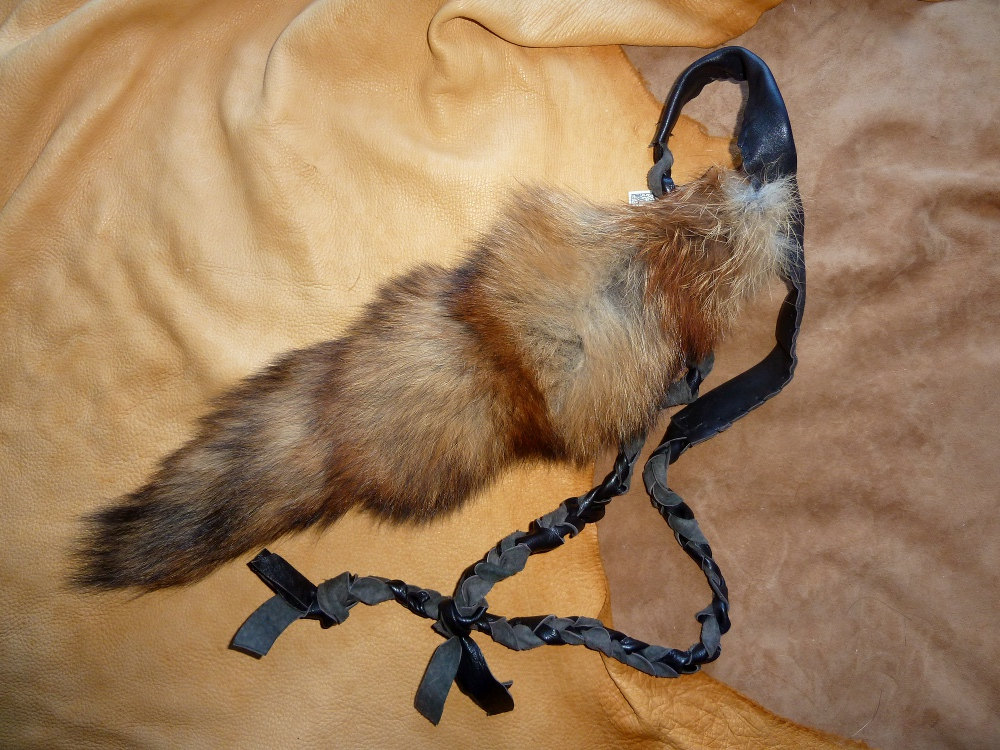
Care and Feeding of Your Totem Animal Dance Tail

A while back I posted The Care and Feeding of Your Totem Animal Dance Costume. It’s a handout that I include with every full hide headdress and totem dance costume I make, to give provide physical and spiritual care instructions. I recently wrote one up to send out with tails, too, and thought I’d share it with my readers! (If you want to see the tails in question, check out the Tails, Ears and Horns section of my Etsy shop.)

*******************

Thank you for your tail purchase! Please read through this care sheet for information on how to care for your tail physically and spiritually.

The Anatomy of a Tail

Even in life, many mammal tails are often fragile things—thin skin wrapped around a bit of muscle and connective tissues on a scaffolding made of the thinnest, smallest vertebrae in the body. Tails are meant to be flexible; they may be used in visual communication with other animals, as well as fly swatters and other pest removal. However, yanking on a mammal’s tail is never a good idea.

In the same way, you don’t want to yank on your tail. While the tail may look thick and full, much of that is hair or fur. The skin itself is actually a very thin strip of a very thin hide. If you look at the back of the tail, you’ll see a bare patch. Using your finger, you can trace it further down the tail’s length, and notice how it gets thinner the further down you go. Additionally, if the tan is older, such as on a vintage tail, the end may dry out a bit, making the tail more fragile. But with sensible care, your tail can last for many years!

Physical Tail Care

Keep your tail clean, cool, and dry. Repeatedly exposing your tail to moisture, such as rain, will cause the hide to deteriorate, as will too much heat. If your tail gets a bit dirty, just on the surface of the fur, wipe it off with a damp cloth; Pledge Wipes are very good at cleaning fur, especially old stains or dust and grime. If it gets really filthy and if the tail is not vintage, you can carefully hand-wash it in warm water and a gentle soap, and hang it out to dry immediately (do NOT apply heat). Make this your last resort, however.

The very worst thing you can do to your tail is pull on it. Touching, petting, and other gentle handling is fine, as is everyday wear and display—it won’t fall apart if you don’t treat it like glass. Just be careful to not sit on the tail or accidentally rest weight on it while getting up. Don’t let people yank on it—children may be especially enthusiastic about treating tails like toys, or their classmates may playfully tug on the tails if they wear them to school.

Sometimes accidents like the above happen, and that thin little strip of hide that Mother Nature made will break. This is hardly the end of your tail! I offer free repairs on everything I make, including tails, no matter the reason. If your tail breaks, don’t feel bad! Just send it back, and I’ll stitch it back together for you.

Spiritual Tail Care

While I’ve discussed this in more depth in this article here, here are some ways that, if you’re so inclined, you can connect with the spirit of the tail itself.

–When you first get the tail, spend some time sitting with it, smoothing or fluffing the fur as needed, and getting to know the physical attributes—color, etc.–that make your tail unique. As you’re doing so, see if you get any impressions of the personality of the tail. You may be used to speaking with spirits; if you haven’t, see what thoughts, emotions, or images cross your mind as you handle the tail. If you feel like you should keep it in a particular place, let that be the tail’s “home”.

–Before you put the tail on to wear it, ask the spirit of the tail for permission. If the tail seems to say “no”, then put it back in its place for a few days, and try again. Or ask why it doesn’t want to come out just yet. If you can wear the tail, thank the spirit; some people may also wish to create small rituals for putting on and/or removing the tail each time.

–Some people prefer to just wear tails as accessories. If you wish to have a deeper spiritual connection, spend time sitting with the tail as well as wearing it each week, or even every day if you wish, to get to know it better. You may also wish to research the animal it came from-where that species lives, what it does and eats, what its relationship to humans it, etc. In this way you can have a better idea of whose tail you’re wearing.

–You might even try dancing with the spirit of the tail, or otherwise actively interacting with it when you wear the tail itself. Try going to a park and pretending to be that animal species. Or if you’re ritually-minded, call the tail’s spirit to join you in a celebratory dance!

Privilege and the Broom Closet

(First of all, thank you to everyone for your kind words on my last post. I am still recovering emotionally; writing about other things is helping. Here, have some.)

So recently there’s been some talk about people jumping ship from things like Facebook over to Google Plus. It’s apparently even great for pagans.

I wouldn’t know. A few months ago, Google suspended my account after less than a month since I was listed as “Lupa Greenwolf” instead of my government-recognized name. Since my professional pen/personal pagan name wasn’t good enough for G+, my profile remains suspended–that image above is a screen shot taken from my browser when I go to the G+ page. I could change my name on this account to my legal name and still be able to live my life more or less the way I do now, but I have a number of personal reasons for preferring to be “Lupa” in the pagan community, and keeping my legal name reserved for other parts of my life. I’m not a tightly closeted person, but it’s my choice to present myself under one name or another.

I’m lucky that I was able to make that decision, because there are a LOT of people who don’t have that choice either way. Pagans who would have much worse consequences if they decloseted. People who use the internet to connect with queer, poly, or other minority folks and don’t wish to connect those to their legal names. And, of course, people who have been the victims of stalking, domestic assault, and other crimes who don’t want to make it easy for their attackers to get at them again.

If you can be out of whatever closet by choice and not force? Great! But understand that you have a privilege that many others do not. Your privilege is that you have the option to decloset (or not) and can decide whether you feel you can handle whatever negative consequences may occur without having it made for you.

So who are you?

–Chances are good you don’t have children, or at least don’t have to worry about someone trying to wrest away custody using your religion, sexuality, etc. as a lever. Or you feel that you have enough grounding to win a custody case, and so aren’t concerned.

–If you do have children, you don’t feel particularly concerned about the effects having decloseted parents could have on them in school and other situations. You feel either that there are no real risks, or you feel capable of handling the risks, and you feel that your children will be sufficiently protected physically and psychologically from the potential effects of your decisions.

–If you are in one or more relationships, you do not feel that your partners are at sufficient risk that you should stay closeted to protect them, nor do your partners feel threatened enough by potential risk to protest your decloseting, or even end their relationships with you. Or you can afford the potential loss of your relationship(s) and not be so badly financially and/or emotionally harmed by that loss that it would be better to stay in the closet.

–You also probably are either securely employed in a non-bigoted environment, can easily choose to move to another work environment, are self-employed, independently wealthy, have a spouse, partner, or sugar daddy/mama who is capable of supporting you no matter what, or otherwise don’t have to worry about your source of income being destroyed by bigoted employers/coworkers/systems.

–You’re probably fortunate enough to have people who support you emotionally and psychologically, a safe buffer of friends and/or family who will give you safe space for being who you are and who you know won’t abandon you.

–You can handle the potential loss of people who may turn on you entirely if they find out, or are capable of dealing with harassment from them if they stay in your life, or if you can’t get away from them. Additionally, you are not dependent on these toxic people for a place to live, food to eat, support in school, or in the case of minors, legal dependency.

In other words, while you may face risks due to decloseting, you feel you are capable of handling them and can consciously take them on by being public about who and what you are. You may even face the same risks as someone who stays in the closet, but you feel more prepared and able to face them than the other person.

Granted, there are exceptions to every rule, but given what I’ve seen of closeted vs. uncloseted folks, the above are very common descriptors of the willfully decloseted. It doesn’t make you a bad person, or a good person for that matter, but these are all privileges that not everyone has.

Moreover, it’s a dick move to criticize people who stay closeted to any degree, or their reasons for doing so. Not every decloseted person attacks their closeted associates, but some do. I have seen many people over the years complain about people not decloseting, whether that was the broom closet or the queer closet or whatever closet others were using for protection, I’ve seen them called traitors, and I’ve seen the blame for continuing discrimination against everyone else laid at their feet for not standing up and being visible. I’ve seen pagans say “You should have nothing to hide if you’re strong in your faith”. I’ve seen radical queers tell closeted queers that all they’re doing is milking the “benefits” of the closet and not taking the full brunt of queerphobia. I’ve seen closeted people being told that by staying in the closet, they’re actively supporting the bigots themselves.

And the criticism is always by people who are ignorant of their own privilege, sometimes willfully so. They’re people who have financial, psychological, logistic, or other advantages that many of the closeted do not, the ones I mentioned earlier. They can’t seem to see past their own self-righteous tunnel vision to see that not everyone has the same options they do, and may not be as safe as they are.

Before you start complaining about how I’m attacking the decloseted, this is what I mean by privilege: Privilege isn’t a criticism of the fact that you HAVE something; it’s a reminder that not everyone ELSE has what you have, and that affects the options each of you have access to in a given situation. The criticism comes when you forget that imbalance, and act in spite of it, and thereby harm those without your privilege.

Why is this important? As individuals move, so moves the community. If the community only moves in the direction of privilege, then it begins to exclude those without privilege more and more. (We already see this with struggles with transphobia and racism in the pagan community.) A pagan community that relies more heavily on G+, for example, excludes those who cannot be decloseted or otherwise link their legal name to their involvement with paganism.

So if you’re considering making yourself a G+ only kind of pagan, using your legal name openly as a pagan, by all means please make your decision as you will. But as you do, please remember that you get to have that privilege, and how ignoring privilege can affect the larger community over time, with each decision an individual makes.

ETA: I have since found out that the name issue with G+ has been relaxed, and have submitted an appeal to see if they’ll unsuspend my account. Even if they do, that still doesn’t solve the overarching issue of closeting vs. decloseting, which is what this post is about–G+ was just one convenient example.

The Death of the Place That Raised Me

I am in a small town in Missouri, the place that I grew up in. It’s been a trip of many revived memories, as my mom dug a whole bunch of my childhood belongings out of a storage space in my old room, and I’ve been going through the bittersweet process of sorting through everything, deciding what mementos to keep, and which to let go of as resources to send back into the cycle. So I’m already in a mindset deeply tied into my life as it was over twenty years ago.

Which meant that when I drove to the little patch of woods by my old house that I explored so much when I was still in my single digits, finding that it had been entirely leveled and replaced with a brand new building was an arrow to my heart.

I am still in shock, and so disbelieving. I feel I’ve lost a long-time friend, perhaps one that I lost touch with as I moved away, but never forgot entirely and visited when I could. And I never got to say a proper goodbye. I had no idea that the last time I visited would be the very last.

I know, I know. I get that the fact that this place stayed “undeveloped” as long as it did, in a podunk little town pretending it’s a big city, was pretty impressive. It’s actually the second place that I’ve seen destroyed. The woods behind the house we lived in next, and that I am visiting now, was almost entirely removed for a housing development. The spirit there still lives; much-diminished, and much more jaded, it still lives in the remnants of the woods that flank the artificially widened creek that sluggishly meanders through as best as it can.

And that destruction happened over fifteen years ago, when I’d only had a couple of years to connect with the spirit there. That experience, coming home on the school bus one day to find all the trees save for a few down and shattered–that was a horrible introduction to adulthood, and it really was where my childhood came to an end. Today, even those old wounds pulsed achingly.

I am still angry. I haven’t “gotten used to it” or “grown out of it”. And I feel isolated as I sit in a place where most people wouldn’t understand why I’m so deeply hurt by this loss. I’ve already been told “Oh, but the pharmacy people are so nice!” and given the attitude of “development happens, get over it”. Invalidation after invalidation. And it hurts, it just hurts so much.

That place? It taught me the joy of the outdoors, the fascination with other species, and my place as a human animal. It was my refuge when I began to experience bullying at the age of eight. It was my first minor rebellion, as technically I wasn’t supposed to be over on that side of the hill. But mostly it was a place where I could allow myself to explore, both the physical landscape, and my imagination. I wasn’t just a little girl in a pink coat wandering through the brambles and trying to avoid poison ivy. I was a wilderness seeker, living in a little cabin in the woods. I was a wolf, hunting rabbits in the tall grass. I was a snake basking on a big rock. I was so many things, each time I sneaked through the narrow pathway in the poplars and into the trails around the cedars.

I spent so much time in that place, that little maybe-half-acre of scrub woods, and now–now I can never walk there again. All I can do is hope that the few pictures I took on my last visit, two years ago, are still on my old laptop, that I can have a little more visual aid to help strengthen my memories in the wake of seeing this horrible shift.

Underneath the foundations of that building are the remnants of root systems from scraggly cedar and poplar trees that I hid among when I was young. There, too, are the nesting sites of Monarch butterflies, quite possibly relatives of the one that I watched in its chrysalis every day for two weeks until it emerged one spring day. And there lie the bones of the garter snakes and box turtles that were descendants of the ones I would catch, observe briefly, and release. There are stones that I stood on, lifted up to explore the life hiding underneath–snakes, crickets, centipedes, and more.

I won’t go back this trip. I won’t go back to try and find any last remnants of my place. I can’t bear it. I know I shouldn’t hold it against the new spirit of this place that is just being born. All places have spirits, including built-on ones. And I’m sure the pharmacy building now there will develop its own spirit over time.

But it’s not my place. The spirit of the place I knew is dead. Gone. Living only in my memories, and maybe in the remnant memories of a few other people who saw it as more than just an open lot.

All I have left is one single pine cone. I was going to go back at this trip and collect a few more mementos. I’m glad I have the one that’s left. It’s on my place altar. I hope it can stay safe there. It’s my last physical connection to the place that had so much meaning for me.

When I get home, when I can get back to that pine cone on my altar, I’ll spend some time looking for the pictures on my computer, and put together a mourning ritual to help me grieve. I’ll wait until I get back to a place where I know my anger and my sadness will be respected for what they are, instead of having them minimized and invalidated. I’ll go to where I can be safely held in my hurt, and remember the place that held me when I hurt so many years ago.

Until then, it’s not “just a place”. I’m not just “making a big deal out of nothing”. I have to remember that. I can’t let my grief be derailed by others’ expectations of how I should feel or what should be important to me. I spent too much time living up to the expectations of others, and I’ll be damned if I deny my hurt any longer for a place that formed me in ways no human being ever did.

Souvenir

So in case you missed it, last week I got home from a road trip involving heading down to San Jose for PantheaCon, then heading back up the Pacific coast by way of highways 1 and 101. My partner and I ended up doing some inexpensive (read: free) touristy things. We also spent a good deal of time poking around antique shops and flea markets for inexpensive art supplies and other goodies. I didn’t have a huge budget, but I did find a few really nice things, particularly in the realm of beads.

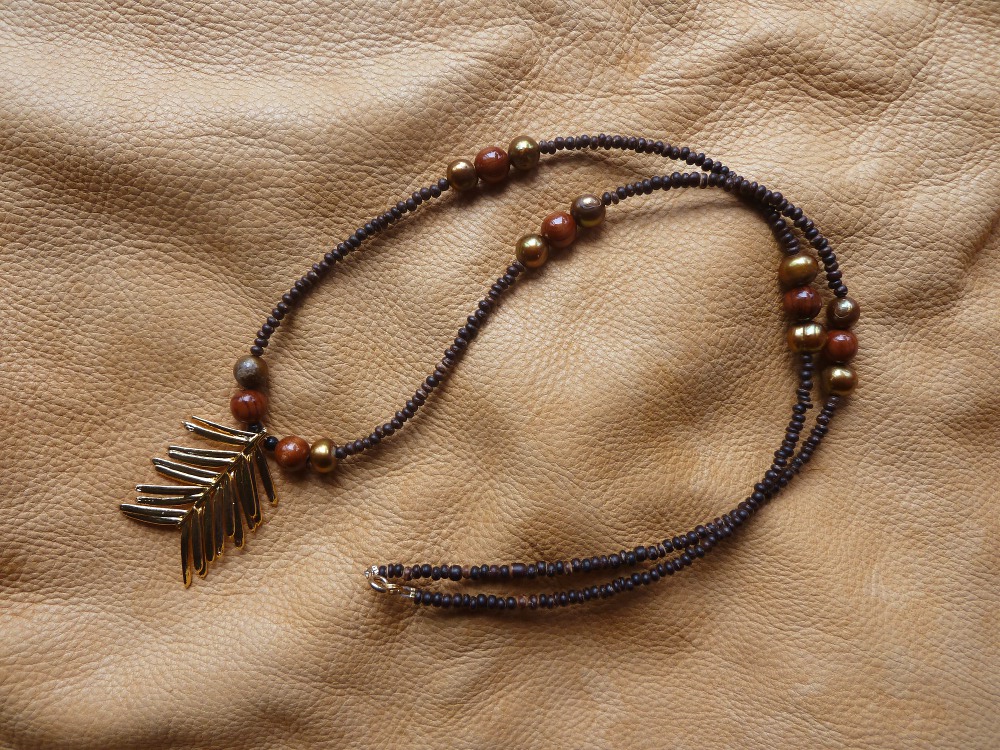
So last night I made some time to just sit and make jewelry, since I’ve been itching to play with the new beads I got since we got home. The first necklace I made was one that I had been planning in my head as I was collecting beads and findings from here and there, and as it came together its spirit wrapped around me, cuddled up close, and refused to let go. Each bead I put on the wire told a bit more of the story of our trip, and when I was done, I had the perfect souvenir of our adventures together.

See, we started down in San Jose itself, once the convention was over. And when we escaped the urban areas and got into the wilderness, we were greeted by the beauty of redwoods, one of several new experiences for me. The same day I left PantheaCon as it closed was the first day I got to see redwood groves in Muir Woods. Later in the week we drove down the Avenue of the Gods, further north along the coastline once we had reached 1/101. And it was there that we stopped at a little independently-owned gift shop. Most of what they had were either out of my price range ($80 bowls made from redwood burls, totally worth the price for their craft) or not particularly useful to me (yet ANOTHER sweatshirt?) But I found a string of polished beads made from redwood scrap, and three little clusters of redwood needles coated in 24K gold, sitting forlornly on the clearance rack.

So those carried the energy of new experiences–the redwoods, the California coastline, my first coastal storm, and the seemingly endless road trip.

Later that day, we traveled along to Ferndale, a small town a little outside of Eureka. My partner wanted to check out all the restored Victorian homes and business buildings, and was not disappointed. There were gingerbread manses galore, and the downtown district was full to overbrimming with historic locations and 19th century construction that had survived storms and fires and neglect. We visited an artist who had made the town his home for many decades, who opened a studio not to sell his art, but to share it for free, and to teach people his crafts. We took pictures of lovingly cared-for houses and churches. And we explored a little general store of nouveau-vintage items, knickknacks, and an extensive display of period antiques for all to see. At this place I found several strands of glass beads, as well as some dyed freshwater pearls.

A few of these pearls, dyed green-gold, flank the redwood beads. The pearls represent the best of human contributions–creativity, conservation, and art–which were evident not only in Ferndale, but in various communities throughout our trip.

Across the Oregon border, not too far from home, we ended up in Waldport, one of a string of little coastal towns. While my partner chatted up the owner of a local knife and sword shop, I wandered over to a flea market across the street. I poked through various antiques and tchotchkes, and came across a veritable treasure trove of little wood beads of the sort that I use frequently in my jewelry. The seller wanted naught but a song for them, and I knew they’d get used, so they went home with me as well. And as I stepped back out onto the street with my little purchase, looked at the little rows of shops that characterize so many Oregon coast towns along 101, and breathed the salt-tinged air, I knew I was back home.

And these little brown beads–those ground the necklace. They’re not the most flashy ones, but they connect the islands of shiny redwood and pearl together.

And in the same way, home is what makes the moments of exploration and adventure stand out even more. It’s not that home is a bad thing; quite the contrary. My partner and I have created a cozy living situation together, and Portland is a good place to be right now. Home is a safe place to return to when the adventures are through for the time being. And the adventures are all the better when I know I have that anchor if I need it, if I start feeling overwhelmed by all the new things, or tired from driving. The shine and sparkle of new places helps me appreciate home more, and without my good home I couldn’t enjoy travel nearly so often on the occasions it happens.

The necklace I’ve created, then, isn’t just some shiny thing–indeed, I very rarely wear jewelry other than my usual wolf chain. So for me to keep something like this that I would normally release into the wild, as it were, is an occasion to be noted. Right now, as I am easing back into the routines and challenges of everyday life, I am wearing this necklace to remind me of those beautiful adventures and the healing they gave me. I carry with me the redwoods, and the gingerbread, and the crashing waves on bluffs. And I smile, and continue on with my day here at home.

Quick note – No Unsacred Place links

Hey, all, just wanted to crosspost a few quick links to my latest essays from No Unsacred Place.

I completed the “Deep Ancestral Totemism” series of posts, meditating on our evolutionary history and the structures of our brains to be more in touch with ourselves as animals; you can read them here:

Part One

Part Two

Part Three

And my latest post, We Do Not Return to Nature. We Are Already There. solidifies some thoughts I’ve had about the nature of “nature” for a while now, particularly in light of us being an increasingly urban species. This isn’t just about finding little bits and pieces of “nature” in a city, but rather a city being, in its entirety, a part of nature, as much as any wilderness place, and the ramifications that that view can have for our efforts toward sustainability.

Cultural Appropriation 101 for Dead Critter Artists

In recent years, wearable art with animal parts has become downright trendy, particularly, though not exclusively, among twenty-something hipsters and their “ironic” ilk. Feathered earrings are all the rage, fox tails are on everyone’s purse and belt loop, and “hipster headdresses” are showing up everywhere from college campuses to Coachella.

Unfortunately, some artists are participating in an older, undesirable tradition: cultural appropriation. For decades, particularly since “going Native” became cool with the hippies in the 1960s, non-Native people have been grabbing bits and parts of various Native American cultures—or at least what they think “playing Indian” is supposed to be like. And there are those who deliberately misrepresent themselves as Native artists or purveyors of Native art, when they’re in actuality not associated with any tribe, and may even be reselling dreamcatchers and other things made in China.

So why is this a problem? Read on:

–What is cultural appropriation?

Cultural appropriation is the borrowing/theft of elements of one culture from another. More specifically, the culture doing the appropriating is generally more powerful than the one being borrowed from, and often there is a history of oppression and even genocide. Appropriators generally don’t think about the effects the appropriation could have because it’s part of their privilege to not have to think about things like that.

Anyone have a source for this? I got it from Native Appropriations, who were also looking for the source. Artist! We want to credit you!

Most commonly with regards to dead critter art, appropriators are cashing in on “Native American mystique”, either accidentally or intentionally misusing elements or perceived elements of Native American cultures in their art. This is not just a case of mistaken identity, as in happening to use animal parts in your work and having someone else accidentally assume it’s Native, but rather things like people “dressing up like Indians”, or mass-produced dreamcatcher car air fresheners. Hipster headdresses are an especially bad trend; these are quasi-Plains-tribe feathered headdresses, like old Indian “warbonnets” from 20th century Westerns, worn by (almost always white) hipsters for “irony”.

–Why does it matter?

There are a few reasons:

First, racial stereotyping. There are still entirely too many people who think that Indians are just imaginary beings that exist in some romanticized past, or are all horse-riding savages out on the plains, or are all unemployed alcoholics, etc., etc., ad nauseam. Artistic appropriators usually draw on the “noble savage” stereotype, where Native Americans are hyper-idealized as nature-loving, broken-English-speaking shaman-elders dispensing medicine to wide-eyed whites. That, or they draw on the “all natives wear feathers and buckskin” stereotype, drawing together some Hollywoodized smattering of supposed Plains Indian traits into a cultural trainwreck.

Second, buying “native-inspired artwork” does nothing to help actual Native people. This includes artists who may have some Native blood in their background, but have absolutely no contact with any indigenous cultures. News flash: being 1/16 Cherokee does not predispose you to being able to work with dead animals in your art, nor does it make you an expert on your distant family’s culture if you’ve had no contact with your tribe. While certainly not all Native people live on reservations and not all are impoverished or struggling with addiction, the truth is that many reservations are among the poorest places in the United States and this all too often gets ignored and even encouraged by non-natives. The money that goes to non-Native artists posing as “Native” could be going to actual Native artists, either on or off the reservations.

Third, continuing to pander to stereotypes does nothing to help these issues or the people affected by them. Playing dress-up Indian just sends the message that Native people are stereotypes, costumes, images, and otherwise not real people. Additionally, the confusion can draw attention away from actual Native artists who are trying to get their work out there and clarify what is and isn’t genuine tribal artwork. “Hey! We’re over here! Someone pay attention?” often gets drowned out by “NEW NAVAJO NATIONS SHIRT ON SALE 50% OFF AT URBAN OUTFITTERS!!!!!” If we’re going to have any hope of turning these harmful trends around, we need to be paying better attention than we have been.

Now, for some more specific points:

–Why is it bad to associate feathers and antlers and furs with Native American art? Don’t they use these things in their work, too?

Some of them do, some of them don’t. The sort of indigenous artwork you’ll find in Guatemala is very different from what you’ll see in South Dakota, which is all different from what you’d find in British Columbia, and then on into Alaska. And while many modern Native artists do incorporate these things in their work, not all stick to traditional art forms and patterns; there’s just as much innovation of new designs among Native artists as anyone else. So just as there’s no such thing as a monolithic “Native American culture” or “Native American spirituality”, so there isn’t one single style of “Native American art”.

And as a side note, if you think about it, “Native American” as a general title is a remnant of what’s happened to a diversity of cultures over the past five centuries. Most non-Natives wouldn’t take the time to identify someone as Cherokee, or Salish, or Diné. And so to those non-Native people, “Native American” is as specific as they feel they need to get, effectively erasing cultural diversity even further. “Native American” as a concept didn’t exist 521 years ago.

Anyway, back to art—yes, some indigenous artists use animal parts in their work, but some don’t. And of those that do, the exact materials they use, and how they incorporate them, varies not just from tribe to tribe, but from artist to artist. Some tribes use almost nothing in the way of animal parts in their work, or none at all; others’ art looks very different from the buckskin shirts and feathers found in some Plains tribe artisanry. For example, weaving plays a significant part in a number of tribes’ art and culture, from Guatemalan sheepherding cultures, to the Chilkat weaving of Northwestern tribes. Woodcarving is also important in the Northwest and elsewhere, and far north the Inuit are known for intricate carving of bone and ivory.

Also, assuming that ANY art with animal parts is Native or stealing from Natives is itself a form of stereotyping. This essay was prompted in part by a situation where a neopagan artist was using very personalized designs in her art with animal parts, designs that anyone even barely familiar with actual Native art would know weren’t indigenous. Someone called her out as an appropriator simply because she had a piece with an antler and some feathers. That critic was furthering stereotypes herself, by automatically equating dead animal parts with Native art, as if that’s all that indigenous people ever use. I think I’ve made the point that “Native American art” is much more than antlers and feathers, and to continue the idea that antlers and feathers is all it is is just more limiting and stereotypical.

–“So why can’t I have my hipster headdress? It’s just ‘Native American INSPIRED’”.

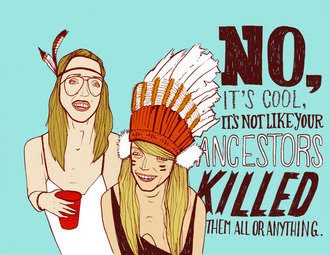
It’s also racist. I’ve been sorely tempted on more than one occasion to ask someone in a hipster headdress “So, do you wear blackface on Tuesdays?” Think about that for a moment. American culture (other than a few pockets of pure ignorance) has rejected the stereotyping of black people by blackface performers. We see what’s wrong with it, and so we don’t do it anymore.

But in the same way that blackface was a farcical, marginalizing stereotype of African Americans, so hipster headdresses and similar “Native-inspired” art can do the same to Indians, yet fewer people are speaking out about it. Really, how does wearing chicken feathers on your head and acrylic paint on your face honor people whose homes were forcibly taken from them, whose numbers were drastically reduced to just a fraction of what they were by deliberate mass murder, and who today still often suffer the consequences of physical and cultural genocide?

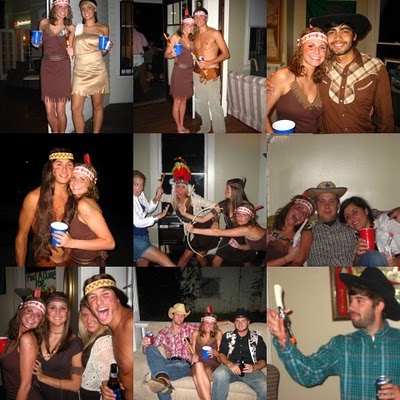
Keep it classy. Source: http://arcj.blogspot.com/2007/09/cowboys-and-indians.html with hat tip to Native Appropriations

Unfortunately, indigenous people are still all too often made invisible in civil rights efforts. So most people don’t see what the issue is with chicken feather headdresses and “Pocahotties” at cowboy-and-Indian-themed frat parties because they haven’t encountered any opposition to it. The current hipster headdress trend doesn’t help this invisibility one bit; it simply reinforces the idea that “playing Indian” is somehow okay. (By the by, this is a MUCH more detailed and eloquent explanation of what’s wrong with hipster headdresses.)

–But so and so is Native American and they said my artwork was cool!

Well, yes. Native Americans aren’t one big group in full agreement on everything. Some are going to think that there’s nothing wrong with the made in China dreamcatchers and may just think the hipsters in headdresses are silly, nothing more. Others are more pissed off about the effects they see these things having on their people and other tribes.

It’s because some of them are upset that I feel it’s worth paying attention to. If Person A isn’t upset about something but Person B is, it doesn’t mean that I should just assume Person B is full of shit because it suits my personal interests to do so, especially in a situation where there has been definite damage done to the ancestors and cultures of both Persons A and B by people not listening to them. And, on top of it, as a person who is NOT a part of an indigenous culture, I have even less authority to decide that that complaint is worthless. Finally, given the history of white people NOT listening to Natives’ complaints, to include today, do I really want to continue in that tradition of not-listening?

–So what can I do to help?

First and foremost: educate the fuck out of yourself. Check out the Native Appropriations blog at http://nativeappropriations.blogspot.com/ and read the archives, as well as checking out the blogroll. For a historical perspective, read Dee Brown’s Bury My Heart At Wounded Knee. If it seems like each chapter is just telling the same story over and over again but with different people in each, then that should tell you something about the consistency of how badly various tribes were treated. If you have a Netflix account, both Reel Injun and Homeland: Four Portraits of Native Action are on instant queue. These are just a few tiny starting points, but even they can be good eye-openers.

Study up on actual Native artwork, too. Some art and history museums have collections (however ill-gotten) of artwork and artifacts of various tribes. Read up on various tribes’ artworks, both historical and contemporary. Head over to sites like http://www.nativeart.net/ and http://indiancountrytodaymedianetwork.com/native-american-art-entertainment. If you want to buy genuine Native American artwork, ask the artist about their tribal connections, and make sure you’re buying from the right people (powwows are a good starting place). Oh, and make yourself familiar with the Indian Arts and Crafts Act of 1990.

Second, take a good long look at your own artwork. Have you been trying to make Native-style artwork? Are you still developing your own style, and are there ways you can make it more your own rather than borrowing from others? I’ve been developing my own work for over a decade, and I still periodically look over what I’m doing to make sure that I’m not encroaching on someone’s traditional designs; it’s part of why I no longer use loomed and applique beadwork in my art, and why I no longer make dreamcatchers, as a couple of examples.

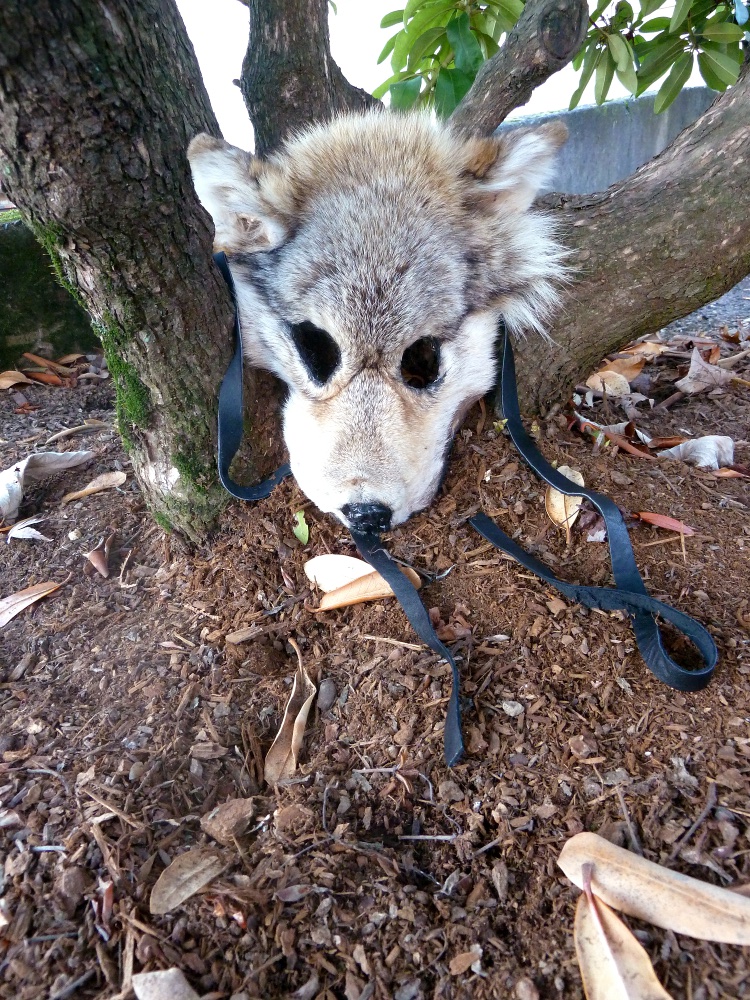
Wolf mask by Lupa, 2011.

Presentation is important, too. I have a big disclaimer on my artwork page on my website and in the main description of my Etsy store that specifically says I’m not Native and I’ve never claimed to be. I’m even wary of using certain key words in my Etsy listings; I’m okay with using the fairly generic “pagan” and “shaman” as they’re a part of my background as a neopagan since the 1990s. (However, I’m also aware of how neopagan culture has itself appropriated from indigenous cultures, as well as the troubled recent history of the word “shaman”.) I’m less okay with keywords like “medicine”, even though I know that people looking for generic little leather bags will use that term, which has been drawn further and further away from its origins much in the same way as “shaman” and “totem”. But I refuse to use “Native American” on my listings (with one exception) even though it would probably get me more hits from people who don’t know the difference between a Native American artist and someone who makes stuff out of deerskin.

Third: find your own balance. I’ve explained above how I have my boundaries currently set, and those may change over time. Even writing out this article has given me reason to test those boundaries and how I feel about them. You may not be as concerned as I am, and be okay with making dreamcatchers as a non-Native person, or not see an issue with using the term “Native-inspired”. Or, for that matter, you might be even stricter and see my calling myself a “shaman” or using the term “headdress” for the wearable animal hides I make as appropriative actions in and of themselves. I can’t decide for you where your boundaries are, though I will respect you more for at least giving them thought.

And that’s really where I want to leave this for now–something for people to chew on, and think about, and discuss further. Feel free to link to this, if you like; it’s a public post.
How Wolf Fed the Scavengers

Once, when this place was still new, a great famine struck the land. The sun broiled the earth, and the plants were so thirsty in the drought that they could barely keep their stems and trunks straight, never mind grow enough fruits and leaves for everyone to eat. The plant-eaters were always hungry and they grew thin, and the meat-eaters could barely find anything other than bones to gnaw on, their prey was so wasted away. All the animals grew desperate, and fell to fighting each other more than they ever had before.

So it was decided that the animals needed a king. This king would decide who got how much to eat. The plant eaters argued that because they were the closest to the plants, that they knew them better and should get to have control over who got what. The meat eaters opposed them, saying that as they were at the top of the food chain, they had a better view of the situation. Those who ate both plants and meat were split right down the middle, some siding with the plant eaters, and some with the meat eaters.

Bone stag wall hanging by Lupa, 2010

The arguing lasted for three days and three nights, until at the end Whitetail Deer was made the king. All the animals brought forth all the plants that were ready to eat. “Since I am king,” he said, “I will take the first portion since I need my wits about me to keep an eye on our food supply. Then the rest will be divided up among the plant eaters according to size. But the meat eaters may only eat those animals who die of starvation and disease; from now on, hunting will be banned.” This caused much dismay among the meat-eaters, but what could they do? He was their king, too, and he said these words while shaking his mighty antlers with their sharp points.

So the plant eaters were able to leave the meeting with as much food as they were able to get, and all the animals were to collect more plants as they were ready to harvest, even the smallest berry or seed. Each day the food would be brought to Deer’s home, where he would divide it up, and send the plant eaters home with food while the meat eaters only had a scant few bony carcasses to squabble over.

Then it was decided that the meat eaters were not even allowed to be at the food collection except to bring what they had gathered and pick at the bones of the starved, and the plant eaters began to venture out of Deer’s home only to bring the collected food in, protected by their king’s antlers. The only ones who stayed out were the dead, who were left on the edge of Deer’s home, and over time there were fewer and fewer carcasses left out each day.

Wolf totem headdress by Lupa, 2012

Soon the meat eaters began to hoard what food they could. The bigger ones, by bullying and stealing food from others, ended up with the most and stayed strongest, while the little scavengers grew more and more hungry over time. Only Timber Wolf did not participate in this; she only took enough to feed herself, her mate, and her pups, and often ate the least of all her family. She grew sadder as she saw how the animals fought each other over so little.

The little scavengers noticed that of all the big meat eaters, she was the only one to let them have their own food. So they sent Raven, who was the bravest of them, to go speak with Wolf and ask her for help, since she was a great hunter, swifter than all the other meat eaters, and perhaps she would know what to do. She was given the last of the scraps to take to Wolf as an offering.

Raven flew to Wolf’s home as quickly as her weakened wings would carry her. She landed at the front of Wolf’s den, and croaked to her, “Lady Wolf, great huntress, brave warrioress, I am here on behalf of all the little scavengers, those of us who are too small to hunt big game. We are hungry, and we are too weak to steal our food back from the other big meat-eaters. You have the greatest hunting skills, and you are powerful. Will you help us to get food so that we may not starve to death and all become food ourselves? Soon none of us will be left!”

Wolf, curled with her mate and pups in her den, heard Raven’s pleas, and it was enough for her. She was tired of seeing the little scavengers creeping around and crying. Her hackles raised, she stalked out of the den, and met Raven there.

“Yes, I will help you. Let us go to our king, and ask him why we are unable to hunt. Let us ask him why we are not allowed to be at the food collection any more, other than to bring what we spend our days collecting in the hopes that we will be given bones to gnaw. My young cry for food, and your young barely live. It is too much.”

So they shared the scraps so Raven could recoup her strength from her flight, and Wolf could be ready for the trip. Raven perched on Wolf’s back, and they went to Deer’s home. When they got there, all the plant-eaters were inside, and no one was guarding the door since all the meat eaters were so weak that no one thought they could get in.

But Wolf got in, and Raven with her, and before anyone could speak or stop them, Wolf strode straight to where Deer sat, one antler shed and lying on the ground, the other shaking on top of his head. He was surrounded by all manner of food. The stores were piled from the floor to the ceiling; there were enough plant eaters that had died that even the small amount the famine-stricken plants could produce was more than what they could all eat. She looked at Deer, and all the plant eaters around him, and noticed how fat all of them were. And she grew enraged.

“How dare you?” she cried. “How dare you leave us out here to starve? You threw out all of those who nibbled at the edges of your leavings, and you only gave us your dead. Now that so many of you have died and you have more than enough food for all who remain, you keep it locked away here! You are no fit king!” And with this she fell upon them all, with bared teeth and fiery eyes.

She slew a tenth of the rabbits, and a tenth of the wild sheep, and a tenth of the elk. She hunted and killed a tenth of all the plant eaters, and the smell of the blood brought all the meat eaters together to feed. Then Deer himself, huge and fat and no longer so fierce without his antlers, got up and ran away, and Wolf chased him, with the little scavengers in their wake.

She chased him through the forest, and she tore away his toe, and the weasels fed upon it. Then she chased him through the mountains, and in a clearing she tore away his tail, and all the ravens came to take a piece of it. Then she chased him through the desert, and she tore away his remaining antler, and all the mice came and chewed at it.

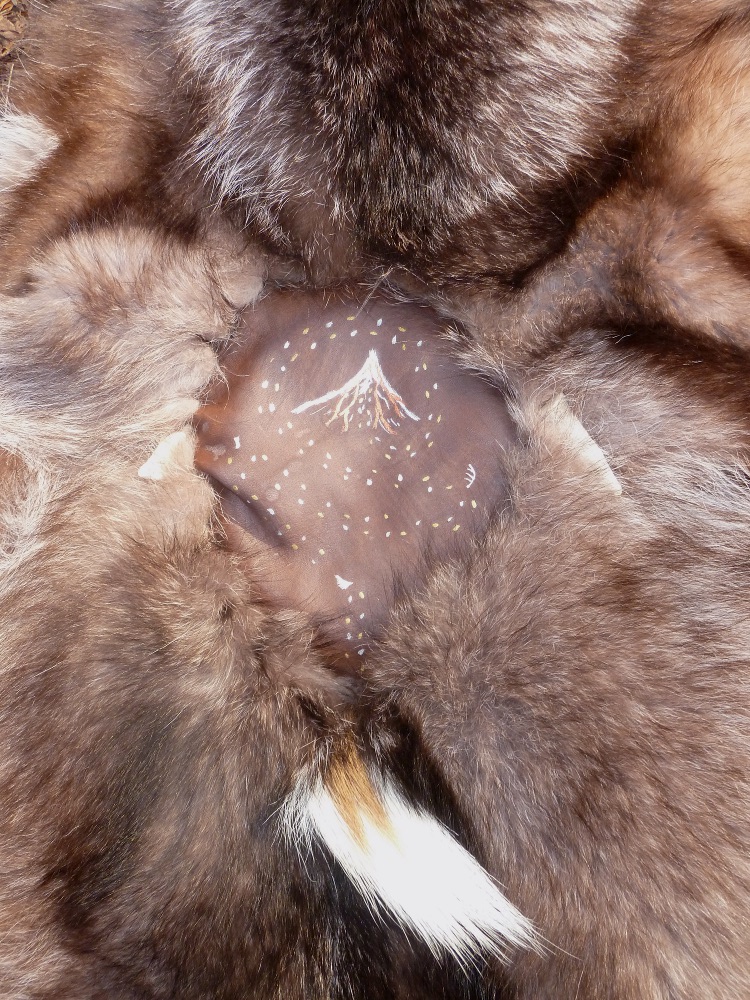
Detail from wolf totem headdress by Lupa, 2012

And finally they circled back around to the mountains, where Wolf chased Deer all the way to the top of the highest peak, and there she overtook him and slew him. And his coppery blood rushed down the mountain in all directions, and he had grown so big that there were great, gushing rivers of it. The blood flooded all the land, from the mountains to the desert to the forest, and such was its power that it brought an end to the famine, and the plants thrived again.

And when Wolf came down from the mountain she brought Deer with her. She fed her young and her mate and herself and she tore what was left of Deer to pieces and gave all the little scavengers enough to feed themselves and their families.

Then she addressed all the animals, “I have killed our king, which makes me queen. I have only one decree—that we all go back to the way things were before the famine so that plant-eaters eat only what plants they gather, and meat-eaters eat only what meat they hunt or find.” And so it was.

But all the little scavengers followed Wolf around from that day on, for whenever she made a kill, she remembered their plight and how their food had been stolen from them, and always left them something to eat. And for her part in bringing back balance, Raven and her children were allowed to eat with Wolf and her kin for the rest of time.