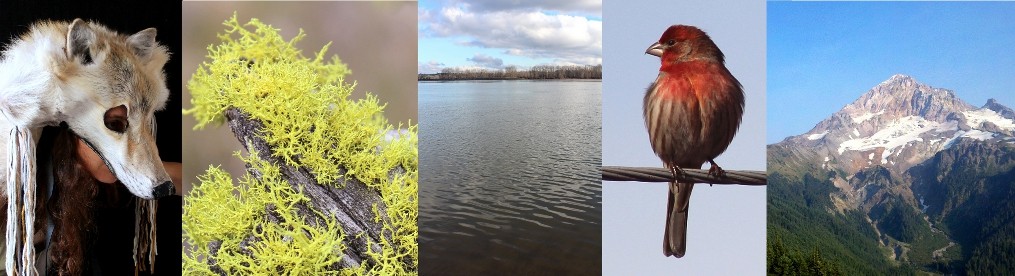
Alright, so this used to be a big, long FAQ with lots of Q&A, and it was a pain to try and keep updated as I changed and evolved in my path over time. Plus it was just damned unwieldy. So here’s a shorter version; you’re welcome to ask me questions, too.
I started this blog in 2007 to document my efforts in taking the best of the things I’d learned and practiced over the previous decade and change and integrate it into a more formal neoshamanic path. And hey, if you read back through those early posts, you can see just how earnest I was about it at the time. I was developing new god-forms to embody the forces I was working with, and trying to make new ritual traditions, and so forth. A lot of this was because I knew a lot of people into devotional work at the time (well, I still do, to be honest) and I admired the structure and inspiration these practices gave them, and so I wanted to see if that would work for me as well.
It kind of did. What I learned was that I didn’t need more structure. I needed more connection. I was so focused on trying to make something deliberately from scratch that I was neglecting the connections I was trying to make–classic example of mistaking the map for the territory. But amid the “construction mess” I was getting valuable experiences, most importantly the sacred act of going outside. I was trying to connect with my bioregion and its various denizens, and I found that actually going out into it was more effective for me personally than sitting in my ritual room in the home I shared with my now-ex-husband, and drumming and journeying to the places I often visited physically anyway.
Additionally, while I’ve been happily pagan for over fifteen years, and I do feel that things like drumming do have a place in my greater society, I found myself more and more attracted to embodying (neo)shamanism in this culture through more integrated roles. This post from 2011 was a turning point; it was written when I was most of the way done with earning my MA in counseling psychology, and I’d been working in my internship as a counselor for the better part of a year, serving a community and finding my place within it. While drumming and healing rituals are valuable in their own right, there are a lot of people in this culture for whom these are not comfortable or desirable practices. So I’ve found myself moving more toward embodying the role of shaman-as-intermediary in ways that are more accessible to the general population I serve, rather than trying to convince them that what they really need is to have the bad spirits sucked out of them with a straw.
So these days my practices don’t resemble what I was doing five and a half years ago all that much. I don’t really drum or journey very much any more, though I do have times when I bring out my drum or dance my wolf. And I do still do my skin spirits work with hides and bones and the like, in art and in personal spiritual practices. But overall, I’m less concerned with exploring the spirit worlds, and more with engaging this one, spirits and all. I especially want to help people reform and renew their connections with this world, not just the nonhuman environment, but their own communities–and themselves. That means helping people recapture their wonder at the world in all its parts, helping them learn that it can be okay to be vulnerable and open sometimes when the setting is safe, and if all goes well to live a better life than before, whatever that looks like for them.
And I’ve become a much more naturalistic pagan. I’m really not concerned any more with things like an afterlife or the literal existence of spirits. I’m drawing more and more on the sciences and the understandings gained thereof, and letting myself be utterly awestruck by evolution, atoms, and the cosmos as a whole, among others. I’m starting work as a counselor again soon, after a year and a half off to focus on my art and writing and personal development. I’m working with animal, plant, and fungus totems, among other beings of the spiritual bioregion, to offer a nature-spiritual path that’s less about symbols and abstracts, and more about getting people in direct contact with the world around them for the benefit of all concerned. And I’m continuing my service to that world through not only the counseling, but direct volunteer work like adopting a stretch of the Columbia River to keep clean and monitor.
When I started all this years ago, I really wanted greater connection–and I got it. It didn’t turn out the way I expected. But it was much more effective than I’d ever hoped. There’s more to write in this narrative, but suffice it to say that once I let my path develop more organically than intentionally, I found exactly what I’d been looking for all along.
 Therioshamanism
Pingback: Occult of Personality » Blog Archive » Podcast 34 - Therioshamanism with Lupa
Thank you, Lupa, for this facinating look at your own personal path into shamanism. I have to say, you are one of the most articulate and daring individuals I’ve “met” in the online pagan/therian community. I’m in a similar place along my own neoshamanic path. I enjoyed Ecoshamanism (though I didn’t agree with certain things in it), and I also have very similar views on food and organic meats. Best wishes from a fellow therian shamanist (in training), Korak
Korak–Thank you for your kind words, and you’re quite welcome! If there’s anything I can do to help, feel free to let me know. And I’m always up for trading notes, too–talking shop with other folks is a very valuable thing as far as I’m concerned, especially as a solitary. Cheers, and welcome 🙂
Thank you for sharing the path you are creating. IMHO creation of one’s spiritual path is the core of shamanism. I must admit when I read some of your words in relation to your work and connection with animals, animal spirits, and animism I thought I was looking at ideas and beliefs that I have carried with me for many years. Nice to meet a fellow solitary practitioner in training, and your words and ideas do lend support for me to continue with my own path my own way. I look forward to reading more about your path and wish you great success on this journey. TF
I love your above comment regarding plants! I say this all the time. People are so short-sighted.
Also, your paragraph listing your books has, in the first sentence, the word “both” that should be removed since you’re now listing more than two books.
I should do a FAQ for my blog and one for RTV, soon.
LOL I”m logged in as rendingtheveilcom? *snerk* Well I reckon you know who it is. 😉
As the others here, thank you for taking the time to record your thoughts and experiences and make them accessible. I found this recently and am excited about exploring it further, as what I have read so far contains many similarities with experiences and lines of thinking that I previously thought were unique to me. (I often find that if I think something is singular, it is only because I haven’t learned enough yet to find out that it is not.) I hope you find peace and great learning in your new home and look forward to reading more.
Sheta–Thanks for catching that 🙂
coyotlboy–Thank you! I hope this blog brings you some good ideas!
So I’ve been toying with writing this for a couple of days. Hopefully it’s not too whiny; I’m quite sure it’s too long. Basically I’m writing to ask for advice; I understand that training is not an option, but any pointers would be invaluable. Hell, even “No, you aren’t crazy” would be useful.
I was raised by fairly actively anti-religious parents, who didn’t interfere with my interest in spiritual matters but mostly regarded it as a phase or some kind of regrettable but mostly harmless quirk. My father, in his utterly atheist way, encouraged me indirectly by taking me on long walks and pointing out the interrelationships of plants and animals in various habitats – a “systems” view of ecology was an integral part of my worldview from early on.
In my late teens and throughout my 20s I identified as Wiccan, but it never really “took.” The more do-whatever-you-feel forms didn’t work for me at all, due partly to my then-undiagnosed ADD – what was delightful spontaneity to others was disorienting free-fall to me, because I need some structure in order to let go and stop worrying about what comes next or whether I’ve missed a cue. The more structured forms that I encountered were Gardnerian or Gardnerian-based and rigidly heterosexual (and heterosexist, of the polarity-between-two-people-of-the-same-sex-is-impossible school of thought); I am a gay man. The rampant cultural appropriation turned me off, as did the all-god(desse)s-are-one-God(dess) duotheism. Also, the rigid vision-first visualization was brutally difficult: I am a kinesthetic thinker, so I can visualize just fine but I need some description of what I’m feeling before I can see and sometimes I need to sit up or move, which I was told was “immature.” I also found Wiccan ritual needlessly complex.
I wandered through ADF Druidry, but – as with Wicca – I mostly felt like I was going through the motions – the atheist upbringing raising its head. I also understood the emphasis on reconstruction, but I was born and raised, and have spent the majority of my life, on the BC coast. Although I’m approaching fluency in Scottish Gaelic, it never felt any great degree less alien to the land than English (although *slightly* less alien, due to certain cultural differences).
I moved to Buddhism, of the Theravada school (Tibetan Buddhism attracted me, but the complex visualizations involved made it a non-starter), and have found great benefit in meditation. It informs my philosophy greatly, but not my spiritual life per se. And again, it is alien to this land and I do not speak Pali (Theravada’s liturgical language).
As you may guess, language is important to me – i have a very strong gift for them and am an amateur linguist.
Learning Native practices is out of the question for me, as the local Native people are Coast Salish and Coast Salish do not share these things to anyone but family members.
I’d written off “shamanism” due to distaste for the word, Native dislike of the concept, and the exact white-middle-class-ness of Core Shamanism that you wrote about.
But.
While I’ve never experienced any kind of shamanic crisis, I do have a persistent low-grade malaise if I don’t get outdoors enough and an even more persistent attraction to what I’ve been calling animism thus far.
Events I’ve found spiritually significant…
As a child at a nominally Christian summer camp on one of the Gulf Islands I once wandered into a clearing. I instantly felt a presence that I can best describe as an invisible Tolkien Ent: something very old and not at all human-feeling turned its attention to me, looked me over, apparently decided I was no harm, metaphorically patted me on the head and went back to its thoughts. The only spirituality/religion I knew of at the time was Christianity, so I assumed I’d had an encounter with God, although I was no clearer on the concept of Jesus than I’d ever been.
When I need answers, one oracular technique I have come up with on my own is to go to the beach and find a piece of driftwood. I “impress” my question on it and then throw it into the sea. When the tide brings it back I pick it up – the instant my hand touches the water on the stick, I have my answer, which can come in various forms but always feels like I’m just remembering something. This works well, but I can only do it two or three times before I get a clear feeling of “Enough!” and have to stop.
Hiking with my partner in the woods, I once saw a crow looking at me. Just for fun, I said, “Hey, crow, how are you?” in Hən̓q̓əmin̓əm̓ (Downriver dialect of Halkomelem, the local Indigenous language). That crow did a visible double-take as if saying, “Whoa, white dude just talked like real people!” and proceeded to follow us for at least a kilometre, hopping from tree to tree and cocking its head at me.
A technique I used to use, but got out of the habit of due to ADD and a period of being homeless, was to “visualize” (feel more than see, as is usual with me) a stone representing my question and “drop” it down a well in my belly; I’d then jump and whirl around until dizzy and collapse on the bed; I often went into a trance immediately
Once a roommate threw open the door to tell me something and I literally felt like I’d been picked up and thrown into my body. I had to pat myself down because my physical and spiritual bodies felt out of alignment – my vision told me my limbs were in one position and my proprioceptive sense told me they were in a different position; the sensation was nauseating.
I also contradicted my partner – whom i know to have the Sight – on an occasion where he later admitted he’d been letting wishful thinking muddy the waters Our friend was having a baby at home; my partner said it was a boy and that all was well, but I said I felt no male energy and the baby was frightened, something about breathing. When our friend later went to a birthing clinic after the labour had gone on too long, it was discovered that her daughter was going into hypoxia due to aspirating her own feces.
Parenthetical sick humour moment – I figure if your life starts with breathing your own shit, it really has nowhere to go but up; on this, my partner agrees.
So… I have some gifts, a connection to the natural world, an ongoing attraction to animism, and a resistance to overly human or overly abstract religion. Now what? I looked at Northern Tradition shamanism but it doesn’t strike any sparks. Your writings do, in part because of the integrity and care with which you write about cultural appropriation. You’re also more local to me, albeit taking “local” in a broad sense. If you’re wondering why I don’t talk to my partner, we have developed an unhealthy power dynamic – which I am now beginning to change my part of, since becoming aware of it – and asking him for advice in this would just exacerbate the problem.
Hmm. Sounds like you’d have a heck of a journey! I present a few thoughts:
–What helps you to manage the ADHD? You mentioned structure, but what else helps? Being able to focus to the best of your ability is a strong tool in all this, though you’ve managed to accomplish quite a bit, such as with the languages. So what works for your focus? Anything with regards to sleep schedule, diet, other purely organic elements that can be tweaked?
–How are you with group work? I am purely solitary, other than occasionally offering workshops, but do you think you might benefit from the structure of a group? Most of the shamanism groups I’ve found have been based in core shamanism. While I have my reservations about core shamanism, the structure of having other people there and having a fairly comprehensive system may be helpful to you as a starting point, and you can build on and embellish it as you like.
–How often do you get outdoors? Is there any possibility of holding yourself to something of a schedule?
I manage my ADD with Ritalin, because it works for me, meditation and a lot of scheduling; my phone has an alarm on it for damn near everything. As to diet, I dom’t consume a great deal of raw sugar or canned goods – I’m a good cook and prefer to know what’s in my food. I attempted vegetarianism but it was a disaster: like you I need meat protein for grounding, and the extensive planning and preparation required for a properly balanced vegetarian diet doesn’t mesh well with severe ADD.
I’m an introvert, so hadn’t considered a group, but will definitely research that idea -‘thanks for the suggestion and for the reminder that core shamanism can be a starting-point, not the be-all and end-all.
I’m good in groups, mostly – the Gardnerian group I belonged to didn’t work out because bluntly, I take no shit and kiss no ass – which statement probably makes me sound much more combative than I really am. It’s just that having spent time on the streets has given me a fairly sensitive bullshit-detector, which can be awkward when the ADD takes my internal censor offline, and an occasionally pungent vocabulary. “Crapping a steaming pile of knotwork on a plate of Wicca does not make it Celtic” was one of many lines that got me into trouble.
Also – warning, another novella-length posting – I can’t BELIEVE I totally forgot any mention of the probably most relevant experience I’ve ever had.
At a Pagan festival in WA state focusing on the Greek pantheon, I “carried” the god Pan. The “drawing-down” circle wasn’t especially moving – until it was my turn.
As the last words were spoken, I felt *something* shouldering its way into me and my normal consciousness shoved to one side as a passive rider.
Suddenly the room was strange, all straight lines, ugly and disturbing. It was far too hot and stank unbearably of humans. I went outside, dressed in nothing but a fake-fur kilt and horns, shirtless and barefoot on a WA state Easter weekend in a light rain – and felt warm and comfortable.
I stayed mostly in the woods, disliking proximity to too many humans; being inside buildings was very difficult, I felt caged by straight lines and it was stiflingly hot. My sense of smell was vastly more prominent – it was impossible for me to interact with anyone without leaning in to smell them: without getting their scent the connection was dim and two-dimensional.
Some women smelled of blood, and I “knew” they were menstruating; others smelled sweet and oddly (for me) sexually attractive – I couldn’t figure out why until one said later that she was almost certainly at the ovulation phase of her cycle.
I lost much of my language: I could speak, but simply and only with basic concepts. At dinner – we were still drawn down – I couldn’t access the names of vegetables; broccoli was simply “plant,” although *internally* it was a concept something like “the strong-smelling dark green plant that looks like a tree and shoots up a stalk with yellow flowers when the days start getting shorter,” but not verbal – more like a time-lapse video with smell and touch. I got the same kind of time-lapse lifecycle video for any life-form.
I drank from puddles, and found what I’d normally call unacceptably “muddy” to be simply “rich” – but any hint of petroleum, whether gas or even just tire-tracks, made me gag and spit it out.
At dinner I saw a man with a halo all around him; I was told by several people later that my body language was precisely that of a cat seeing a mouse: turn and straighten up extending my spine fully, eyes locked on the prey, chin sinking a little as hunter-focus took over.
He and I had a fairly brief and utterly disastrous relationship of sorts -‘loneliness, immaturity and divergent expectations doomed it and my then undiagnosed ADD finished the job, and I wound up exiled from that community, only partly by choice.
Since then I’ve kept well away from Pan: the experience was too uncontrolled – I nearly fell down a cliff and did crack a rib because human bodies are weak and Pan simply didn’t perceive or didn’t care – and the heartbreak fallout was also pretty daunting. My advice for any subsequent priests intent on drawing him down was, “You won’t be learning lines for the ritual drama but you still have homework: you need to work out because Goaty plays rough.”
So what have you learned of him since then, and why do you think you were so bowled over?
Brilliant Name Therioshamanism. I have recently stumbled into the path of wanting to connect more with the animals I find, and learning how I can ask for their bones in a respectful way, I was recommended one of your books, so looking forward to getting that.
Glad you’ve enjoyed so far, and please let me know if you have any questions!
I really like this a lot! It seems very different then your books which I also like a lot. I used to refer to you as Otherkin, a submissive female wolf in a human body. Has that changed? If your understanding of Otherkin and being that wolf has changed, which it seems like it has, do you still identify as Otherkin or should I now say you are not Otherkin? You are the most famous Otherkin person I know of, so if someone tells me they are a cat in a human body, who is the person I now should l direct them to? I know you took the Otherkin book off the market because more about Otherkin is now known, so it is outdated. Will you be doing an updated Otherkin book or are you no longer part of the Otherkin community? Who would be the current Otherkin people if anyone had questions?
Oh about ADHD, there are many types. One is hyperfocus. Almost all people with ADHD pay great attention to what stimulates the brain. There is no attention deficiency with ADHD, more of a lack of controlling what the brain focuses on, so often people with ADHD like myself hyperfocus to a point most people cannot imagine, which would to me seem like an attention deficiency on their part. I love learning so I got straight As. With ADHD. Whatever grabs the brain’s dopamine and adrenalin is what an ADHD brain will become an expert in, if allowed. The movement asking people with ADHD to lose that gift to be more “well rounded” and mainstreamed is to me a loss for society. I take Provigil so I can sleep and go slower with thoughts, speech and ideas so other people can understand me better. But I notice that people without ADHD appear to my ADHD brain to have a lack of creative focus, an attention deficiency. Neurodiversity rocks!
As mentioned, I am no longer identifying as a therian, and I doubt highly that I’ll be writing in that topic again. There are other voices who need to be heard, IMO.
It seems that a lot of us in the otherkin community have drifted away from it, myself included. Do you think that had to do with the social stigma at all? I feel like it might just be a natural progression of thought for the body and brain. We try to isolate ourselves as unique and non-human in a way, then later on find ourselves connecting with nature and realizing we’re still human… the whole lot of us just lost that connection centuries ago through the rise of civilization that “separates” us from the rest of nature. Most of us are born and raised into a society that drastically cuts us off from our inner animal, our natural “other.” Then we awaken to it, but we think we must be special or privy to some talent or power others aren’t.
In reality, we Awoke, but any human can. We’re all other and that other is still human. We’re all still animals, no matter how fancy we dress or how well we prepare food or how cleverly we create games and movies and books to distance ourselves.
It took me a while to figure that out, and I still like to delve into the abstract and use symbolism, but realizing I was human helped me feel more connected and less of an outcast to the world. It helped me figure out that we’re all weird and wonderful and capable of so much.
I still have your Field Guide, and I love that I got to be in it. ^_^
~Simim, formerly known as Raethyn Sarachael
I really couldn’t say. I would guess it’s a combination of factors, dependent on the individual’s personal reasons. Some of it may be stigma, some of it may be finding different ways to frame one’s experiences, and so forth.
And I’m glad you still treasure the book 🙂