Offering Classes in Portland

Are you interested in practicing shamanism? Do you live in the Portland, OR area?

Join me for an informational meeting about a new, ongoing series of shamanism training classes. Based on her own practice, Therioshamanism, these classes will be designed to accommodate beginners as well as those with varying levels of experience. This informational meeting is a chance to get an idea of my approach to shamanic practice and to help attendees find a good fit for themselves, as well as offer input and ideas for these ever-evolving monthly classes.

In addition to practical shamanic techniques such as identifying and working with spirits, drumming and other vehicles for journeying, healing and other sacred work, these classes will cover related topics, such as the place of shamanism in non-indigenous American culture, the issue of cultural appropriation, bioregionalism and ecospirituality, and other relevant material in our ongoing work. Participants will also be invited to share what they’d like to know more about as we work together over time.

The informational meeting will be held Saturday, May 19th, from 11am to 12pm at Quaking Grass, 5010 NE 9th, Unit B (take the stairs on the north/back side of the building, whose front is on Alberta) in Portland, OR. Suggested contribution for this meeting is $5 per person, no one turned away for lack of funds.

Keep your eyes peeled for other events coming soon, including totemic drum and dance circles, and standalone workshops on topics like totemism, sacred work with animal parts, eco-spiritual art, and more!

I have been practicing various pagan and ecospiritual paths for fifteen years; I have been developing Therioshamanism as a dedicated path since 2007. I am a published author and sacred artist, and earned my Master’s degree in counseling psychology in 2011.

Some Observations on Plant Totems vs. Animal Totems

If you’re at all familiar with my writing, you’ll know I’ve been writing about animal totems for years. Animal totemism has been a foundation of my practice pretty much from the beginning, way back in the 90’s. I’ve always had some connection to plant totems as well, but they’ve had more of a background presence in my life. A lot of that is due in part, no doubt, to the fact that I am an animal, and therefore I resonate more easily with other species of animal. So it’s been harder for the plants to get through to me; sadly I’ve seen them more as scenery in my journeys and other works than as active participants.

White trillium near Triple Falls, Oregon. Photo by Lupa, 2012.

Over the past few years, though, and especially as I’ve been spending more time in deeper wilderness, I’ve been more aware of the bioregional nature of the spirit realm. Animal totems don’t just exist as disembodied spirits in a void somewhere, but in spiritual ecosystems with the totems of plants, fungi, stones, and various other spiritual beings. What I’ve become aware of is that there were deep connections with plant totems all along, and I just wasn’t appreciating them for what they were. For a while now I’ve been spending more time meditating on those relationships and really getting a feel for them, and now I feel ready to share my thoughts.*

Some of this is due to the way in which the plant totems have tended to relate to me. Animal totems are very active and pro-active. Like their physical counterparts, they’re frequently on the move, going from place to place, and they’re used to making the first contact with a person. They view the world often as a series of tasks, challenges, and things to do. And we humans follow suit. Plant totems, on the other hand, have a much different perspective. They are often acted upon (though certainly there are examples of plants acting on animals, and definitely on other plants). While a plant totem can make itself known to me, it’s usually after I’ve made the first contact. In my last post here I talked about how White and Red Clovers came to me and talked to me about some of our early experiences together, but it was only after I thought about them and gave them that opening.

So we often take for granted that a totem being will come to us if there’s something important to know. I wonder, though, how many plant totems have messages and conversations ready for us that go unheard because we don’t pay attention? And what sort of attention should we pay, anyway? Most of the things I have learned from plants and their totems have been through a sort of experiential osmosis–absorbed in my senses and pores without consciously realizing them, inhaled and digested as a matter of daily goings-on, rather than being actively sought and observed with animals. Yet these can be incredibly powerful and moving lessons, and I am amazed at just how much I didn’t realize I have gained from plant totems over the years.

Another consideration is that a plant is rooted in one place, something that is alien to most animals (especially terrestrial ones). Other than a few house plants that get repotted, plants generally stay in the same place their entire lives. Even widespread plant colonies that expand their boundaries through growth still have limited “travel” by our standards; most of us couldn’t think of living our entire lives on a single acre, never mind being rooted in the same place for life. Not that plants know nothing of the world; part of my unverified personal gnosis is that plants (or, at least, their spirits) communicate through their intricate root systems. Plants do move. They grow, they shed, they expand, they move with the wind. A plant is not a still being. We can’t see it with the naked eye, but plants breathe, and they convert sunlight to food. Like the depth of understanding, plants know how to make the most of the spot they’ve taken root. Forests, for example, are a living race upward, each plant jockeying for the best spots to get sunlight.

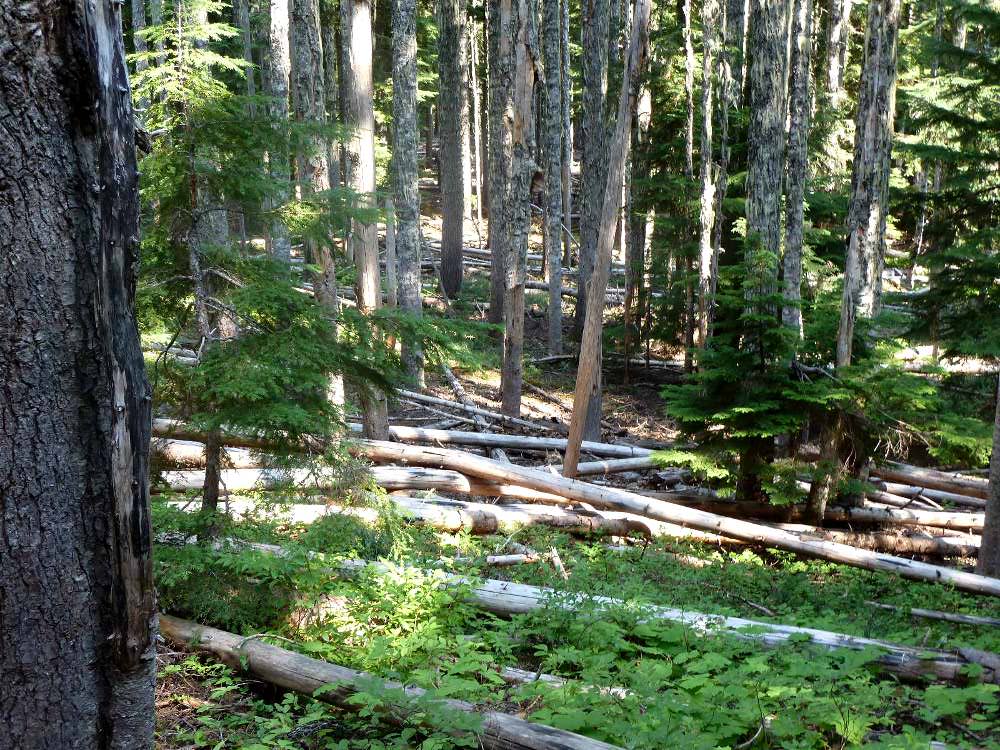
Photo of Douglas fir forest on Mt. Hood near Barlow Pass, Oregon. Photo by Lupa, 2011.

And the plant totems, being connected to every individual of their species, can often have a very deep understanding of many places and what goes on there. Tree totems in particular can be very significant wells of knowledge of places. That’s another thing that can throw us humans off about plant totems. Animals have comparative breadth of knowledge about a place; they can know their territory intimately, but it’s still limited primarily to the surface (or water, or tunnels, or whatever their primary habitat is), and they can be easily removed from their territory by rivals, by a lack of food, by humans, and so forth. Plants, on the other hand, know one place very deeply, investing an entire lifetime in one spot, one view. A plant can be uprooted and moved if young enough, of course, but left to its own devices it will concentrate on the one place it’s rooted until it dies. And so we don’t always understand the “depth” observation that plants take versus our “breadth” animal understanding.

When the Clovers were talking to me about how I still carry the lessons I learned early on, even though one of the places I learned them has been destroyed and others are off-limits, that was a testament to the plant totems’ patient, long-distance way of perceiving. Like a tree rooted in a forest, some of the features and beings around me and my life would change, but I remained. (And, likewise, I may someday be one of those features in someone else’s life that goes away, while they themselves remain.) I really had to stop and think about what they were seeing in me, and more importantly how they were seeing me. Where I was caught up in a piece of my lateral landscape that had changed forever, they were taking a longitudinal assessment of me as a constant factor.

There’s a lot of value in the alternative style of perception and understanding that plant totems have. It can be difficult to engage sometimes because I’m not used to it. But the more I consciously engage with what the plant totems have been sharing with me without me realizing it, the more grateful I am to them for it, and for the patient, ongoing contributions of their physical counterparts.

* Incidentally, I’m also working on exploring my experiences with fungi totems, stone totems, spirits of places, and other not-animal, not-plant beings as a greater exploration of the spiritual ecosystem, and I intend for my writing to unfold and reveal these explorations over time, traveling deeper into the foundations of the ecosystem. But for now–you gt my thoughts on plants, because I’m just linear that way. Plus it’s a lot easier for many people to start wit what’s familiar and progressively move outward, and I figure it’ll be better for everyone if I take this progression from “more like me” to “less like me”.
A Brief Poetic Interlude

Home, 5/5/2012

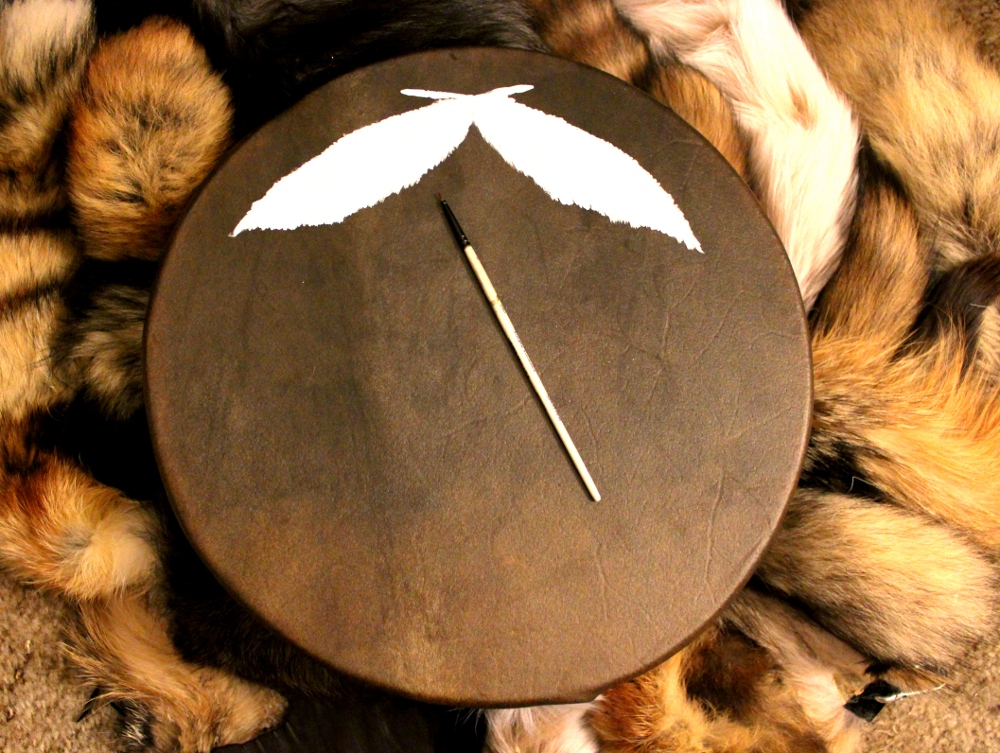
I love the sound of the paintbrush
Delicately moving across this drum.
The tiny tempo evokes the spirit
Of small, curious birds,
Translucent claws tapping against taut-stretched hide.

So sensitive is the skin, that from the lightest touch
A song emerges.
No matter how heavily the drum is beaten
No matter how loud the voice
I was here first
With my paintbrush made of birds.

WIP drum by Lupa, 2012

White and Red Clover as Totems

I’ve been thinking again about my now-deceased little patch of woods from my hometown. I can’t have that place back ever again; even if the pharmacy that’s there now were to be torn down, the plants that would regrow wouldn’t be the same, and the geography’s been changed, flattened out. And so I mourn that loss. (As an aside, I’ve written even more about it recently at No Unsacred Place.)

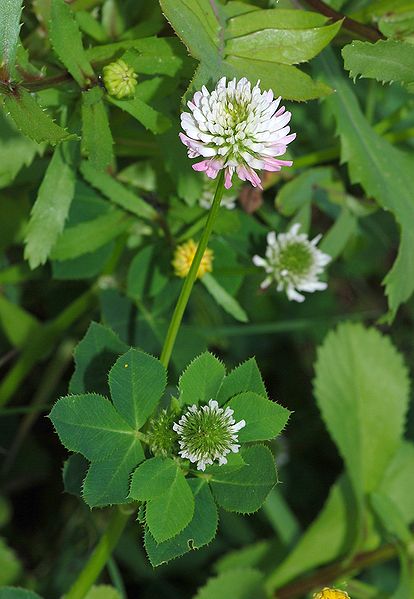
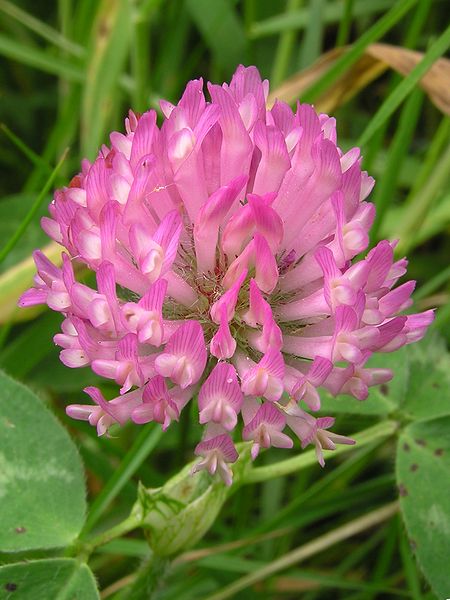
In the process of mourning, White Clover and Red Clover came to me. These low-lying legumes were a big part of my childhood explorations; I spent many hours outdoors lying in patches of three-lobed leaves and fragrant white flowers, and eating the pink petals of the larger red species. Spring was always marked by the arrival of the first clover buds, and throughout the summer I would silently cheer any time the flowers got high enough to be made into necklaces before the lawn would get mowed again. My favorite hiding places were where the clover and other plants were allowed to grow high and thick, instead of being cultivated into submission as with most of the neighborhood.

As I grew older, and eventually moved to several places around the country, I always found clover–white more often than red, but both of them still made strong showings. And they were persistent. Even when I lived in paved-over old industrial areas of Pittsburgh where bricks and old run-down buildings were common, clover stubbornly populated open lots and little scrubby patches by the sidewalks. Here in Portland I see a lot of white clover, to include places where organic urban gardeners plant it as a cover crop. Red is more rare, but I’ve seen it on occasion, often on the edges of parking lots and other hardscrabble places.

And as I have mourned my loss, White and Red Clover reminded me of all the times I’ve seen them over the years and how that’s helped me to maintain the connection to my childhood wonder at the world. I realized that although I’ve lost a specific place dear to me, I never lost the connections that were formed there. I’ve taken these connections much further, too, out of suburban lawns and into empty lots in cities, and the wide open territory of the Columbia River Gorge. I’ve gone from a tiny little creek trickling through my second patch of woods, to the rivers the bridges in Portland cross over–and to the Pacific Ocean itself.

I am not lost. I am still here. Wherever there is clover, there is also the connection I grew up with. I do not need to feel connected only to the patches of clover in a yard I no longer have permission to enter, or in a field that no longer exists. I also have the clover in the neighbor’s yard that I walk by several times a week, and odd patches here and there throughout Portland. And just as I carry the lessons taught by family members many years deceased, so do I carry what I learned from White and Red Clover, and Periwinkle, and Black Poplar, and Eastern Red Cedar, and White Oak, and so many others through their physical counterparts as I went from a seedling to a sapling to a fine young tree myself. These still stand out to me, so many years later, as a collective of plants and their totems who were so incredibly influential. Some of their children are now dead, victims of the destruction of one place. But thankfully the species and the totems live on, and no one can take that from me.

And given that neither White nor Red Clover are native to the United States, their ubiquitous presence helps me to feel at home where I might otherwise feel rootless. Similarly to Douglas Fir, the Clovers have helped me to be as flexible and adaptable as they are in a new place, particularly as I was not even born on this soil. Part of that grounding does come from reminding me of my roots, and teaching me to set them down wherever I go. If they can bloom where they’re planted, so can I.

I find all this comforting. I have lost, but I am far from alone–or rootless. White and Red Clover showed me that.

Poison Oak as Totem

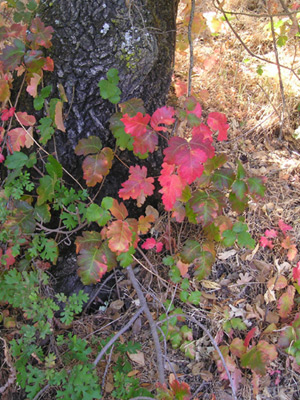
A comment on my last post at No Unsacred Place brought up the itchy, urushiol-soaked leaves of poison ivy and poison oak. I am quite sensitive to all of the plants that exude this compound, and admittedly all they’ve inspired in me has been much cursing and complaint on the occasions we’ve had too close an encounter.

Elinox, the commenter who brought these plants up in the first place, mentioned the idea of a shadow totem. A “shadow totem” is a newer concept that seems to be an odd extrapolation of Jung’s Shadow archetype; a shadow totem represents or embodies something that we fear or are otherwise uneasy with. It’s not a concept I work with myself as I find it a little too much of a pigeonhole, but I agree with the general idea that sometimes we have to face some really difficult things in our paths.

So I meditated some with Poison Oak today to consider our relationship–such as it is. Like thorns and other obstacles, Poison Oak and her kin developed urushiol as a way to avoid being eaten by animals. It does mean, of course, that poison oak is not an especially cuddly plant, and the totem was correspondingly strict about personal space, though pleasant otherwise. She’s actually quite friendly; she just maintains very firm boundaries.

And that’s a very important lesson for me, especially as a woman in a culture where women are still often treated as though our boundaries don’t exist. If we object to catcalling, or sexual harassment, or any of a number of other nonphysical boundary violations, we’re told that we’re “bitchy” or “making too big a deal about it”. If we’re assaulted or raped, there are people ready to question what we did to deserve it–were we drunk, or scantily clad, or walking alone at night, or hanging out with the “wrong people”? In the same way, simply for defending her boundaries with integrity and creating a consequence for violation, Poison Oak is vilified. How much do you hear about this plant for any reason other than “this is what it looks like–DON’T TOUCH IT!”?

This goes beyond women, too. There are so many situations every day where people are expected to yield to those who are more powerful, who have no respect for their needs or integrity or safety. The abuse of power is rampant on all levels of American society and beyond. It’s no wonder, then, that so many put up fierce defenses, even against those who mean them no harm. And it can be easy, if a person doesn’t let us in as far as we want, to vilify them for not giving us what we demand.

Poison Oak also told me to examine my own boundaries. I sometimes feel a lot of guilt for maintaining the boundaries that I do. The older I’ve gotten, the more of an introvert I’ve become, and I’ve sometimes gotten criticism for that. More extroverted people don’t always understand that introverts’ quiet and solitude isn’t about them.

There will always be people who feel entitled to my personal space–strangers who don’t understand that it’s a problem if they suddenly come up to me and start flirting, or those who feel entitled to fill an entire residential block with the loud, bass-heavy thumping from their stereo system. These people tend to complain if someone challenges them, and it can be hard to stay true to my own boundaries when they’re trying to paint ME as the bad guy for standing my ground and insisting on my comfort.

And there’s only so far I should allow others to make comment on my spiritual practices. I’ve been spending a lot of time lately trying to defend myself against people who criticize me for being an American of European descent trying to put together an animistic practice, and from people who are uncomfortable with or even incensed by my work with animal parts in art and spirit. While being aware of what others are saying, and my own power and privilege, is a good practice to cultivate, there is a point past which I need to maintain my own integrity and preserve the roots I have set down to give myself more balance.

However, I also need to be mindful of the negative effects that my own “urushiol” can have; sometimes boundaries can be too tight. I sometimes have to make a real effort to get out and be social, not out of any fear of socialization, but simply because I am so comfortable in my personal space that I simply neglect to come out of it at all. Over time, others feel they simply can’t approach me, and so sometimes I need to demonstrate that yes, I can be sociable!

And in some ways I grew up with a certain level of entitlement that’s been hard to shake even at this point of my adult life. I was raised in a town where people were very prickly to each other, where being bullied taught me that everything is a personal offense, and where people always looked for someone to blame for whatever went wrong, even something as small as a delay in traffic. Poison Oak’s “passive” defense isn’t an open attack, and she doesn’t go out of her way to cause trouble. It’s something to keep in mind as I continue unraveling this unwanted part of my past conditioning.

By the end of the conversation, I saw a good deal of myself in Poison Oak, and vice versa. While I’m sure I’ll be unhappy the next time I end up with an itchy red rash from brushing up against her progeny’s leaves, I won’t blame them at all. Urushiol is only the protection that Poison Oak has developed over time, and it’s really rather effective. If I can’t touch or pick poison oak like I can clover or dandelions, it doesn’t mean the itchy plant is a bad one. It just means I need to respect that plant’s boundaries as much as my own.

Clarification

Regarding that last post–I was NOT speaking ONLY of human beings, or only recent human cultures. I certainly wasn’t saying that non-urban or less centralized cultures are more “wild”, and I’m well aware that we do not hold the monopoly on technologies and innovations and correct ways of thinking. That sort of ethnocentricity is NOT something I wish to be associated with, thank you.

When I was speaking of the wildness and risk inherent to life, I was speaking of ALL life that has ever existed on this planet, of which humans–ALL humans–are a tiny, miniscule fraction. For most of these beings that have EVER existed, life was/is a much riskier proposition than we generally experience. And when I say “we”, I mean those of us who live relatively comfortable, secure lives. So I’m rather frustrated that people translated this into such an anthropocentric view, forgetting that I was speaking of much more than humans.

Please re-read the previous post. I spoke quite a bit of “living beings”, and nowhere was I only comparing the standard of living I and others enjoy ONLY to other human beings. Nor was I saying that even this comfortable life is without risk. But I feel risk is more resonant of our wild heritage–not just HUMAN heritage–than the outer trappings and symbols I spoke of. All this was was some musings I had about what (usually white, urban) people like to call “wildness” like wearing dead animals and worshiping nature deities, compared to the risks of being a wild animal; and drawing casual, loose comparisons between the *slightly* greater risk of self-employment and how that makes me feel a little closer to the wild because I could see similar challenges between the ebbs and flows of my income, and the successes or failures of a day’s hunt–by ANY predator, not just human ones.

Animal Heritage, Employment, and Being Wild

As I write this, I am taking a brief break from what I call an “artwork frenzy”. As a full-time self-employed artist and author, I spend a great deal of my time in creative pursuits. However, there are times when I am relatively free of immediate deadlines and scheduling static, where I am free to spend several days buried in a particular project or set of projects. I refer to these as artwork or writing frenzies. It’s during these times where, unfettered by the needs and expectations of others, I can write the bulk of a book manuscript in the space of a few weeks, or dance back and forth among several art projects adding a little paint here, checking a sealant there, giving my hands a break from yards of hand-braiding, and so on. It’s really where I do my best work.

I am preparing for an event I’ll be vending at this weekend; while I have more than enough artwork to fill my booth, I always like to have new offerings to debut. It gives me an excuse to show off, and often breaks me out of creative ruts. As I’m taking hides and antlers, paint and yarn, and creating a variety of ritual wear and tools and other such things, I have Netflix going with a steady stream of shows about history, prehistoric animals, geology, cosmology, and the origins of life itself. It takes me temporarily out of this moment and is the closest I can get to travelling and exploring somewhere new.

But it also gives me context for where we as a species are right now. Just a few thousand years ago there were only a small handful of humans scattered across the land, just one more species of wild animal amid the rest. So much time was spent by all creatures either procuring food, or avoiding becoming someone else’s meal. Jack London’s dour law of “eat or be eaten” that ruled his canine character Buck in The Call of the Wild may seem extreme to those of us who are used to buying food at a supermarket or convenience store, and who do not have to spend every waking moment looking over our shoulders in case some other being leaps upon us and tears us to pieces. But for most living beings that have graced this planet, today and before and beyond, life is full of unpredictability, and constantly at risk of being brutally brought to a close. We here enjoy a level of safety and security very rarely experienced by any beings throughout the planet’s history.

Similarly, in the half-year and change since I became fully self-employed, I’ve gotten the barest reminder of the aforementioned unpredictability. While overall I’ve been a success, I’ve also had to learn to weather the ebbs as well as the flows of the business. There’s only so much I can do on my end to bring in enough income to keep my household going. I can make a ton of art, I can promote it, and get out to events to vend. But at the end of it all, none of it works if there are no customers buying what I create. In the same way, the most powerful and crafty hunter, the most skilled scavenger, and the most resourceful grazer or browser, cannot eat if the food is not there. No matter how much they may roam, how many chases they may make, how many miles they tread in search of prey or carcasses or edible plants, there are still days where they go to sleep with empty stomachs.

This is unlike domestic animals, and people employed by others who receive a regular wage. They have more security in that someone else rations out the food–or money–they get on a regular basis. Sure, there’s the chance the farm may fold or the business may collapse; famine and downsizing are both dangers. But one of the amazing recent creations of humans are societies in which you can more or less know exactly how much of a given resource you’re going to have access to depending on the current arrangements you’ve made. If your job is secure and you get consistent pay and hours, you likely know when payday is and how much you’re getting. That’s pretty damned impressive in the grand scheme of things, and almost unprecedented in the Earth’s entire history.

I am not a wild animal. I am happily domesticated, for the most part. I’m happy in an apartment, where I have easy access to food and medicine and warmth and companionship–and, for that matter, where I’m unlikely to get eaten by a saber-toothed cat. But I do like to think a little about my wild heritage, and that of our species as a whole. See, I don’t think it’s the trappings of wildness that make us wild. I could run around Portland wearing my creations, and seek out ever more dangerous and untamed deities and spirits, and spend nights backpacking in the woods. But if I’m still coming back to the security of home, if I know I have that secure base to come back to, it really doesn’t make me any more of a feral human being than I was before. It would just make me a dilettante.

What I feel brings me just a shade closer to myself as a wild animal is the uncertainty I’ve taken on. This ebb and flow of income and resources is just a touch closer to what my distant ancestors went through their entire lives out of lack of any other option. Granted, even this slightly greater risk is still somewhat of an affectation. Even with Portland’s crappy economy, I have enough formal education and matching experience in multiple professional fields, and the ability to relocate if need be, that I have more than one potential fallback if I need it. (Specialization is for insects, as Heinlein said.) But in this moment, where the ability to pay for the food that comes onto the table is dependent on a much more variable income, I can appreciate what my ancestors, what many of my fellow human beings today, and what almost all other wild animals, experience on a daily basis–just a tiny bit, anyway. I can’t know what it’s like for sure to be any of these others, but it’s a bit of a wake-up call here in my privileged, comfortable urban lifestyle.

And most attempts on the part of my fellow domesticated humans to “be wild” are affectations to some degree. Going out to the woods to play overnight is not the same as having your home, your source of food, your security suddenly disappear. Those who are unwillingly homeless, or who otherwise fight every day to survive with no safety net, are closer to the wild than those of us secure in our homes and full pantries. No amount of fur and feathers, or fake hipster war paint, or trance-dancing at drum circles, or worshiping ancient deities of natural phenomena, brings us closer to wildness than having one’s life in more danger than before, even a bit. The more I know of the violent and dangerous track that life on Earth took to get to this moment, the more I appreciate that the wild is built on risk and threat, nowhere near as romantic as society would make it.

I don’t intend, of course, to give everything up and go live in a cabin in the woods and eat only what I can hunt and gather. And I don’t feel that being self-employed has somehow turned me into the Wild She-wolf of the Northwest. It’s just a tad bit riskier than having a day job, and I contemplate that risk, and greater risks, in this moment.

Quick Side Note: Giveaway of my book “Skin Spirits”

For those of you on Tumblr, my book Skin Spirits caused some debate and discussion, some of it heated, over there.

So in an attempt to try to salvage something good out of all of this, I’m giving away a free copy of the book–just reblog this post linked here on Tumblr!

(Wasn’t I just talking about not being able to please everyone regarding the cultural appropriation thing? At least I can hopefully make someone happier with a free book.)

No Unsacred Place posts

Here’s a roundup of more posts I’ve done over at No Unsacred Place:

A Few Thoughts on Plant Totems

I Greet the Land with Love

We Do Not Return to Nature. We Are Already There. and Further Thoughts on Nature, Wilderness, and Urban Sustainability, two essays in which I explore what “nature” really is and how we, even in the deepest parts of cities, are still a part of nature.

The Cultural Quandary

First, I want to extend a big thank you to everyone who commented on my last post about cultural appropriation. Consider this a general reply, since there seems to be a common theme among most of what people had to say.

I feel a bit like there was some misconception that I am not secure in my own path. The point I was trying to make in my last post was not “I feel unsure in my path”, but “I feel unsure about the best practices in addressing cultural appropriation and shamanism, because it seems every single possible solution that is brought up is invariably attacked by someone claiming it’s appropriation”. I am comfortable in my own balance and my practice, but I want to continue to be a constructive participant in the wider discussion of appropriation. My frustration comes down to wondering what there is beside the complaints that seem to dominate the dialogue. I’ve seen very little from critics on what’s going right; it seems no potential solution is without its attackers. It’s like being a ship in a storm with people yelling “WRONG WAY! WRONG WAY!” no matter which way we turn, and not single person saying “Here, here’s a safer path”.

Some of you brought up the idea that maybe there will always be people who are never satisfied, no matter what. On the one hand, it would seem lovely to just ignore the naysayers entirely. But I worry that if I do that, people who have felt shut out for generations will just continue to feel shut out. So the quandary is how to determine what’s signal and what’s noise, and how to navigate that without falling into old cultural patterns of oppression.