Skindancing: Shapeshifting Dance

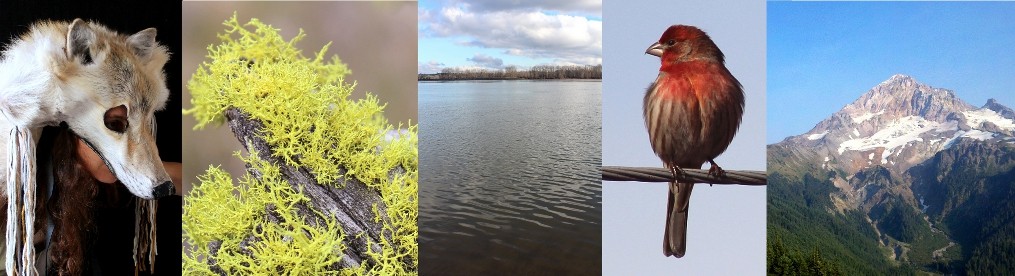
You know how I got into making totem dance costumes in the first place? It’s because I wanted to dance in my own wolf skin! My old grey wolf skin, shown in this post, has been with me since about 1999. However, I didn’t start dancing with him until 2002, when I started going to pagan festivals. I had no one to show me how to wear him, so through a process of trial and error I figured out how to properly split him to wrap him around me, plus trying to find the best places to put the various leather straps to distribute the weight. And then I had to figure out that whole shapeshifting thing–not physically, of course, but allowing the spirit of the skin to “ride” my body, even as I felt, for the moment of the dance, what it was like to see through the eyes of a wolf. And I want to be able to share that with you, so here’s a brief tutorial on how to make it happen.

First, you need to know what skin you’re going to dance. You may, like me, prefer full skin dance costumes. However, that’s not necessary; you may be working with a headdress or tail, or even just a small skin pouch. You don’t even need actual animal parts–even vegans may participate in skindancing! What’s important is how you connect with the skin spirits, regardless of their “housing”.

If you’ve never talked with the skin spirits before, I wrote out my own method here; it may be useful to you, though you may find your own personalized way as well. Being able to connect with the spirit, whether you see it as a literal being or not, is crucial to shapeshifting dance. So before trying this more advanced practice, spend some time getting to know the skin you’re going to dance with. It’s especially important to be able to tell when the spirit is or isn’t wanting to work with you at a given time, because you’ll want to ask permission each time you want to dance with it or otherwise work with it.

Once you have a good working relationship with the spirit, it’s time to try it on for size. A pouch will probably hang with no problem around your neck or from a belt, though it’s best to have at least some physical contact with it. However, something larger may take a little practice to get it to fit just right–every person’s body is shaped differently, and so one person may have to wear the same headdress further back or forward on their head than another one. So before you even get out to the dance circle, spend some time just wearing the skin in your home and learn to adjust its fastenings and your movements as needed.

If you haven’t danced much before, or you’re not feeling quite sure of yourself, you can try dancing at home as well. One thing I recommend to people is to either watch the actual living animals in the wild or at a zoo or wildlife park, or watch videos of them, to see how they move. Then imitate that to the best of your ability. In many cases we simply aren’t able to move in the same way–we can’t fly, for example–and you may have physical limitations particular to you that need to be factored in. Never fear–it’s not about perfection! Again, the connection is what’s important.

And that’s the other half of this practicing–you want to invite the spirit to be a part of you, and allow you to be a part of it, during this dance. For a while, it may just be you moving around, concentrating on just “getting it right”. However, eventually you may find that you can feel the spiritual boundaries between you and the skin melting away. (This is why I don’t line any of the dance costumes I make, other than as needed to strengthen older hides. Direct physical contact with the skin helps facilitate spiritual connection as well!) Take some time to keep practicing and getting to know each other as dance partners.

You may also find that the totem of the species you are dancing, as well as the individual spirit of the skin, may come to dance with you. This can be a VERY powerful experience, but it can also differ from just dancing with the skin spirit. It’s easier to get overwhelmed, but it’s also good practice in deeper spiritual connections and invocation. Have a plan to get out of the trance and ground yourself if things get to be too intense; generally speaking, a totem will leave if asked politely, at least in my experience.

Once you feel ready to do this in a group setting, such as a drum circle at a pagan gathering, there are a few things to be aware of. You may find yourself distracted the first few times you do this, either by trying to not get stepped on by other dancers, or being overwhelmed by all the drumming, or overheated by the fire. (If you’re wearing a full skin dance costume, wear as little clothing as you can and still be decent in the given setting–a swimsuit, for example. Yes, even in cool weather–fur and fire will make you warm in no time!) Don’t worry; it happened to me when I was first starting out, and I still have recent experiences where someone bumped into me and knocked me out of trance. That’s another thing–know who you can go to if you need some help grounding. Taking the skin off breaks the connection, but it won’t necessarily get you back to your baseline headspace. If there are no professional fire tenders, have a friend or two there who can help you come back to yourself.

An important note: Be aware of the animal’s behavior versus your own preconceived notions! I have seen people use skindancing and other shapeshifting practices to act out–basically using the imagery of Wolf to excuse their inability to control their own anger and aggression, for example. How much of yourself are you projecting onto the animal? How much aggression does the animal actually use on a daily basis versus what popular media states? Wolves can be aggressive, but they’re also highly social, and the pack hierarchy is much more relaxed in the wild, as opposed to in the sorts of captive refuge situations where a lot of observation has taken place. (Captive wolves tend to exaggerate the hierarchy due to being in such close quarters.) So dancing Wolf isn’t just about being a snarling beast embodying all the animal qualities we humans tend to repress; it’s also about being loving and playful and sleeping a lot after a big meal!

You don’t have to restrict yourself to just one animal, either. I primarily dance Wolf, but I have also dance Bear, Deer, Buffalo, Leopard, and many others. And even if you dance multiple skins of the same species, get to know them as individuals. Some like dancing more than others, and some just prefer special occasions.

There’s a lot more to this, but these are the basics. If you want to know more about my work with skin spirits, feel free to read more of the entries in the Skin Spirits category of this blog. You may also purchase a copy of my book, Skin Spirits, in the bookstore portion of my website. And I’m always happy to answer questions and give feedback as my time allows 🙂

Death and Skin Spirits and Ethics

I know, I know–I’ve been talking about this a lot lately. But there’s a lot to chew on, so bear with me here.

So the other day, when I was talking about dead critters, I mentioned some of the ethics surrounding the use of animal parts in my art and spiritual practice. Specifically in that post I discussed the ethics of honesty in admitting the source of said parts, especially the issue of people misrepresenting supposedly vintage or otherwise secondhand parts. However, the ethics go much further than just how we represent what we offer.

As mentioned in the earlier post, one of the important reasons for accurate representation is because there are a lot of buyers out there, either of animal parts or things made of them, who restrict themselves on what they may or may not buy for ethical reasons. Some only want secondhand/vintage. Others only want parts from natural deaths, or even only shed antlers or molted fur and feathers. For these people it is imperative to know that what they offer didn’t come from a fur farm or otherwise have a bad life and/or death.

I don’t restrict myself that much. I am an equal opportunity spirit worker when it comes to skin spirits. The only limitations I make are regarding legalities, which is why I put so much effort in trying to educate myself on the laws. I don’t support poaching, and I don’t support other illegal acts. Beyond that, though, I don’t discriminate.

Why? Because all the skin spirits deserve attention and honor, as do their remains. And, in my experience, it’s the ones that have had the worst deaths that need the most spiritual help and cleansing. I do a full purification ritual on everything I make with animal parts, and part of that includes talking with the spirit of the skin or bone I’m working with to be sure it’s ready to go to a new home. Some of them? They’re just not there yet, and I respect that.

And? It’s all death, one way or another. No matter how it happened, or at what point in the lifetime, some animal lost its unique vehicle for interacting with this world. The soul moves on; the “spirits” that are left are more impressions, haunts, though they may have strong personalities. The death doesn’t change, either. A farmed fox tail from fifty years ago is still from a fox that lived and was killed on a fur farm. The vintage status doesn’t change that. Any way the death happened, whether through snare or bullet or gas or electrocution or roadkill or parasitic disease, the end result is a carcass. And that’s where my work starts.

Yes, I try to balance my works with donations and volunteering to help animals and their habitats. But I still own that my art, and my income, rest directly on the backs of hundreds of deaths, and I can never forget that. To do so would be to the detriment of everything I have done for the past 13 years.

Bear Work and What Grad School Taught Me About Being a Shaman

So we’re down to the line here as far as grad school goes. In a week and a half I will be done with my internship, and with luck by the middle of September I will be able to put M.A. after my name!

It’s been incredibly stressful–not all bad stress, but still, stress has an effect. I haven’t had as much time to do a lot of my usual self-care techniques, but I have taken up meditation again. Brown Bear, who has always been my help with healing both myself and others, has been guiding me in meditation with small affirmations. These affirmations are to help me remember certain checks and balances against the negative effects of stress and other pressures. I have a small antique ceramic bowl in my ritual area that I’ve filled with small slips of paper with the affirmations written on them. I try to meditate at least once a day, though if I feel the need for more, the meditation is a brief break to help me ground and re-center myself.

Bear is coming back into my life more strongly, too. Not that s/he ever left, but school had a way of draining me to where I didn’t always have the energy to maintain my totemic and other spiritual connections as much as I’d like. Bear is patient with me, though, and that patience has been invaluable during this time. It’s not just that I appreciate being the receipient; it’s also good modeling to remind me to be patient myself, with myself and with others. I feel pretty confident that our work is going to continue and deepen as I enter this new phase of my life.

This sort of small, simple practice, while it certainly doesn’t replace more intense journeying, is just one of the things I’ve learned to appreciate more in the past few years. One of the main reasons I decided to pursue a Master’s degree in counseling psychology was that I wanted to be able to help more people. Outside of indigenous culture, the United States doesn’t really have a central shamanic role. There are, however, some professions that I consider to be analogous, to include counselor, and rather than trying to shoehorn post-industrial nonindigenous Americans into quasi-indigenous, pseudo-tribal artificially created pigeonholes, I see there being the greatest value in A) adopting those analogous roles, and B) if we feel the need for some archetypal shaman role, that we create it ourselves based on where we are, not where we wish we were. So for me, my training as a shaman hasn’t been at the hands of indigenous people, trying to convince them that this white girl is worthy of their amazing spiritual secrets, but instead in an education that is more tailored to what I’m used to. Not that it isolates me; on the contrary, my internship at a high-risk inpatient addictions treatment center has brought me into contact with an unprecedented variety of women from all sorts of racial, cultural, spiritual, familial and other personal backgrounds. I doubt I would have met any of them if I’d just hung up a “shaman” shingle and waited for people to show up.

Because let’s face it. Most Americans of all races wouldn’t go to a “shaman”, either because their religion forbids it, or they feel that sort of animistic practice is nutzoid. Native Americans are more likely to go to their own holy people and other such community figures. Most of the people who would come to me as a shaman are going to be similar to me–white, middle-class in origin, college-educated to some extent, and either neopagan or New Age of some flavor. However, people from numerous walks of life go to counselors, sometimes mandated by courts, but also often voluntarily. And I want to be accessible to all of these.

Even though I intend to go into private practice as a counselor once I graduate and get my degree, I am still going to keep my hand in on the community level, with some low-cost slots for the uninsured, as well as doing some research that I hope will benefit my internship site as well as the clients who use it. Yes, to an extent shamanism is about offering myself, but I can’t just go in saying “Here, take this!” As with any counseling or shamanism, it’s about finding out, collaboratively, what the client needs, and going from there. With counseling, I can offer a much wider set of possibilities to a broader range of clients.

And that’s one of the most valuable lessons I learned.

On Dead Critters

So after my last post about strip-mined crystals and sustainability, it got me thinking more about the animal remains I use in my spirituality and artwork.

One of the things that I have always tried to do, ever since I started doing artistic and spiritual things with animal parts in the 1990s, is to try and use secondhand ones as much as possible. Early on while still in the Midwest, I haunted antique shops for old mink fur coats, and one of my best finds ever was a very old bear skin rug for $50! Since then, I’ve found more sources for old fur garments, taxidermy, even old Davy Crockett hats with real raccoon tails stitched to fabric tops. And I still generally prefer secondhand over new.

However, there are different degrees of “secondhand”. There’s secondhand as in the antique bobcat rug that I turned into a dance costume. And then there are the tails I use in my art, which mostly come from furriers, who don’t generally use the heads, tails or feet of hides, so other people like me make stuff out of them. And that’s a different sort of re-use.

See, if something is left over from food or subsistence hunting/trapping or the garment industry and never had a specific post-death use before, it’s really just a discard. Whoever had it first (other than the animal who wore it) didn’t actually do anything with it other than toss it away, or offer it to be sold to craftspeople like me. That’s using every part of the animal, but saying it’s secondhand is like saying that the bags of dried corn husks left over from food-grade corn that are used for tamales or crafts are secondhand. Yes, it’s great that the processor of the corn can sell the husks instead of tossing them, but they’re still technically a new product. In the same ways, the bundles of fox and other tails that are left over when fur coats are made are new as well. Granted, they’re not being incinerated or tossed in a landfill, but I wouldn’t call them secondhand.

So what do I consider more properly secondhand?

–Old fur and leather coats that I cut up to make into other stuff
–Taxidermy bought from a taxidermist’s private customer, not the taxidermist directly
–Animal parts that were owned by another private individual as part of a collection, or destashed from art supplies
–Other random items that were previously owned by another private individual, ranging from real-feather feather dusters to novelty armadillo purses

Why is this important? Because some people feel very strongly for spiritual and/or ethical reasons that the animal parts they work with in their spirituality should be secondhand. Leftovers from the fur industry are great to be reused, and I am happy to incorporate them in my work, but they are still new, not secondhand. And for some people, that’s not far-enough removed for their comfort, which I can certainly understand.

I feel it is important to make the distinction between discard and secondhand for honesty’s sake. I have seen sellers of animal parts at various places on the internet claiming that the heads, tails and other new discards they get from the same sources I do are “secondhand”. And, caveat emptor, there are sellers who will even claim something is not only secondhand but vintage in order to try to seem more ethical. Not all sellers do this, of course, and there are some people who do offer genuine vintage and otherwise secondhand animal parts; additionally, honest misidentification can happen. However, I feel those who are deliberately misrepresenting things with dubious stories are doing a huge disservice to the customers who trust them as well as to the spirits of the animals they misrepresent.**

And that latter part, about the animal spirits, is especially important to me. My whole reason for starting this form of artwork over a decade ago was to give the skin spirits and their remains a better afterlife than being a trophy or status symbol, and that is still one of the central goals of my work. If I deliberately sell a farmed fox tail as wild–or for that matter, as a “natural death”***–or a new one as vintage, it dishonors the spirit, the customer, and my art. It is both a spiritual and ethical issue, one that I feel needs more discussion.

**It might be enough to make some go vegan!

***A postscript on that whole “natural death” thing and related topics: I occasionally will have people contact me and ask whether I have any animal remains from animals–such as wolves–that died naturally, either in the wild or a zoo or other facility, or at the very least were accidental roadkill, or were “nuisance kills”. If an animal dies in the wild, it will almost always become food immediately; the best you can hope for is to find bones and maybe a scrap of rotted hide, for the most part. Zoos and wildlife preserves generally don’t sell the remains of their deceased inmates; they are usually either cremated or donated to science (and here’s a great article about dead zoo animals for your reading pleasure!). Roadkill often is too beat up to do more than salvage some bones, and enough states have laws against picking up roadkill that it’s a legal risk anyway. As to nuisance kills? Well, sure, there may be some use to killing a coyote as part of population control, but hunters and trappers help keep the population down, too–“population control” is just another term for “officially enacted hunting and trapping”. Ethically, it’s really not much better than regular trophy or food hunting.

****Somewhat related, and continuing the discussion on ethically-sourced art supplies, is this great bit of research on Fire Mountain Gems’ suppliers. Since a lot of people buy jewelry supplies from them, to include stone and metal beads and findings, this is good info to have!

Stripping Away the Mined Crystals

So over on Witchvox, Heather Awen has articulated something that’s bothered me for years. Go read the entire article, please, as my summary won’t do it justice, but in short she points out the hypocrisy of using crystals and other mined stones to “heal the Earth”, when those rocks come from strip-mined locations that produce pollution, employ abused workers, and are otherwise incredibly environmentally unfriendly. And I completely agree with her.

Mind you, I don’t feel that we can stop mining entirely, not unless we want civilization to come to a complete halt. We’re entirely too dependent on minerals from deep inside the Earth. However, we can at least start with taking the blinders off about where the resources we use–all of them, from rocks to food to cotton fabric–come from. To me, being environmentally friendly isn’t about making specific choices like “paper or plastic?” according to some sustainability bible, so much as it is about making informed choices, no matter what those choices are. Being more aware of what goes into our decisions and what factors affect them can help us to remember to include not only our own wants and needs, but those of others, in our ultimate answers.

Like food. Sometimes I have enough money to buy organic produce, usually in the summer when the farmer’s markets are full of direct-to-consumer sales, and the cutting out of the middlemen means that prices are competitive, if not better, than the stores–I can get a huge bundle of carrots for two bucks, for example. Other times, it’s off to WinCo where I’m after a smaller grocery bill to avoid living on ramen. Still, I keep the organics in mind even when I’m getting conventional produce and the like, and if I find a good deal on a more earth-friendly option, I go for it.

Of course, I feel the most important of the three environmental R’s is Reduce. Pagans are notorious for buying not only ritual tools, but random tchotchkes to scatter about the home. Plenty of pagans’ homes are full of statues, pictures and other images of deities, spirits and nature, along with Celtic knotwork-bedecked tapestries, candles–and, of course, strip-mined crystals. Many of these were purchased new, and a good number of them were made in China, India or other countries that aren’t so strict on slave labor. Do we really need these things? Really? Does it make us more pagan to have them? Of course not, and there are plenty of articles in print and online about how you don’t need tools to be a pagan, and how to be pagan on a budget (which includes things like using kitchen knives as athames).

The people who have these things are generally well aware that they don’t need them–but they do like them. And while I am fond of the concept of Reduce, I am not going to tell people “Environmentalism: this is why we can’t have nice things!”. But we can be more selective in the nice things we do have. For example, almost all my ritual tools were either handmade by me or another artist, or found in the woods, or secondhand. There are a few small things from early in my paganism that I bought new, but those are the exception. And even when I was in my BUY ALL THE TCHOTCHKES phase, I wasn’t going to Dollar General or Wal-mart and buying cheap-ass, poorly made statues from slave labor. I was going to thrift stores and flea markets and buying others’ discards.

Still, a secondhand strip-mined crystal was still strip-mined, and I feel it is important to remember that when we make decisions. When people want to choose greener options for working with animal parts and are not in a position to just find them in the woods, I recommend they buy secondhand and vintage–which does reduce the demand for new deaths, but it’s still the remains of an animal that may have had an awful death (hence still also advocating for both spiritual and material ways to make up for one’s purchase). Less impact does not mean no impact.

So what to do? Choose carefully. Do you need something, or do you just like it? Are you giving money directly to an artisan, or are you paying a factory who will give their workers pennies out of the price? Are you reusing the resources already in circulation, or are you creating demand for more dead teak trees? I can’t make your decisions for you, and they may be different in each case. But at least please consider this discussion food for thought.

Addendum: While this article was in half-finished mode, Heather wrote an awesome follow-up to her Witchvox post over on her own journal. There are some great tips on choosing greenly!

Hope For the Future

So I am in serious crunch time with my Master’s degree program. Next week is finals, and I am due to finish my internship at the end of August. In addition to all this, I’m trying to take some opportunities with my artwork, along with working on a new book as well as finalizing the animism anthology I started at the beginning of this whole grad school thing. Between that busy-ness, and my spirituality being more drawn inward, I haven’t had a lot to say here.

However, all these things converged in an experience today that I thought was worth sharing. As preparation for evaluating my internship site (for those unaware I’m completing my MA in counseling psych), I’ve been sitting in on some of the therapy groups that I haven’t previously facilitated or co-facilitated, just to get a more well-rounded understanding of the program. Today’s group, comprised of women who have completed the inpatient portion of the program and are now in clean and sober housing, did some art therapy, creating boxes as transitional objects to help them stay focused on their recovery. While the original concept of a transitional object was concerning “blankies” and other things a young child uses to replace the bond with hir mother, it may also be applied more generally to other situations where an object stands in for as connection, particularly when in need of comfort. One of the common factors contributing lapse or relapse in many recovering addicts is a lack of impulse control. A transitional object can help the client “check” themselves and remind them there is an alternative to giving in to the craving, as well as reminding them of positive connections made during treatment and other recovery efforts.

It’s similar to what you see in magic and other spiritual practices–objects as reminders of a positive goal, concept, etc. The activity that today’s group engaged in–decorating boxes with decoupage/collage materials–could just as easily been a coven or other magical group spending an afternoon creating pocket shrines or other devotional objects, or items for spells and rituals. I tend to prefer magical work that utilizes such things, partly for the process of creativity, but also because I simply like having physical reminders of nonphysical things around me. The objects reinforce my perceived connection to what they represent. And, of course, the process of making the object adds intent and effort, making it more personal than simply buying a random box from the store (though a carefully planned shopping trip can also be a strong ritual in and of itself).

I was invited to create my own box along with the clients. While I spent some time observing facilitation, I did manage to put together some small and simple that spoke to current events:

Part of what I am going through right now is a lot of mixed feelings about my decision to be completely self-employed when I complete my internship. I’m intending to be an artist and writer part-time, since that business has been effective enough to essentially be a part-time job, and to open a part-time private counseling practice. This will help keep me from burning out on either endeavor entirely, and give me the sort of variety that I prefer. However, there’s a lot of fear surrounding this. I would be happier with more business capital saved up, though I’m better off than I thought I’d be. And even with that backing me, in this economy, and especially in the slump that Portland is in, there are no guarantees that even my greatest efforts will succeed. While I cannot speak for the experiences of my clients, I can see some resemblance between my fear of failure, and their own, though the particulars vary quite a bit. So this exercise in creating something to answer that fear was timely for all of us.

I started with an image of wilderness, Canyon Creek, taken from a travel magazine. This represented a safe environment, and one full of life and ongoing potential. I wanted to emphasize to myself that while things could always be better, I have lots of opportunities and I’m not starting from a place of desperation or emergency. I added a picture of a handmade wooden bowl from a wood crafting magazine. I love this sort of craftsmanship, and when I own a house some day I would love to fill it with this sort of uniquely crafted, practical creation. I found, in a home decorating publication, a photo of a weathered whitetail deer antler hanging on a cord; while much simpler than what I make, it stood in for the talents and skills I do bring to this situation, that I am not helpless and I have a lot to offer wherever I may go. Finally, I completed the box with a quote from Thomas Bailey Aldrich: “They fail, and they alone, who have not striven”. Just another way of saying nothing ventured, nothing gained, and a reminder to me that even in the worst-case scenario where everything falls to pieces and I am left with nothing, at least I tried going for a dream I’ve held for a very long time, and the success of which will be highly beneficial to me on numerous levels.

I’m going to be using this box to contain my fears. Any time I feel doubt or worry about the future, I’m going to write it on a small slip of paper, put it into the box, and let that hope for the future contain and surround the worries. While there may be genuine concerns at the heart of those doubts, I want to temper them with optimism. This is one way to remind myself of that.

Quick Note

Hey, folks, just letting you know that although I’m hella busy right now (as is normal) I’ve been reading the comments to my last post, and for the most part I haven’t really had anything useful to add, but I have really, really, really appreciated your perspectives. I’m really pleased to be seeing how much this resonated with people, and just the sheer diversity in the ways you all approach the same problem I discussed. Great stuff–and maybe some of you may feel compelled to write blog posts and such about this? I’d love to see more discussion!

There Is No Goddess. There Is No God.

Anthropocentrism: seeing human beings as the most significant beings in the Universe, or at least on Earth. I daresay that many pagans will argue that they aren’t anthropocentric, that perhaps they see the gods and spirits as more significant, or even all of us being equal, human and otherwise. However, in a broader sense, we are anthropocentric in that we have a tendency to align with and sometimes value what resembles us more over what resembles us less. We ally ourselves more with animal totems than plants, and even among animals we tend more toward liking or working with mammals than invertebrates.

And then there are our deities. With rare exception, all of the gods and goddesses are human in form, even if it isn’t their only form. And, with rare exception, all deities fall along a sexual dichotomy—female or male. Our deities are in our own form, whether we want to admit it or not. You can take a pantheon of deities and map out the human psyche to a great degree. (Whether or not the gods came from this mapping, or vice versa, is another debate for another time.)

I don’t feel there is anything inherently wrong with this. But when it is applied to specifically nature-based religions, which covers many neopagan religions, I have to question how much of Nature people really understand, and how much Nature is really being brought in as a basis for the spirituality in question.

Here’s why. We are most familiar with sexually dimorphic species, those that generally develop male or female reproductive structures, and we are a dimorphic species ourselves. Yet there are a wide variety of animals and plants that are not sexually dimorphic. Some, including but not limited to microscopic beings, reproduce asexually through division, budding, spores, parthenogenesis, and other ways of passing on genes without sex. And there are many species that either possess both male and female reproductive organs, or that literally change their physical sex as a natural part of their life cycle.

If we’re going by sheer numbers, sexually dimorphic beings are far outnumbered by the count of individuals—not just species—that are asexual or hermaphroditic. And if you want to include all of Nature, then you also have to include non-reproducing parts of nature, like stones and waterways.

So why do we persist in applying a dimorphic dominance to our understanding of nature and nature-based religion? Because we know that best. Because it’s comfortable. Because for most of us as humans, being a human animal means falling into the categories of “female” or “male”. I don’t think most people realize just how many species aren’t dimorphic, so it just doesn’t occur to us to think of nature in any other terms—hence the Wiccan (and co-opted by other paganisms) Goddess and God mythos, and pantheons of male and female deities paired off together.

I would challenge readers to look at Nature, and nature-based religion, in different terms. Put aside, for just a few moments if you will, the idea of paganism as being about a God of the wild animals and war and phallus-shaped mushrooms, and a Goddess of domestic agriculture and family nurture and having a bun in the oven. Think about how we are outnumbered by the non-dimorphic entities of the world. Think of Gaea not as a loving mother Goddess, but as an all-encompassing Both/And deity who is all things. Allow yourself to see the Divine as including all reproduction of all types, not having a specific form, but being manifest in everything, from stones to amoebas to helium to cacti. If you’re feeling really enthusiastic, perhaps even try creating mythology about deities that aren’t dimorphic, aren’t anthropomorphic, aren’t even necessarily animals. What might that look like?

Even if ultimately you prefer a female/male dichotomy and dimorphic deities, you may find value in appreciating that that’s not all there is. And maybe if we can expand our minds beyond sexual dichotomy, we can embrace other continua. So many of our magical and spiritual correspondences are based on either/or pairings—female/male, light/dark, cold/warm, good/evil, etc. Even if we personally may still feel comfortable with a Mother Goddess and Father God or other similar duality, what if we could transcend more of these as a way of expanding understanding and consciousness?

James Arthur Ray, Redux

So in case you haven’t heard, James Arthur Ray was convicted in the deaths of three participants in a sweat lodge he held back in 2009. The short version is that Ray strongly urged people, who were suffering more than is usual in this physically strenuous ritual in an improperly constructed structure, to stay in spite of vomiting and other symptoms of dehydration and heat exhaustion/stroke. Three people died as a result of overheating and smoke. Ray, who was running the ceremony (such as it was) was convicted on charges of negligent homicide.

While I feel terrible for those who died and those who loved them, and those who suffered and still suffer as a result of this monumental mishandling of people’s vulnerability, I’m not going to speak on that. Instead, I want to revisit my commentary from shortly after the initial tragedy. Amid other things, I spoke of the primary issue of competency:

I think the issue that stands out to me the most is that of competency. In counseling, competency means having at least an adequate, if not superior, set of knowledge and skills about a given topic to be able to effectively help a client with a minimum of risk to their psychological health. One thing I’m learning in my classes on practical skills is that no matter who you are, you will always screw up. Therapists are human, and as much as one would like to be the most awesome, helpful, effective therapist ever, there will always be those clients who just don’t work out–and the ones that you really regret because you know you could have acted differently in hindsight.

Competency is an ethical issue designed to make sure that the chances of causing harm are minimized. For example, I’m on the adult track in my program. My classes are tailored toward working with adults, and my internship will be the same. Before I could ostensibly work with children, I would have to take steps to increase my competency through education and reading, at the very least. The same thing goes if I end up having a client referred to me who is of a special population whose unique situation I don’t have experience or knowledge of.

Running a proper sweat requires competency on a couple of levels. I’m not going to get into the debate as to whether indigenous spiritual ceremonies associated with sweats are inherently spiritually better than New Age or otherwise not indigenous ones, and whether these people died because the spirits were displeased. On a physical level, though, there is a definite need for competency–how to safely construct the lodge, how to prepare the correct sort of stone, how to monitor participants for health concerns, and so forth. Psychologically, too, there needs to be competency with any sort of rite of passage or other ritual that has the potential to shake a person out of their usual headspace. I have heard entirely too many horror stories in the neopagan community of ritual leaders who led people through a particularly moving ritual–and then didn’t stick around to pick up the pieces when a participant ended up with some trauma being dredged up by the experience.

What seems to have happened here is a lack of competency on a physical, and potentially psychological, level. Did Ray know about the risks of running a sweat with that many people and that sort of construction, and how to know when something was going wrong? Did he make it clear to people that, no matter how moving an experience they were having, if they felt ill they needed to get out, and they wouldn’t have failed for admitting their limits? Did he receive any sort of training that might have included how to address these and other concerns?

And I still maintain that this is the cause of the deaths and suffering in that incident. During the trial, it came out that Ray was woefully incompetent and lacking training in a number of practices he used. This includes a lack of training in how to properly construct the physical lodge, and how to respond to a participant who is in physical distress. Additional testimony suggests that he even willfully ignored these factors, which affected his decision not to act.

I also continue to maintain that this does not prove that being non-Native, or that charging any sum of money, no matter how exorbitant, made people die. You can have a dozen white people charging $50,000 a head enter into a sweat lodge, and if they are properly trained in the construction and use of the lodge and ceremony and implement it to the greatest degree possible, then there is no greater chance of them killing anyone in there than any native person who has also received the same training and displays the same level of implementation. If Ray had happened to be Native in descent–and, hell, even if he had received the proper training but still chose to act unethically and dangerously–his being Native wouldn’t have done a single thing to protect anyone. Nor did the exact amount of money he received make him kill people. His attitude toward how to get the money was more to blame than that. You can point to any number of people who allowed the receiving of money to tarnish their judgment, but that doesn’t mean that there is direct causation between forking over cash and walking into a deathtrap, and the risk doesn’t automatically get higher with rising numbers.

Why am I saying all this? Because I am tired of seeing people who are right to be angry, infuriated, livid about what happened to a bunch of innocent people, turn their rage at a specific incident (or incidents, as this is not the first sweat lodge injury or death) into broad criticisms of A) non-Native people having anything to do with sweat lodges, B) anyone receiving money for Native or other spiritual/cultural practices, and/or C) the very existence of neoshamanism/non-indigenous nature religions/etc. Not only is it an inaccurate conflation of a number of factors that are not all causally related (and remember, correlation does NOT equal causation), but it is also ignoring the fact that there are plenty of non-indigenous practitioners of various related practices who, whether they receive money or not, are competent in whatever it is they do. You may not agree with the values associated with what they’re doing, but if they’re enacting things competently on physical and psychological levels, then you can’t accurately say they’re more likely to fuck things up, and trying to beat people with the red herrings (in this case) of racial background and filthy lucre is just going to distract from the actual problem at hand: this guy didn’t know what he was doing, and didn’t care to know what he was doing, to all appearances.

Let’s instead focus on increasing and maintaining competency. Not “What does this person believe?”, but “What is this person doing, and is it safe?” What reduces competency? Is it the proliferation of inaccurate information on how to enact certain rites when the correct information is often restricted in access? Is it people having unhealthy relationships with the money that represents resources for everyday survival? Is it mental disorders such as Narcissistic Personality Disorder? Is it cultural appropriation? Is it any/all of these and more? What can we do about these things that doesn’t just involve repeating “Don’t Pay to Pray!” and “You’re Doing It Wrong!”? How do we answer both the concerns of marginalized indigenous peoples in the Americas and elsewhere, and those of non-indigenous people who do find New Age and neoshamanic practices spiritually, psychologically, and personally fulfilling? This, I feel, is a lot more productive start to dialogue than the assumption that James Arthur Ray is the rule, not the exception.